


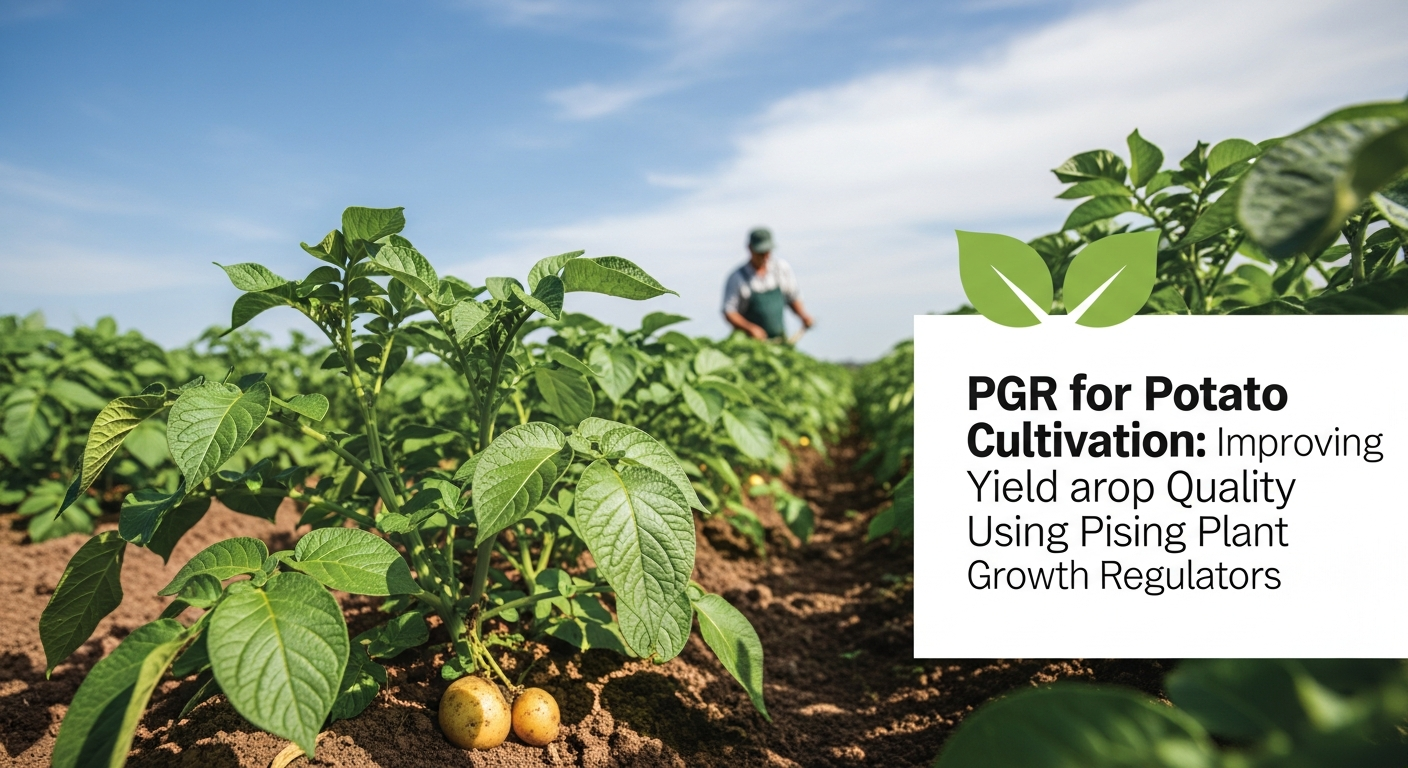
Plant Growth Regulators (PGRs) for potatoes help to direct plant growth, ensuring balanced shoot growth and improved tuber formation over time. Balanced nutrition and controlled growth are important factors in the culture of potatoes, and using Plant Growth Regulators (PGRs) helps to achieve balanced nutrition and growth. PGRs for potatoes help to create uniform sprouting, strong roots, increased efficiency of nutrient uptake, and increased tolerance to periods of environmental stress, all of which contribute to good quality tubers.
Combined with a properly designed Fertilizer Program for the PGR for potatoes, PGRs help to increase tuber size, provide improved consistency of yield, and contribute to the overall quality of the potatoes. In the early stages of vegetative growth through bulking of tubers, proper use of a PGR for potatoes ensures that all stages of potato production will be maximized for stronger plants and higher marketable yields.
Understanding PGR for Potato and Its Role in Agriculture
Using PGRs on potato crops has become increasingly essential for potato producers to produce higher yields and better quality tubers through regulated, efficient growth of the potato plant. Producers want to have balanced growth above the soil (shoots) with healthy development of both the tubers below the soil and balance between the development of the two growth patterns.
The use of plant growth regulators during the key growth stages of potatoes (e.g., the sprouting stage, stolon formation and tuber bulking) regulates the plants’ hormone activity, allowing the crop to grow more uniformly, reduce plant stress and increase the potential for increased productivity.
What Is PGR for Potato and How Plant Growth Regulators Work
Plant growth regulators are natural chemical substances that regulate and control the natural hormones produced by plants to direct and manage plant development of potato plants.
The properties of PGRs in terms of potato growing techniques:
PGRs regulate the emergence of shoots and early vigour, helping potatoes develop a strong root and stolon system.
- PGRs improve tuber initiation and uniform tuber size.
- PGRs enhance nutrient uptake and stress tolerance in potato crops.
Difference Between PGR Fertilizer and Traditional Fertilizers
Plant Growth Regulators and Traditional Fertilizer Types Used In Potato Cultivation, Comparison Through a Chart.
- The role of both PGR type fertilisers and traditional fertiliser types in the cultivation of potatoes is complementary.
- Traditional fertilisers provide nutrient elements (nitrogen, phosphorus and potassium)
- While PGR fertilisers influence how we grow and develop our crops
The difference between the two types of fertiliser is that traditional fertilisers feed the crop; whereas PGR's influence the direction of the growth of the crop by directing the crop from the seed through the vegetative stage to maturity. When both types of fertiliser are used together, the greatest success with potato cultivation is achieved.

Why PGR for Potato Is Important in Modern Agriculture
In today's modern agriculture, farmers are being pressured to produce more food per unit of land with better quality and more efficient resource utilisation, PGR's assist farmers in achieving these goals.
- So why is it essential for potato growers to learn about PGR's?Consistent yields across fields
- Increased tuber size, tuber shape and tuber uniformity
- Reduction of environmental stress
- Supporting Sustainable Precision Farming Practices
Increased use of PGR's will allow farmers to have increased yield, control their crop, their environment, and provide an overall improved crop quality through PGR use by optimising their use of fertiliser and reducing the losses associated with using traditional fertilisers.
Science Behind Plant Growth Regulators in Potato Crops
Plant Growth Regulators (PGRs) are essential tools for farmers to help guide their potato crops through various stages of growth, from sprouting through tuber bulking and all stages in between. Like different millets provide support at specific developmental milestones for babies, PGRs offer potato growers similar support at distinct points in time on their way to completing the potato crop. By understanding the science behind the way PGRs operate, potato growers can take full advantage of their potential effective use to enhance yield potential, increase uniformity in size, and improve quality of production.
How Plant Growth Regulators Affect Potato Growth Stages
Potatoes go through multiple growth stages, and PGR functions in a different way throughout each of these stages, enabling healthy growth.
PGRs influence key potato growth stages listed below:
- Sprouting/Early Vegetative Stage
- Established Canopy Development
- Initiation of Tuber Formation
- Bulking and Maturation of Tuber Formed
The effect of PGR at the Sprouting/Early Vegetative Stage supports uniform sprouting and establishment of strong emerging shoots. The mid-growth PGR regulates excessive growth of the above-ground foliage so that a larger percentage of the energy and nutrients produced by the plant can be utilized for tuber development..
Role of PGR Fertilizer in Tuber Initiation and Bulking
The initiation and bulking phases are important for the production of potatoes, and PGR fertilizers assist in these stages by helping to improve the quality of potato tuber yields.
PGR fertilizers have the following benefits in developing potato tubers:
- They promote uniformity and early initiation of potato tubers.
- They assist in transferring nutrients and nutrients to the potatoes in the tubers
- They help with increasing both the size of the tubers and the weight of the potatoes.
- They help with reducing the number of misshapen or small potatoes produced.
Physiological Effects of PGR for Potato Plants
PGRs have an impact on the physiological makeup and behaviour of potato plants, therefore affecting the way that potatoes grow, how they store carbohydrates and how they handle stress.
PGRs physiological effects on Potatoes include the following items:
Plant hormone balance regulation the PGRs improve the balance of hormones within the plant.
Improvement of photosynthesis efficiency.
- Increase tolerance to environmental (heat, drought stress).
- Improvement to nutrient absorption.
- Development of a stronger root system.
The physiological actions of PGRs on potato plants increase efficient usage of water and nutrients. The physiological activity of PGRs provides an internal balance of influences (gibberellins and cytokinins) that provide stronger root systems and tubers= healthy tubers. This internal balance will help ensure that potato crops are able to withstand difficult (challenging) climatic conditions and provide stable yields.

Types of Plant Growth Regulators Used as PGR Fertilizer in Potato Farming
The use of plant growth regulators (PGRs) allows modern potato growers to manage potato production above and below the ground. Just as different types of millet provide babies with unique nutrients as they grow, there are different types of PGRs for the potato plant that will support the potato plant in its different growth stages-from sprouting stage to tuber bulking.
Through the proper use of PGRs as part of a well-balanced fertilization program, PGRs will improve both vigour and uniformity of tubers as well as overall yield. The right type of PGR employed in your program will provide you with improved control over your crop and a more consistent harvesting result.
Gibberellins as PGR for Potato Crop Development
Gibberellins are hormones that are naturally produced in the plant and have many functions, but the most important function they perform is in potato crop development. These PGRs will control stem elongation and sprouting, as well as aiding in the development of the potato plant in cooler or more stressful conditions.
Benefits of Using Gibberellins as PGRs to Develop Potato Farms:
- Promote uniform emergence of the seed tubers;
- Aid in early shoot development
- Increase height and formation of the canopy
- Enhance early vigour in cooler or more stressful growing conditions.
Gibberellins are used during the early stages of growth in your potato program to ensure a good and uniform emergence and development of the vegetative plant. If you correctly use these growth regulators, your plants will be able to establish a good foundation and use nutrients more efficiently than if you do not use gibberellins. While they are beneficial for potato crops, excessive use of gibberellins can cause excessive vine (plant) growth, so PGRs should be used at the proper level to produce strong, healthy plants without hindering tuber formation.
Cytokinins and Auxins in PGR Fertilizer Programs
Cytokinins and auxin work together to regulate cell division, root growth and tuber initiation in potato crops.
Cytokinins help:
- Promote cell division and tuber initiation
- Improving the size uniformity of tubers
- Delaying the premature aging of leaves.
Auxins help:
- Strengthen root systems
- Support the development of stolons.
- Improve nutrient uptake efficiency.
Growth Inhibitors and Their Role in PGR for Potato Yield Control
A graphic titled "Growth Inhibitors and Their Use as PGR's in Controlling Potato Yield" lists the following roles of growth inhibitors as plant growth regulators (PGRs):
- To assist in the control of excess shoot elongation
- To assist in improving tuber bulking efficiency
- To assist in enhancing plant stress tolerance
- To assist in stimulating uniform maturation

Benefits of Using PGR for Potato Cultivation
Farmers growing potatoes may use plant growth regulators (PGR's) to help them increase the yield and quality of their harvests by balancing the growth of their crop. Similar to how different types of millets are given at various age groups to babies, PGR's help regulate the growth of carbohydrate-based crops like potatoes at specific stages, including sprouting, vegetative development, and target development.
Proper usage of PGR's will also increase the efficiency of using the nutrients applied to the crop, creating stronger plants, and forming larger, uniform-sized tubers. Thus, when properly applied PGR's, create a greater yield, increased profitability, and reduced costs in the marketplace.
Yield Enhancement Through PGR Fertilizer Application
PGR Fertilizers Improve Potato Yield by Optimizing Nutrient and Energy Production.
Important Yield Improvements with PGR Fertilizers Are:
- Canopy Size and Plant Vigor Improved
- Root and Stolon Formation Increased
- Tuber Initiation + Bulking Enhanced
- Reduced Nutrient Wastage
- More Marketable Tubers Produced
The use of a PGR fertilizer program allows potato plants to develop roots and tubers more efficiently, ultimately providing growers with efficient products and higher yields per hectare, when compared to traditional methods of plant growth and development through excessive leaf production. Regulating plant hormones through the use of PGR fertilizers, promotes increased efficiencies in the process of photosynthesis and creates superior transport of nutrients to the tuber-producing root structure. Improved efficiencies of growing conditions through the application of PGR fertilizers creates greater consistency across the growing area of the field.
Improved Tuber Size, Shape, and Quality Using Plant Growth Regulators
The greatest benefit of using plant growth regulators in potato production is to improve tuber quality of potatoes.
Quality Improvements; Examples of Quality Improvement
- Tubers of uniform size
- Tubers of improved shape, smooth skin
- Decrease in the number of misshaped and undersized tubers
- Increased starch storage
- Increased Storage Quality
Just as nutritious millets support healthy development of infants through healthy nutrition, plant growth regulators provide appropriate support for the healthy development of tubers. These regulators will synchronize the growth of the tubers in potatoes so that they grow uniformly (in size and shape). As tubers grow uniformly, the benefits from grading, sales, and marketing will increase while decreasing losses due to harvesting.
Stress Tolerance and Uniform Crop Growth with PGR for Potato
Potatoes experience stress levels from various environmental factors including high temperatures, drought, nutrition imbalance, disease pressure, etc. Plant growth regulators provide a greater ability for potatoes to withstand stressful conditions more effectively.
Benefits of Stress Management
- Greater heat and moisture tolerance
- More vigorous root growth leads to greater water absorption
- Less variation in crop uniformity within a field
- Less impact on crops from variations in environmental conditions.

Application Methods of PGR Fertilizer in Potato Farming
It is important to use plant growth regulators (PGRs) correctly and at the right time to achieve optimal yields in potato production. Just like different types of millet are best suited to specific stages of infant development; similarly, the growth stages of potatoes determine which PGRs should be applied to attain the optimum yield and quality of potatoes.
Utilising PGR on potatoes when applied properly causes balanced vegetative growth, healthy tuber initiation, and increased overall crop uniformity. Correct application will also allow the PGR to be effective without causing undue stress on the potato plant.
Best Time to Apply PGR for Potato Crops
The timing of application of PGR to potatoes is the most critical factor for successfully growing potatoes with the use of PGRs.
The best time to apply the PGR to potatoes:
- Early vegetative stage for even plant establishment.
- The tuber initiation stage to promote tuber development.
- The early tuber bulking stage to maximise tuber growth and uniformity.
Recommended Dosage of PGR Fertilizer for Potatoes
Appropriately applying an appropriate amount of PGR Fertiliser will help you obtain the maximum benefits from this product without harming your potato plants.
Dosage Prescribing Guidelines include the following best practices.
- Always follow the manufacturer's recommended rate(s) on the label.
- Use the lowest effective dose possible initially.
- Do not apply repeated high doses.
- Base the rate applied to soil fertility and crop health.
Foliar Spray vs Soil Application of Plant Growth Regulators
Foliar and soil PGR application methods both work; however, they serve different purposes within the context of potato cultivation.
Advantages of Foliar Applications:
- Do not need to go through any roots; absorb directly via leaves.
- PGR responses are immediate.
- Apply when cooler in the day.
Advantages of Soil Applications:
- Absorbed through roots slowly, rather than through leaves.
- Provides a long-term growth-regulating effect.
- Allows for improved interaction between roots and tubers.

Safety, Residue Management, and Sustainability of PGR for Potato
Applying growth regulators (PGR) in potato farming provides significant benefits in yield and tuber quality; however, the need for safety and sustainability should always be addressed first. PGRs should be chosen and applied based on the farmer's experience with the regulatory process, just like pgrs appropriate for very young children or customers who may have sensitive digestive systems.
All farmers applying PGRs in food crops should familiarize themselves with applicable guidelines, which assist them in utilizing the benefits of applying PGRs without compromising on quality or environmental safety. Below is a summary of selected key points:
Safe Use Guidelines for PGR Fertilizer in Food Crops
The correct application of PGR is critical when growing food crops such as potatoes, where tubers will directly be consumed by the end user.
Key Safe Use Guidelines for PGR Applied to Potatoes:
- Only use approved plant growth regulators for crop production on potato field
- Adhere to the recommended rate/dosage and application methods as outlined by the manufacture
- Permit the application of the PGR at the growth stage indicated on the product label
- Apply in accordance with the manufacturer's recommendations prior to the harvest period
Ensure that your equipment is calibrated to allow for the application of consistent amounts of PGR throughout the field
Summary of Key Points:The regulatory process for applying PGRs should be understood by all farmers including the newer products in development. The recommended dosage of a specific product should promote plant growth and prevent nutrient problems and/or residue from accumulating on tubers prior to harvesting. By following proper use practices of PGRs and maintaining acceptable safety standards, the farmer will have produced a quality, safe food product.
Residue Concerns and Regulations for PGR for Potato
Managing PGR residues is essential for using them effectively on crops. This means:
- Make certain to follow PHI instructions.
- Do not apply PGRs frequently and/or in large amounts.
- Remember to apply adequate amounts of water after applying the PGRs.
- Select PGRs which are low in their residual effects.

Eco-Friendly and Organic Alternatives to Synthetic PGR Fertilizer
As Sustainable Agriculture gains popularity, more Farmers will begin to look for Eco-Friendly products as alternatives to Synthetically Designed PGRs.
Organic and Natural Product Options:
- Seaweed Extract based Growth Promoters
- Humic and Fulvic Acids
- Microbial Bio-Stimulants
- Compost Teas and Plant Extracts
Organic Plant Growth Regulators (PGR) will not only support Natural Growth of Your Child but will also support a Healthy Crop Growth System and Protect Your Soil Ecosystem from The Harmful Effects of Synthetic PGRs. Using these organic and/or natural inputs combined with a reduced amount of synthetic PGRs will enable farmers to create sustainable and residue-free potato production systems.
Common Mistakes to Avoid When Using PGR for Potato
The use of plant growth regulators (PGR) in potato growing is an effective method for improving both the quality and quantity of the tuber yield. However, using PGRs incorrectly can lead to negative effects on the performance of the crop.
When farmers understand common mistakes that occur when using PGRs, they can help reduce stress on the plants and uneven development of the tubers, as well as reduce yield loss. Proper management of PGR for potatoes will allow for a smooth transition from the sprouting stage to tuber bulking stage.
Overuse of PGR Fertilizer and Its Impact on Yield
Applying an untreated amount of PGR fertilizers does not guarantee improved results compared to the use of recommended application rates, and most often results in negative results.
Overusing PGR fertilizers may result in the following:
- More vegetative suppression than necessary
- Decrease in number of tubers and size of tubers
- Delayed initiation of tubers
- Temporary yellowing or stress of leaves
- Decreased ability to move nutrients into tubers
Similar to the fact that too much nutritious food can cause a baby’s stomach upset, over-application of PGR fertilizer will disrupt the hormonal balance of the potato plant. Over application of PGR fertilizer will likely slow tuber development and ultimately lead to fewer tubers produced that can be sold. When the use of PGR is intended to control or guide growth rather than restrict growth, using only the recommended amounts is critical for the production of healthy tubers.
Incorrect Timing of Plant Growth Regulators
Timing is critical when applying PGRs on potato crops. Mistakes regarding timing include:
- Applying PGRs before sprouting begins
- Applying PGRs after bulking in the tubers has begun
- Not applying enough PGRs, by application too often
- Failing to consider the weather and the stage of growth
Potato plants respond best to PGRs when the products are applied at certain growth stages, including early vegetative and prior to tuber initiation. By applying PGRs before sprouting occurs, young potato plants may be crushed. Conversely, when PGRs are applied too late, tuber bulking cannot take place. Therefore, when potato plants are timed properly, the potato plant achieves a balance between shoot and tuber development.
Mixing PGR Fertilizer with Incompatible Agrochemicals
Not all fertilizers and pesticides can be combined with PGR products, as improper mixing may result in less effective products or even cause harm to the plants.
Mistakes made when mixing PGRs include:
- Mixing a PGR with a strong nitrogen fertilizer
- Mixing a PGR with an incompatible fungicide or insecticide
- Not performing a jar compatibility test
- Using hard and highly alkaline water

Real-World Results of PGR for Potato Farming
The use of plant growth regulators by potato producers continues to increase, as farmers see many benefits from utilizing them to improve crop uniformity, tuber size, and quality. PGRs provide support for potato crops during specific developmental periods,
The combination of PGR(s) with balanced nutrition allows potato plants to produce a more consistent, better-quality crop through improved stress tolerance and yield.
Yield Improvement Case Studies Using PGR Fertilizer
Multiple demonstrations and field trials have shown that, when PGRs are used as part of a fertilization program, yields have consistently improved for potato producers.
Benefits Observed Include:
- Increased Number of Tuber(s) per Plant
- Increased Uniformity of Tuber Size and Shape
- Increased Dry Matter Content.
- Decreased Physiological Possibilities of Disorders
Research Examples:
- The application of a PGR early, assisted in the initiation of stolon(s).
- The application of a PGR during the mid-stages of development, enhanced the process of tuber bulking.
- Improved Nutritional Efficiency Reduced Waste.
Farmer Experiences with Plant Growth Regulators in Potato Crops
Farmers using plant growth regulators were able to enhance the health of their potato crops and make management easier for them.
Outcomes from the observations made by many farmers were:
- Increased and uniform rate of sprouting
- Improved standing strength of foliage and canopy
- Less stress incurred from extreme heat and moisture changes
- More consistent tubers for grading
Profitability Increase Through Proper PGR for Potato Management
Using PGRs affects more than just the yield of potato crops, but also influences the profit a farmer earns on his or her rental of land.
Farmers realize the following benefits in terms of economics regarding the use of PGRs:
- Increased percentage of potatoes which grade out as market-able
- A decrease in the amount of crop lost due to varying degrees of potato tuber development/progress
- Higher profit per hectare
- Use of fertilizer and water are optimized.

FAQs
Q1. What is PGR for potato farming?
PGR for potato farming involves using plant growth regulators to improve plant growth, tuber development, and overall yield.
Q2. Is PGR fertilizer safe for potato crops?
Yes, PGR fertilizer is safe for potato crops when applied at recommended dosages and growth stages.
Q3. When should plant growth regulators be applied to potatoes?
Plant growth regulators are best applied during early vegetative growth and tuber initiation stages.
Q4. Can PGR for potatoes increase tuber size?
Yes, proper use of PGR for potatoes helps improve tuber size, uniformity, and marketable yield.
Q5. Is PGR fertilizer different from regular fertilizer?
Yes, PGR fertilizer regulates plant growth and development, while regular fertilizer mainly supplies nutrients.
Conclusion: Why PGR for Potato Farming Is a Smart Agricultural Strategy
The integration of PGRs in potato production is a practical and progressive method of growing potatoes that will help potato producers achieve greater crop yields and quality (both yield and quality) by promoting a healthy plant and therefore facilitating a uniform potato tuber development throughout early stages of the plant's lifecycle. When applied correctly, PGRs can improve a plant's ability to use nutrients more effectively and produce tubers of similar size compared to non-PGR treated potatoes.
The combination of a well-developed fertilizer program (fertilizers should be applied based on the specific nutrient needs of the plant) with the use of PGRs has an even greater positive impact on crop productivity and profitability when farmers use this combination of products/techniques with both products to achieve maximum productivity.
Farmers who want to achieve optimal production while promoting long-term soil health and sustainability will find PGR use to be a sound agricultural practice that will consistently return good results each season.