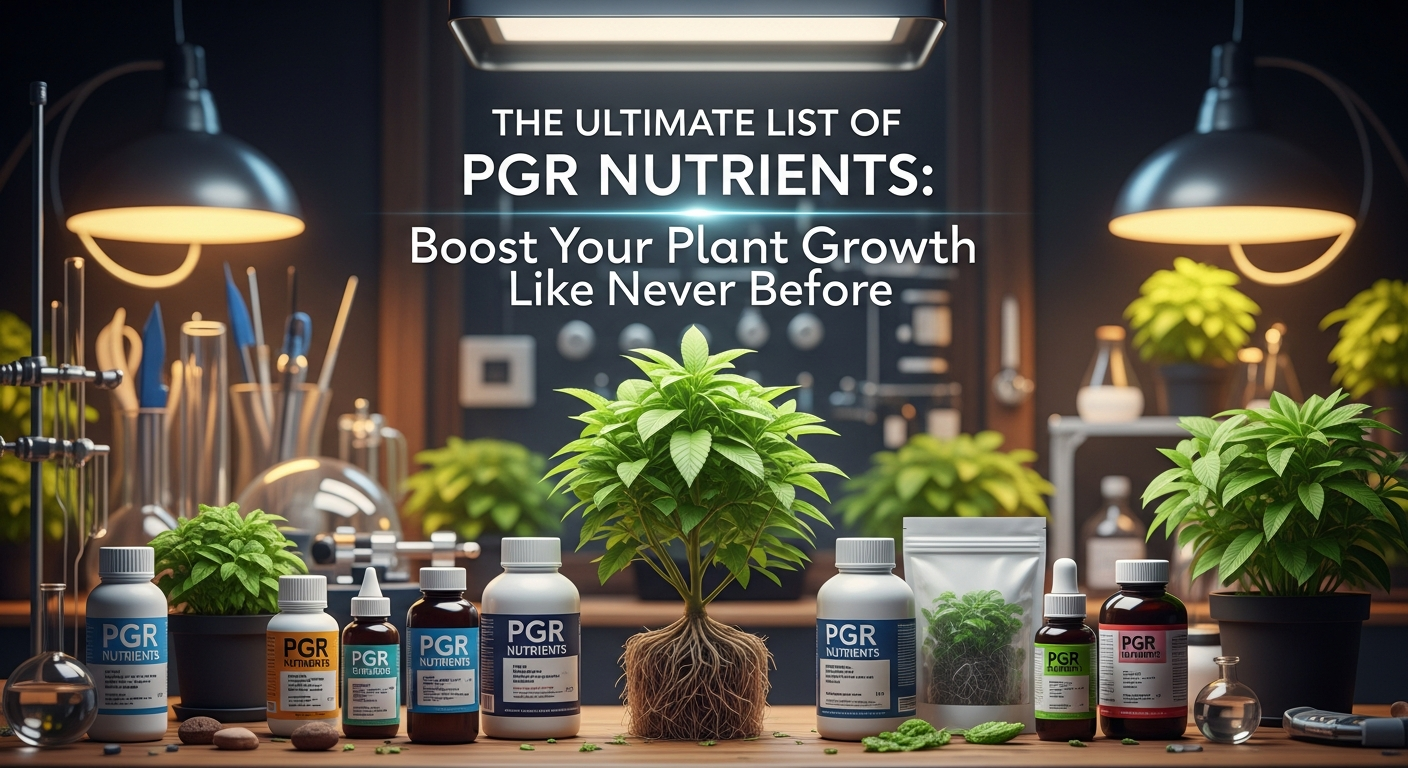
PGRs are powerful agricultural inputs designed to help your plants grow stronger, healthier, and bigger. PGRs are being used in modern agriculture and horticulture and being used to control plant growth at all stages of development, from germinating seeds to harvesting crops.
Some of the most important PGRs for farmers include Auxins (root growth), Gibberellins (stem elongation), Cytokinins (flowering), Ethylene (fruit ripening) and Abscisic Acid (stress resistance). When your crops are healthy and growing evenly, they will produce the best possible yield of food and fiber.
The proper application of PGRs can dramatically increase nutrient uptake and plant growth, and support the development of healthy roots, stems and leaves as well as to promote rapid plant metabolism through cell division. PGRs are effective in very small amounts, and they are very quickly taken up into your plants, providing results that are achieved in the shortest time possible without putting undue stress on the plants being treated.
Not only do PGRs help improve crop yield and quality, but they also improve a crop's ability to withstand adverse environmental conditions. By using the correct combination of PGRs, you will achieve unparalleled results from your farming program. Every application made is an investment in producing healthy plants with a maximum return on the dollar!
Understanding PGR Nutrients: What Are They and Why Do Plants Need Them?
Plant Growth Regulators (PGRs) are either naturally occurring or artificially manufactured. PGRs influence the physiology of the plant so as to control and direct the growth and development of plants, whereas typical fertilizers primarily provide nitrogen, phosphorus and potassium (essential plant macronutrients).
Having a defined list of PGRs allows both farmers and consumers alike to manage their crops with greater efficiency through enhanced plant vigor, balance and productivity. PGRs support plants at every critical growth phase, from early root establishment through harvest.
What Are PGR Nutrients in Agriculture?
Plant Growth Regulators (PGRs) are organic compounds or hormones that play a role in controlling plant processes including cell division, growth and differentiation of stem and root, flowering and response to environmental/biotic stressors. While they are required in very small amounts, their effects on crop performance can be dramatic.
Key Points Regarding PGR Nutrients:
- PGR nutrients will help the control of plant height, branch development, flowering and fruit production
- PGR nutrients will help to enhance nutrient absorption and utilization
- PGR nutrients increase the ability of plants to resist stress (heat, drought, etc.)
- PGR nutrients may be used in combination with PGR fertilizers to maximize their effectiveness.

How Plant Growth Regulators Work Inside Plants
Upon application, Plant Growth Regulators (PGRs) are taken up into the plant through the leaves, roots, or seeds and subsequently translocated throughout the plant system. Within the plant system PGRs interact with other hormones and enzymes to elicit internal responses that regulate growth and development.
How PGRs Internally Function
- Stimulate or suppress cell division and elongation
- Regulate flowering and fruiting
- Balance vegetative and reproductive growth
- Enhance the effectiveness of applied PGR fertilizers
PGRs act at the cellular level so a small amount of applied PGRs can result in noticeable improvement in the health and structure of a plant.
Importance of PGRs for Yield and Crop Quality
In combination with traditional nutritional management programs, PGR (plant growth regulator) fertilizers can lead to improved crop yields and crop quality. The proper use of PGRs helps to produce more uniform plant growth, better efficient utilization of soil nutrients, and the beneficial distribution of plant energy toward optimal plant growth.

By properly selecting from the various types of available PGR nutrients, producers can maximize their profitability while preserving plant health; therefore, PGRs are an essential tool for long-term profitability and sustainability in agriculture.
Comprehensive List of Commonly Used PGR Nutrients
Plants will require specific PGR nutrients in order to grow properly at each stage of their growth, remain balanced, and produce a high yield—just as babies need proper nutrition for growth at different ages. In agriculture, the following list includes the most frequently used PGR nutrients and explains how each one helps plants develop, either alone or in conjunction with other fertilizers as part of a complete PGR fertilizing system.
While each PGR is used at extremely small rates, they all have a large effect on stimulating root growth, shoot formation, flowering, fruiting, and managing stress, making them vital components of today’s agriculture.
Auxins – Root Growth and Cell Elongation Regulators
Auxins are perhaps the most common class of plant growth regulators, particularly in the early stages of development. Root initiation and the controlled elongation of cells are both primarily under the influence of auxins.
Important aspects of auxin use:
- Development of strong, deep roots
- Increased establishment of seedlings and increased survival of transplanted seedlings
- Enhanced uptake of water and nutrients by plants
- Uniformity of plant structure
Auxins are often incorporated into horticultural PGR fertilizer formulations for nurseries, cuttings and young crop production, as they enhance the formation of healthy root systems, which serve as a base for achieving maximum yields.
Cytokinins Cell Division and Shoot Development
Cytokinins mainly affect above ground growth, with their primary functions:
Promote Cell Division and Healthy Shoot and Leaf Development
Balance Between Vegetative (non-reproductive) and Reproductive Development
Reasons Why Cytokinins are Important to Agriculture:
- Promote Rapid Cell Division and Shoot Growth
- Delay Leaf Aging (Senescence) and Improve Chlorophyll Retention
- Increase Branching and Leaf Surface Area
- Improve Flower Production and Fruit Set.
When Combined with Other Plant Growth Regulators (PGRs) & Nutritional Elements, Cytokinins Will Help Maintain the Plant's Health and Improve Photosynthesis and Overall Crop Quality During the Plant's Life Cycle.
Gibberellins, Ethylene & Abscisic Acid
Gibberellins, ethylene, and abscisic acid are examples of plant-gathering research (PGR) nutrients that provide necessary functions of plants from germination to maturity and during periods of stress.

Together gibberellins, ethylene, and abscisic acid make up a total list of balanced PGR nutrients thus, plants benefit from the use of PGRs and adapt to their environment efficiently.
The Science Behind Major Types of PGR Nutrients and Their Functions
Understanding how Plant Growth Regulators (PGRs) promote and regulate growth of plants, such as by influencing flowering and physiological responses to stress, begins with learning about the science behind each of these nutrient categories. Understanding the science of PGR nutrients also helps a farmer select the appropriate PGR fertiliser at the correct growth stage. For example, this article includes a breakdown of the different PGR nutrient types and how each functions in the plant system, as well as the importance of those nutrients in order to grow healthier plants and achieve increased yields.
PGR nutrients provide internal signals to plants to indicate when to develop leaves, flowers, ripen fruit, and conserve energy when stressed.
Auxins and Gibberellins in Vegetative Growth
The main plant growth regulators (PGR) that drive the production of the vegetative portion of plants, especially in the early and active stages of crop growth, are auxin and gibberellin.

Together, these two plant hormones (auxin and gibberellin) provide the basis for most fertilizer programs that utilize PGRs to rapidly create uniformly growing vegetative portions of plants.
Cytokinins for Flowering and Yield Enhancement
Cytokinins will help a plant to move it’s energy from growing and maturing in size (vegetative growth) to producing flowers and being pollinated (reproductive growth). They are vital PGR nutrients at both the flowering and fruit-setting stages.
Cytokinins are known to:
- Promote cell division within buds and shoots.
- Delay aging of leaves and extend the time a plant can remain green post-harvest.
- Encourage retention of flowers and reduce loss through flower drop.
- Increase the size, uniformity and total yield of fruit.
In addition to improving the above characteristics of a plant, when used in combination with a complete and balanced list of PGR nutrients they allow for the maximum yield potential of crops to be achieved due to the strength of flowering and high efficiency of photosynthesis occurring over the growing cycle of the crop.
Ethylene and ABA for Ripening and Stress Management
Ethylene and abscisic acid (ABA) are two important PGR (plant growth regulators) elements that help with the overall developmental stages and response to stress for crops. Therefore, there is no doubt that they play a crucial role in the quality of all crops and provide them with the best chance of survival.
Ethylene:
- Regulates ripening and development of fruit color
- Provides synchrony in maturation for easier harvesting of fruit/vegetables
- Improves both flavor and texture of fruit produce
Abscisic Acid:
- Regulates how a plant responds to stress, including drought and salinity
- Regulates how much water is lost through stomatal closure
- Induces dormancy in plants when conditions are unsuitable for growth
Utilizing these PGR nutrients will assist plants to adapt to environmental stresses and remain of high quality and productivity.

Synthetic vs Natural PGR Nutrients: Which Is Right for Your Crops?
When it comes to feeding babies and an infant's development, we can determine that every stage of a baby's life has its own food types that will aid in development. Just as different foods work best for babies at various times in their lives, different PGR types will impact the growth stages of crops by crop type and the type of farming goals an individual has.
Both synthetic and natural PGR nutrients work on the same core processes of plant growth; however, they differ from each other in the manner by which they are produced, their effectiveness, and how quickly they act when applied to crops.
Synthetic PGR Nutrients and Their Applications
Synthetic plant growth regulator nutrients are formulated in laboratory conditions to provide exact and rapid growth responses. Commonly used in commercial agriculture, they promote uniformity and high productivity in agricultural production.
Key Attributes of Synthetic Plant Growth Regulators
- Synthetic PGN products provide fast-acting and highly concentrated solutions.
- Synthetic PGNs provide reliable and continuous results.
- Synthetic PGNs can effectively be used to control the height of plants; promote flowering and fruiting of plants.
- Synthetic PGNs are extensively used throughout commercially challenged agricultural sectors.
Primary Uses of Synthetic PGR Fertiliser
- To induce roots during transplanting
- To achieve uniform flowering and fruit set
- To achieve proper size and shape control of fruit
- To synchronise the ripening of fruit for ease of harvesting
Synthetic PGNs are extremely efficient when immediate and verifiable results are required.
Natural and Organic Plant Growth Regulators
Plant growth regulators sourced from the environment, such as seaweed, plant extracts, and microbe-based materials are being used more widely in organic and sustainable farming practices.
The advantages of using natural PGRs are:
- They have a gentle, slow-release effect;
- They help promote healthier soils and increased microbial populations;
- Their use reduces the chances of plants experiencing excess stress or overdosing due to high nutrient concentrations in the soil; and
- They can be applied to crops that are certified as organic.
In addition to the above benefits, many of the commonly used sources of natural plant growth regulators include:
- Seaweed extracts (which are high in cytokinins and auxins);
- Humic and fulvic acid; and
- Others include microbial growth stimulators and botanical extracts.
Using natural PGR fertilizers is an excellent approach to increasing the long-term health of crops and their ability to withstand stress.
Choosing Between Natural and Synthetic PGRs
Selection of the correct type of PGR will be dependent on crop type, growth stage, and overall production goals. Most producers will use both natural and synthetic PGRs to produce plants that grow equally and sustainably in harmony with their environment.
Before selecting the right PGR, consider:
- Crop sensitivity/plant's growth stage
- Timing of when you need to see results
- Organic versus conventional agricultural methods
- Environmental and soil health considerations.

How to Choose the Best PGR Nutrient for Maximum Yield and Quality
Maximum yield is determined by the selection of PGR nutrients that provide plant benefits based on its stage of development. Farmers need to match their crop's requirements with the corresponding PGR nutrient(s) on the market today. By utilizing the appropriate PGR fertilizer, growers will see growth enhanced through increased nutrient use efficiency and improved stress tolerance.
An intelligent PGR strategy takes into account; i.e., crop type, stage of development, and their current nutrition program(s).
Crop-Specific Selection from a List of PGR Nutrients
PGRs will react differently for each type of crop that you grow. By choosing crop specific growth regulators you can focus on giving the plant the correct amount of growth and reduce any additional stress from other PGRs that are not intended for that particular crop.
Some Key Factors to consider based on the Crop Type:
- Cereal and Grains - Auxins and Auxins will provide early plant speed and allow for uniformity of height.
- Vegetables - Cytokinins will allow for improved flowering and set of fruit as well as size of fruits.
- Fruit crops - A balanced application of the PGRs will control flowering and retention of fruit as well as ripening.
- Plantations - Utilizing PGRs that aid with stress management such as ABA will give the plant longer term stress tolerance.
Choosing the right PGRs for the appropriate crop type will maximize growth patterns and improve your total market yield.
Growth Stage-Based PGR Selection
Selecting PGRs according to the growth stage of a plant is important to ensure optimal performance.

When using the correct PGR at each growth stage, energy can be efficiently consumed and crop consistency can be achieved.
Integrating PGR Fertilizer with Nutrition Programs
PGR nutrients should work together with traditional nutrient programs rather than replace them for optimum results; integration will allow for improved efficiency of uptake of nutrients by plants and better plant efficiency.
Best practices for integrating PGR's Include:
- Applying PGR and Macro/Micro Nutrients Simultaneously
- Overuse should not be done; small amounts of PGR's are fairly effective
- Timing PGR Applications with Irrigation or Foliar Feeding
- Monitoring Crop Reaction and Making Adjustments to Applications

PGR Application Tips: Dosage & Timing for Optimal Results
Much like a baby grows through the right food in sufficient quantity, so too will all types of plants exhibit best when the correct amount of PGRs is applied at the right application time. A list of PGRs that are going to work very well will not work near as well if the application process is done incorrectly. When PGR fertilizer is applied correctly it will help provide plants with healthy growth, better yield and consistent quality, while putting no stress on plants.
The most appropriate dosage, time, and method of application of PGRs is critically important.
Correct Dosage Guidelines for PGR Nutrients
The PGR nutrients are very active and require only small amounts. You won't see the effects of using too much PGR on your plants, but you may see some effects when you don't use enough PGR.
Here are general recommendations for dosage of PGR nutrients:
- Always follow the manufacturer's recommended dosage.
- When using PGR on younger plants and seedlings, use the lowest recommended dosages.
- Do not mix different PGRs together unless instructed to do so by the manufacturer.
- Always test PGRs on a small scale before using them full scale.

Best Timing for Applying PGRs
Applying plant growth regulators (PGRs) at the proper time is extremely important; plants will react differently when they are at different growth stages.
Here are the ideal times to use PGRs:
- Seedling stage - Auxin-based PGRs will be effective for supporting development of the root system.
- Vegetative stage - Auxins and cytokinins will provide for more balanced growth.
- Flowering stage - Cytokinins will improve retention of flowers on the plant.
- Fruiting and maturity - Ethylene will support uniform ripening of fruit; abscisic acid (ABA) will assist with controlling stress during fruit maturation.
Applying PGRs while the plant is actively growing will result in higher rates of absorption and quicker responses.
Foliar Spray vs Soil Application Methods
The application method chosen is important as it will determine how well absorbed the PGR Nutrition will be by the plant.
Foliar Spray
- Quickly absorbed through the leaves.
- The results are quickly evident.
- This form of application is ideal during the flowering and fruiting phases.
- The product is best when applied during the cooler hours of the day (before sunrise and after sunset).
Soil application
- Slow and steady absorption through the roots (at a uniform rate).
- Provides long-lasting results.
- Promotes root development and resistance to stress.
- This method is best for early-stage plant growth.

FAQs
Q1. What is a list of PGR nutrients?
A list of PGR nutrients includes plant growth regulators like auxins, cytokinins, gibberellins, ethylene, and ABA that control plant growth and development.
Q2. Are PGR nutrients the same as fertilizers?
No, PGR nutrients regulate growth processes, while fertilizers provide essential nutrients; both work best when used together.
Q3. Can PGR fertilizer improve crop yield?
Yes, the right PGR fertilizer can improve flowering, fruit set, nutrient uptake, and overall yield quality.
Q4. Are natural PGR nutrients safe for crops?
Yes, natural PGR nutrients are safe when used correctly and help improve plant health and stress tolerance.
Q5. Can overuse of PGRs harm plants?
Yes, excessive PGR use can cause abnormal growth or stress, so correct dosage and timing are essential.
Conclusion: Transform Your Farming Success with the Right List of PGR Nutrients Today!
Every farmer today will tell you that selecting the correct list of PGR (Plant Growth Regulator) nutrients has been a whole new ballgame for today’s modern agriculture. Done properly, PGR products work on the physiological level of plants by regulating their growth to help drive the nutrient efficiency of the plant, and give the plants a well-balanced development cycle from root establishment to maturity. When combined with other traditional inputs, PGRs give the plant the ability to use the nutrients that are already available to them; therefore, the plant grows strong, and will produce throughout the various stages of development.
Utilizing PGR fertilizer with your existing nutrition program, which allows for the ability to adjust/correct/influence the expected behaviour of the crop to meet specific needs related to flowering, fruit set and ripening, and managing plant stress. Whether you choose natural PGRs, synthetic PGRs, or a combination of both, the benefit is due to your correct selection, proper application quantity, and timed applications of the PGRs. The targeted approach to the use of PGRs will reduce the amount of wasted input, reduce the amount of stress placed on the plant, and provide the highest return on investment to the farmer.
Utilizing the Proper List of PGR Nutrients enables farmers to achieve more yield per acre, produce better-quality products, and have an increased level of resilience against the effects of extreme weather. Appropriate use of PGR technology, through appropriate crop management practices, provides farmers the most leverage, which when combined with proper planning can turn PGR technology into a positive asset and an essential component in the development of sustainable, profitable, and future-oriented farming systems