
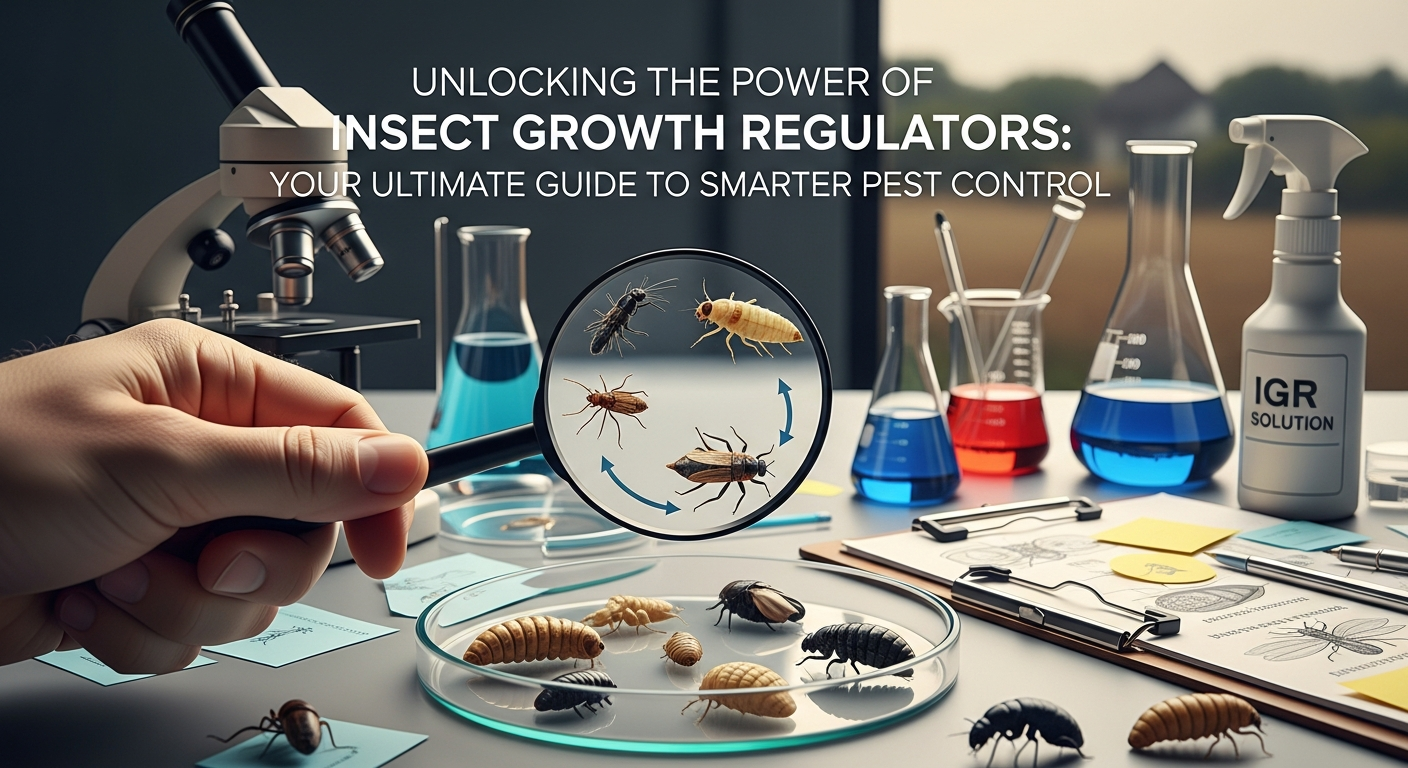
The use of insect growth regulators is a modern, scientifically-backed approach to pest management that focuses on controlling insects in a more intelligent way than just killing them outright. This is accomplished by disrupting the normal development of insects, preventing them from reaching maturity—essentially breaking the life cycle of the target pest.
Rather than simply killing the target pest as with a conventional insecticide (a chemical meant to kill insects), insect growth regulators inhibit a target pest's ability to molt, reproduce, or produce eggs; as such, they are very effective at controlling the target pest while being relatively less harmful to beneficial organisms. Therefore, insect growth regulators are a critical component of an integrated pest management program.
Insect growth regulators also act as a selective insecticide, reducing target pest populations over time rather than creating an immediate population reduction (as can happen frequently with traditional pesticides). By interfering with the reproductive capacity of the target pest, insect growth regulators provide long-term control while requiring fewer repeat applications.
Insect growth regulators offer an advanced, smarter, and more sustainable solution for pest control across all areas of pest control—agriculture and stored-grain protection, public health, and household pest control—allowing you to manage pests in a precise and confident manner, while helping to protect your crops, environment, and resources.
Understanding Insect Growth Regulators: What Are They and How Do They Work?
The insect growth regulators (IGRs) are innovative pest control solutions that employ scientifically proven methods to manage targeted insects effectively and sustainably over the long term by disrupting the natural development patterns of pests instead of killing them quickly as traditional insecticides do through chemical means.
In particular, insecticide growth regulators can aid in situations where a pest problem develops repeatedly. IGRs prevent immature, juvenile stages from becoming reproductive adults by interfering with the normal development cycle of those immature stages. IGRs are used in tandem with other chemicals (conventional insecticides) and are very common among agricultural growers, stored grain product users, public health officials and pest control operators.
Definition of Insect Growth Regulators
Insect growth regulators (IGRs) belong to a category of insecticides that disrupt the normal biological development of invertebrate pests, inhibiting their ability to complete their lifecycle and reproduce. Instead of affecting the neurological function of insects, IGRs affect insects by mimicking or inhibiting the production and activity of key hormones produced by insects.
Key characteristics of insect growth regulators:
- Target eggs, larvae, and nymphal stages of immature insect life cycles
- Inhibit molting, pupation, and reproduction
- Diminish pest populations over time and without the use of chemicals
- Have lower potential to lead to resistance compared to other commercial insecticides
Therefore, insect growth regulators can be viewed as an alternative solution to precision-based insecticides.
How Insect Growth Regulators Affect Insect Development
An insect growth regulator will affect an insect's life cycle at one or more points throughout its development; therefore, as insects do not develop and mature as they should, the overall population will continue to decrease.

This process helps to eliminate pests at the source of the problem (as opposed to simply providing immediate relief, which is the case with most quick acting insecticides).
Difference Between Insecticide and Insecticide Growth Regulator

The Science Behind Insect Growth Regulators: Targeting Pests at the Source
Insect growth regulators (IGRs) represent a breakthrough in effective pest control because they not only kill pests quickly, but they also control pest populations by using the science of how insects develop and grow. Whereas traditional insecticides kill pests by having an immediate impact on the insect's nervous system, an IGR interrupts the process of growth, molting and reproduction at the biological level. This biological rather than chemical method of targeting pests at the stage of their life cycle when they are most vulnerable (eggs and larvae) will help to ensure long-term population control of insects.
Because IGRs work by specifically targeting the stages in a pest's life cycle, they will reduce the number of repeated infestations and the problems associated with resistance, which are common with traditional insecticides. As such, they are an essential component of modern sustainable pest management programs, whether in agriculture, storage or public health.
Juvenile Hormone Analogs
The juvenile hormone analogs (analogs to Juvenile Hormone) represent one of the most common types of insect growth regulators. They imitate the natural juvenile hormone, which controls the transition of an insect from a larval or nymphal stage to an adult.

Unlike the majority of insecticides that provide an immediate lethal effect, juvenile hormone analogs ensure that pests will never reach sexual maturity.
Chitin Synthesis Inhibitors
By disrupting the formation of chitin, which forms an essential part of the exoskeleton of insects, it gives the insect no way to carry out the molting process effectively.
This provides the many advantages of being able to:
- Prevent the insect from being able to carry out molting successfully
- Be destructive to the insect in unstable or developing stages
- Be unusually compatible with larvae
The advantages of using these types of chitin synthesis inhibitors are:
- They are very specialized insecticides acting as insect growth regulators
- They will reduce the number of pests at the development stage
- Compared with conventional methods of treating insects they will have less risk of developing resistance.
This kind of insect growth regulator is especially effective at controlling insects that require frequent molting to achieve similar growth.
Disrupting the Insect Life Cycle
Insect growth regulators disrupt the lifecycle of insects by interfering with the insect's lifecycle. Because they stop development at all stages of development, the insect cannot reproduce and therefore continues to decline over time.

Key Benefits of Using Insect Growth Regulators in Pest Management
Insect growth regulators are an intelligent, responsible and preventative approach to managing pest populations as opposed to simply eliminating them, like most traditional insecticides, which give a rapid yet temporary means of controlling pest populations. IGRs disrupt the developmental cycle of both larval and juvenile stages of an insect, thus providing long-term reductions in the size of pest populations.
Insect growth regulators are particularly beneficial when used in agriculture, in post-harvest storage, as part of public health programs, and as a component of household pest management.Insect growth regulators act on the immature life stages of insects (larva and juvenile) to reduce the frequency of repeat infestations of pest populations and reduce the need for chemical intervention, thereby facilitating more sustainable forms of pest control.
Environmentally Friendly Pest Control
An environmentally responsible method of pest control is by utilizing insect growth regulators - pesticides that work to disrupt the development and reproduction of pests without harming humans, pets, or beneficial insects, when used as directed.

Therefore, using an insect growth regulator as a pest control solution can provide effective pest control while maintaining ecological balance.
Resistance Management Advantages
Repeated application of traditional pesticides leads to resistance. Insect growth regulators (IGRs) can be part of the solution because they work by different means than traditional insecticides.
How IGRs help in the management of resistance issues:
- Do not target the insect's central nervous system.
- Interrupt the processes of growth, molting, and reproduction.
- Much less likely to have resistance develop among pests.
- Can be used in rotation with other types of insecticides.
Therefore, incorporating IGRs into an overall insecticide program will significantly increase the longevity of current insecticides.
Long-Term and Sustainable Control
Regulating insect growth allows for types of pest management support that leads to natural pest population reductions over time, which are usually not initially apparent—by causing immature insects not to mature, it will prevent insects from producing further generations—starting after the very first application—thus eliminating the build up of pests through all future generations as they will be unable to reproduce past the immature stage.
Reasoning for using insect growth regulator systems to promote sustainability:
- Disrupting the insect life cycle
- Reducing the number of insects in future generations
- Limiting the frequency of applications required
- Consistent - long-lasting results

Comparing Insect Growth Regulators to Traditional Insecticides
To understand the differences between traditional insecticides and insect growth regulators (IGRs), it is important to identify their purpose of usage. First, a traditional insecticide is used to eliminate insects quickly whereas an insect growth regulator interrupts the lifecycle of an insect thus affecting their growth and ability to reproduce. Therefore the differences in the manner in which IGRs and traditional insecticides work directly impact their level of safety, efficacy, and overall effectiveness for controlling unwanted pests on a long-term basis.
As a modern and sustainable option, IGRs provide users and pest management companies with an alternative to continuing with the routine use of insecticides through a science based targeted approach.
Safety Profile Comparison
Insect growth regulators have one of the best safety profiles of insecticide products due to their targeting specifically insect hormones and development processes. This fact makes them safer for non-target organisms when used as directed.
Safety Highlights:
- Insect growth regulators only affect insect growth stages
- A reduced level of toxicity to humans, pets and livestock
- A lower impact on beneficial insects than a large number of insecticides.
- A lower amount of residual chemical remaining in treated areas.
Conversely, traditional insecticides operate through their effects on an organism’s nervous system and as a result require greater safety precautions surrounding how they are used.
Effectiveness Over Time
There is also a fundamental difference between the way insect growth regulators and conventional insecticides control pests over time.
Insect Growth Regulators:
- Will not kill the pest immediately but will stop the pest from growing.
- They will prevent pests from having any offspring, thus reducing the overall population.
- These products are designed to provide long-term control of insect populations.
Conventional insecticides:
- Will quickly kill adult insects.
- They will usually need to be re-applied multiple times.
- They can lose effectiveness from becoming resistant to the material.
An insect growth regulator will provide a longer-lasting result than an insecticide.
Cost and Practical Considerations
The initial cost of an insect growth regulator (IGR) can seem high, but, when compared with conventional insecticides, it will often provide much greater value over the long run.

FAQs
Q1. What are insect growth regulators?
Insect growth regulators are pest control agents that disrupt the normal growth and development of insects, preventing them from reaching maturity or reproducing.
Q2. Are insect growth regulators a type of insecticide?
Yes, insect growth regulators are a specialized type of insecticide that target insect growth processes rather than killing insects instantly.
Q3. Can IGRs replace traditional insecticides?
In many cases, IGRs can reduce the need for traditional insecticides, but they work best when used together in an integrated pest management approach.
Q4. Are insect growth regulators safe for the environment?
When used correctly, insect growth regulators are considered more environmentally friendly due to their targeted action and lower impact on non-target organisms.
Q5. How long do IGRs take to show results?
IGRs work gradually, so visible results may take a few days to weeks as insects fail to mature and populations decline over time.
Conclusion: Take Control with Confidence—Why Now Is the Time to Adopt Insect Growth Regulators
Insect growth regulators (IGRs) represent a proactive, innovative approach to pest control because they help manage pest problems at their source—the insect’s life cycle. Conventional insect management uses insecticides that give temporary relief of pests while IGRs, by acting at the developmental level, may prevent the pest from reaching maturity and reproducing. This makes IGRs an effective long-term solution to controlling pests; prevents future infestations, and provides a more effective integrated pest management (IPM) strategy.
IGRs provide IPM providers with a balanced, sustainable alternative to using insecticides and will continue to grow in popularity as consumers become more concerned about pesticide-resistant pests, the negative impacts of pesticide use on the environment, and the unnecessary use of pesticides. The selective action of IGRs on target organisms means that they will be less harmful to non-target organisms, but will also still control target pests effectively. When used as part of an IPM strategy, IGRs provide increased operational efficiency and decreased reliance on repeated applications of insecticides.
Because of all of the previously mentioned reasons, NOW is the best time to start adding IGRs to your modern-day pest control plan. By adding IGRs to your pest management program today, not only will you be able to provide long-term protection and responsible pest control, but you can also rest assured that you will have healthy crops and safe environments, as well as reliable results in the future.