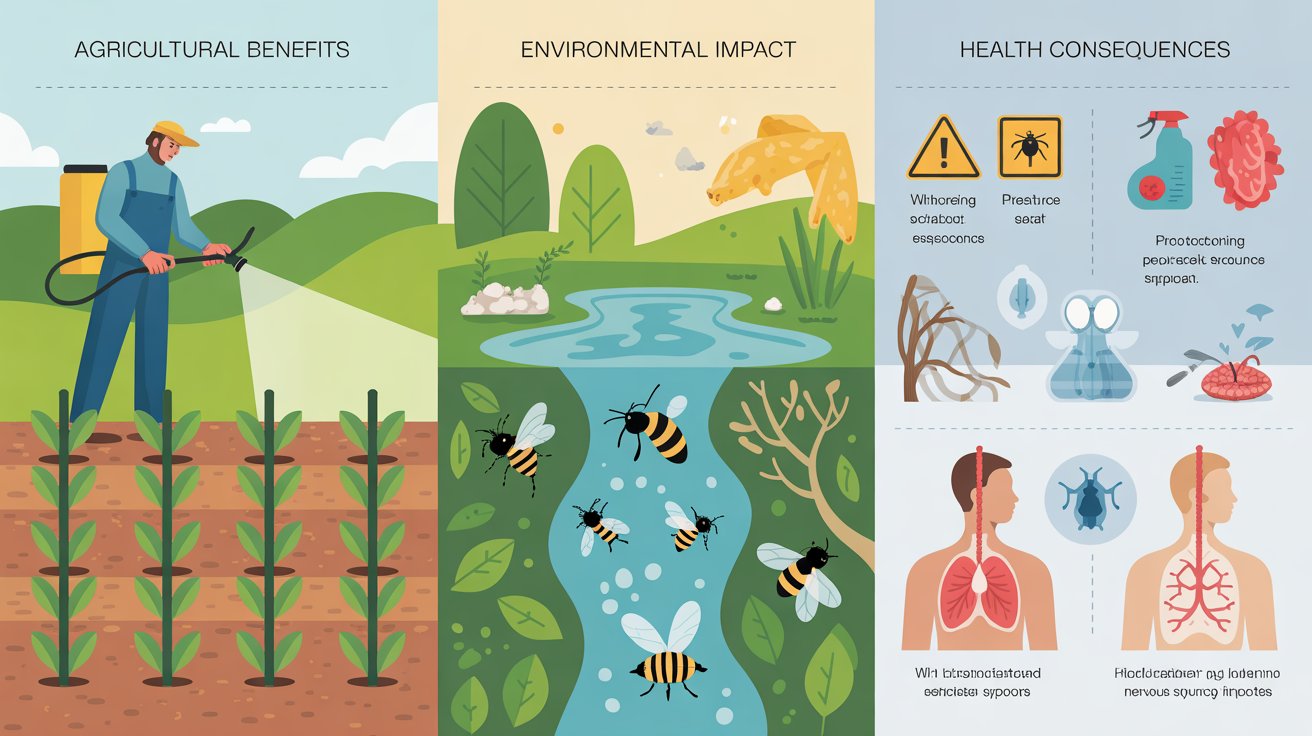
Insecticides are a mainstay of modern agriculture and are as entrenched in farm practices through the generations as basic staples are in the kitchen. These made-from-chemical and natural-based mixtures are used in great measure for crop protection against destructive insects, thereby expanding harvests and assuring food security for its growing populations about the globe. The insecticide value of these chemicals is very similar to that of cereal grains (like millet) in that there is nutrient value (food value) in better protecting a crop against large-scale agricultural losses. The main objective of insecticides is relatively simple - to control insects, reduce crop damage, and assure that each farmer can produce and market food.
On the other hand, the insecticide impact is infinitely more complex than listed benefits. While insecticides help to increase food productivity of the land they also have left behind traces that can enter into soil, water supply and air. These subsequent residues will have an impact on the non-target organisms ranging from beneficial microorganisms increasing crop yield, to bees and other beneficial insects, to aquatic audiences. As time passes, even with the best established uses of insecticides, their environmental impact will trigger changes in natural ecosystems, decrease biodiversity, and disturb the delicate balance of nature. It is a full circle to note, much like a baby's delicate stomach can only take so much, our planetary environment must be just as carefully protected from chemical overload.
Likewise, similar to a traditional grain (millet) being good for one’s health, agricultural practices around insecticide use, done responsibly, can help promote good ecosystems that contribute to planet and population health.
Introduction: Why the Impact of Insecticides Matters More Than Ever
In today's fast-paced agriculture, insecticides have become as common as everyday essentials in farming. Similar to the concern of whether you are choosing a healthy millet for a baby, the concern of what method of pest-control does the most good for our health, food, and environment is important. As pesticides are used increasingly in agriculture, it is important for all of us - farmers, consumers and policy makers - to understand their many effects. They are mitigators of risk, but they are also risk in themselves. As we continue to understand insecticides, we will be better able to make safe farming and healthy living decisions.
Importance of Insecticide Awareness
Knowing about insecticides is similar to reading food labels before you feed someone your baby. You need to know what goes in. To best protect crops, health, and the environment, it is important to know insecticide ingredients, their modes of action, and their potential for long-term effects. Knowing about insecticides also ensures that farmers apply the proper amount at the right time, and it ultimately minimizes the number of residues on food. Knowing about insecticides helps consumers understand the impact of insecticides on their food, and they may feel comforted by the knowledge. Your awareness allows you to receive the benefits of applying insecticides to products while being mindful of food safety.
Why Awareness Deserves a Vote of Confidence (Points)
- Prevents misuse: A mixture with the wrong ingredient or an over-application of a product increases the likelihood of health effects.
- Increases farming safety: Improved safety leads to the increased use of alternative insecticides in farming.
- Safeguards food: Products that result in less insecticide residuals on the food we consume, and understands how to select safe food.
- Builds trust with consumers: People feel safer knowing the practices of farming.
Decreases pesticide load on the environment: Knowledge leads to less insecticides on the environment.
Growing Use of Insecticides in Agriculture
While certain millets are better for different baby needs, certain insecticides are better for different pests. Farmers had been using conventional methods of pest control till they realized chemical insecticides were better for pest management due to faster action and better protection. Climate change has resulted in increased pest numbers, which has amplified the demand for insecticides. The increase can increase the ability to feed more people, but it also increases the risks related to insecticide use and chemical exposure to the environment.
Factors for Increased Use (Points)
- More pests due to climate change
- Large-scale agriculture for food production
- Faster recovery from crop damage with chemical sprays
- Drug-based control is cheaper compared to hiring labor
- High availability of strong insecticides in rural market

Public Health and Environmental Concerns
the nutrient content of our food. Going beyond saving the crop, insecticides are now a part of everyday life. They rarely stay put. They can undergo chemical reaction to create bi-products that are toxic to the environment. It is just as a baby's stomach reacts to foreign food, the environment reacts to harsh chemicals. The negative effects of insecticides can be measured in the soil health, water quality, air purity, and harm to bees and butterflies (non-target innocuous species). When insecticides drift from their desired site, they enter the food chain, creating varied health consequences. This happens by ingestion (food), ingestion (water), or dermal exposure to pesticides. They can cause short-term effects or help develop chronic health conditions.
Public Health Concerns
- Pesticide residue on produce
- Symptoms of poisoning (e.g., nausea, dizziness, skin irritation) Long-term health issues (e.g., hormonal imbalance, nerve damage, or both)
- Risks for pregnant women or children (developing organs and functioning)
- Occupational health risks for farmers (applying chemicals daily)
Environmental Concerns
- Runoff pollution into rivers or lakes
- Reduced soil fertility from buildup of pesticides in the soils
- Death of beneficial insects; including pollinators
- Food chain disruption (i.e., birds, frogs, or fish)
- Being able to develop a pest species that develops resistance (effectively having to use more pesticide products or other self-formulated products)
Smooth short paragraph
The effects of insecticides move beyond killing pests; they also affect from the soil below, and the food on our plate. Sustainability in chains of ecosystem, benefit from insecticides, reduced ecosystem function, and reduced nutrient quality of our food. They do not just help save our crops. Insecticides are now a part of our inevitable risk process. They rarely stay where they belong, as they can produce chemical run-off, and create bi-products that can be harmful in some way to the environment
What Are Insecticides? Types and Common Uses in Modern Agriculture
As a form of protective pest control, insecticides are regularly used by farmers to prevent insects from harming crops, similar to how certain foods promote healthy growth in infants. Insecticides, chemicals or natural products, can restrict insect damage, protect plant growth, and support greater yield in the harvest. Insecticide effects can be observed throughout agriculture, such as on some crops' survival rates, quality of food grown, and farmers' income. Yet, the impact of insecticides on the ecosystem remains an important consideration in weighing types, uses and your ultimate effectiveness for pest control.
Types of Insecticides (Synthetic vs. Natural)
Just as millets vary in texture and nutrition, when it comes to insecticides, you will find different forms each with a different purpose and benefits.
1. Synthetic Insecticide (Chemical-Based)
Synthetic insecticides are made in a laboratory and are typically used on a large scale.
- Organophosphates - Work fast, but are toxic at higher exposure. <br>
- Pyrethroids - Synthetic variant of chrysanthemum flower extract, work better than flower extracts. <br>
- Neonicotinoids - Used in seed treatments to protect the plant from the inside out.
Synthetic insecticides can work quickly with broad protection, which is why they are favored by farmers of high-input crops; however, the more they use them, the more likelihood these insecticides have an impact on soil organisms, waterways, and pollinators. This category has the greatest increased impact on the environment in regards to insecticides as overuse will lead to the death of beneficial insect species and contamination of ecosystems.
Natural Insecticides (Plant- or Microbe-Based)
Natural insecticides are derived from nature, and thought of as softer.
- Neem Oil - Disrupts feeding and reproduction in pest pest species.
- Bacillus thuringiensis (Bt) - Widely used microbe in organic thought farming practices.
- Pyrethrum - Powder that comes from natural chrysanthemum flowers.
Natural insecticides are like millets that are soft and easy on the digestion, they do protect without harming the body. Great option for farmers due to lower environmental impact with the option of using insecticides in line with organic standards, while sowing crop and managing soil in a sustainable manner. Generally will work slower than synthetic versions.

Common Agricultural Applications of Insecticides
Insecticides are applied at different growth stages of the crop (like how different millets are appropriate for different ages in babies)
1. Seed Treatment
Coated seeds provide a protective barrier to young plants from pests that live in the soil.
This practice reduces early plant death which increases the chances of germination. The downside is that the residual effect of insecticides used at planting time, particularly in seed treatment coatings, will build up in the soil and affect underground earthworms and microbial diversity.
2. Foliar Sprays
Insecticides are applied and sprayed directly onto leaves of plants to control surface sap-sucking or boring insects, or arthropods.
Foliar sprays provide a quick fix for controlling infestations of insects such as aphids, mites and caterpillars. Although highly effective, the negative impact of frequent use of insecticides will increase the more an agriculturist applies insecticides in foliar sprays by drift to adjacent ecosystems or bodies of water.
3. Soil Treatment
Soil insecticides are applied by granules or liquids that get mixed into the soil prior to planting.
Paragraph:
Soil treatment insecticides can help limit troublesome pest insects that live underground such as grubs, borers, etc. However, the more that soil treatments are used year after year, the greater the environmental impact that will take place related to soil treatments, potentially killing beneficial fungi and bacteria organisms that assist in building healthy soil.
4. Stored Grain Protection
Stored grain insecticides are used after harvesting to protect grains from insect damage while stored.
Paragraph:
Stored grain insecticides ensure that grains are safe to eat and are not lost during the storage period. Yet at the same time, an agriculturist applying stored grain insecticides may also leave toxic residues on the grain that may later affect consumers of the stored grain.
Pest Control Methods and Their Effectiveness
Much like choosing the best millet for an age-appropriate food, the correct pest control will define the success of crops.
1. Chemical Control
- Chemical control is the fastest and the most commonly used control type.
- Chemical control is effective against heavy infestations.
- Chemical control can create resistance to insecticides if used too often.
Chemical control is an effective measure however a significant impact of insecticides to biodiversity and long-term sustainability.
2. Biological Control
Natural predators are being used like ladybugs, parasitoids, and beneficial fungi.
This is safe for the environment.
Biological control provides natural alternatives to not using insecticides, therefore reducing the environmental impact of insecticides, albeit slower, biological control is much safer for food chains.
3. Cultural Control
Crop rotation
Clean farming practices
Resistant crop varieties
These methods reduce pest habitats naturally and reduce the need for insecticides absolutely, they can reduce the effect of insecticides and total amount of pollution.
4. Integrated Pest Management (IPM)
Combines all methods together: biological, mechanical, cultural, and minimal use of chemical controls.
IPM is like healthy eating, we can ensure we have the healthiest crop we can, with minimal exposure to chemicals. IPM reduces the environmental impact of insecticides and fosters sustainable farming.
The Environmental Impact of Insecticides: Biodiversity and Ecosystem Health at Risk
Similar to how every millet has its own special characteristics, environmental consequences from insecticidal use also exist. Each consequence affects the environment uniquely, but its full impact is multiplied when put together. Ultimately, they reveal insecticide's impact on ecosystems, animals, water, soil, and humans, as a whole.
Meaning, below are the main concerns discussed in clear, simple, and detailed points.
Insecticide Pollution and Water Contamination
Rain or irrigation often helps insecticides wash off farm fields and potentially into heading bodies of water such as ponds, rivers, and lakes.
- These chemicals can dissolve or settle out of solution in the water and disrupt aquatic organisms such as fish, frogs, and microscopic life.
- Drinking water sources can become contaminated and these pesticide reside in the human body.
- Because of the chemical bioaccumulation in drinking water over time, the chemical hazards to animals dependent on flavorful water systems—and ultimately humans—are greatly underestimated.
Water bodies act like delicate systems—just as a baby’s stomach reacts so quickly to the heavy food, rivers and ponds react strongly to a chemical-load stomach's.</*source> when insecticides are introduced into these water bodies, the aquatic vegetation becomes disturbed, oxygen levels decline, and fish are hindered from natural reproduction cycles. Over time, insecticides work to produce a kind of cyclic reaction that works right back to humans. This is one of the strongest examples illustrating the profound environmental consequences of insecticides.
Decline in Pollinators (Bees and Other Species)
Pollinators serve a similar role to Ragi as a "helper" for agriculture.
Overview
- Bees exposed to insecticides lose the ability to find their hive.
- Butterflies, ladybugs, and other beneficial insects are experiencing a decrease in their population.
- Less pollination means fewer fruits, vegetables, and seeds.
Pollinators and bees are gentle workers of nature. For them, when flowers have chemicals sprayed on them, the impact of insecticides is overwhelming, leading to disorientation, paralysis, or death. The decline of any pollinators or insects means there will be less plant reproduction, hurting entire food webs. This has a slow impact on biodiversity and crop success; it shows the damaging impact of insecticides when they are not used appropriately.

Soil Health and Non-target Species Effects
Just as every millet has a role in digestion, soil requires a balance of healthy microbes.
Detailed points
- Insecticides kill more than pests; they kill earthworms, microbes, and beneficial insects.
- Long term, this will reduce soil fertility and nutrient cycling.
- Soil structure will weaken, impacting crop growth.
Healthy soil is alive—with organisms that help plants absorb nutrients. However, if insecticides are used repeatedly, those tiny living helpers die off. This is like taking the fiber out of a meal for a baby: digestion suffers! In the same way, soil is “digestion” and nutrient cycling is diminished. Eventually, the environmental impact of insecticides will produce unproductive, infertile land with poor crop yield and an ever greater dependence on fertilizers.
Human Health Risks Associated with Insecticide Exposure
Like babies' fragile digestive systems, humans have biological systems sensitive to chemicals. The extent that insecticides affect human health depend upon the chemical, the levels of exposure, and the duration of any exposure. As insecticides are protecting crops, any residues from those insecticides will be transferred into the air, water, soil, and food. Therefore, to understand the potential health risks presented by insecticides is extremely important for farmers and consumers as well as various communities.
A discussion of the major health risks is presented here in digestible examples, written as bullets and explained in paragraphs, parallel to your discussion of millet.
Toxicity to Humans and Pesticide Poisoning Symptoms
Insecticides are meant to kill insects, but their chemicals can be harmful to nerve systems as well. The immediate impact of insecticides is usually seen as poisoning symptoms, in cases of high exposures.
Overview
- Affects the nervous system, respiratory system, and skin.
- Symptoms usually occur from minutes to hours after exposure.
- Children and pregnant women are at higher risk.

Insecticides can cause acute poisoning symptoms upon exposure via inhalation, skin contact, or ingestion through contaminated food. Insecticide chemicals inhibit nerve function, leading to symptoms such as difficulty concentrating, nausea, and blurred vision. Farmers experience acute poisoning if they do not use protective equipment (such as gloves, goggles, or pesticide coveralls). The acute effects of insecticides should alert the person to the need for caution and possible medical care. Acute effects may last longer or be worse depending on the strength of the chemical, so it is always best to use insecticides safely and within acceptable dose limits.
Long-term Health Effects from Insecticides
Just as some millets promote bone health and bolster the immune system over time, some insecticides also accumulate in the body and cause gradual, cumulative effects over time.
Key Points
- Chronic exposure is linked to chronic conditions of persistent ill-health.
- Some chemicals build up in fat.
- The effect may not be observable for months, or even years.
Chronic exposure to insecticides is an underlying danger because the effect is not immediate. Over time, insecticides accumulate in body tissues, potentially damaging important organs like the liver, kidney, and brain. Some studies have linked the effects of insecticides to hormone imbalance, developmental delays, reproductive failure, and some cancers. Chronic exposure can be particularly harmful to farmer, workers who manufacture chemicals, and nearby communities. We need to consider chronic exposure to insecticides because the nature of the effects will often be slow and stealthily cumulative. Insecticide exposure begs for the need for reduction or work towards possible safer alternative.
Occupational Exposure Risks in Agriculture
Farmers and farm workers, like the caregivers who prepare daily meals, are much more frequent handlers of insecticides than other groups, so they are the primary group that faces vulnerability and exposure.

Agricultural workers are the most vulnerable group for occupational risk since they mix, spray and store insecticide repeatedly. Multiple farmers work without gloves, masks or eye protections which increases the opportunities for direct contact. Repeated exposure over time results in chronic health problems such as skin illnesses, respiratory illnesses, memory loss and neurological illnesses. The environmental effects of insecticides will also affect workers through contaminated soil and water. Providing access to safety training and protective gear will reduce occupational risk.
The Positive Impact of Insecticides in Agriculture
In today's agriculture, insecticides act like key ingredients in a kitchen - they help growers protect their crops, preserve quality, and provide a safe and plentiful harvest. Given the discussion about the risks of insecticides, the benefits must also be expressed, especially in countries where farming is the primary livelihood. When insecticides are used responsibly, they help farmers become more effective at managing pests, reduce crop loss, and ensure stable food production for growing populations.
Crop Protection and Increased Yield
Just as different millets support different stages of a baby's growth, insecticides support different stages of growth for the crops. Whether that's protecting seed, protecting plants in the growing phase or protecting pre-harvest; insecticides help you grow healthy vigorous plants.
Key Benefits
✔ Minimizing Damage from the Most Important Insects
Insects, like borers, aphids, beetles, and caterpillars, can ruin a crop in just days. Insecticides provide a barrier so that insect damage doesn't reduce crop value or productivity and protects your crop from irreversible damage and helps your plants grow to full potential.
✔ Provide Healthier and Stronger Plants
When you can keep crops protected from pest attacks, plants will be healthier with improved uptake of nutrients, stronger stems, and reduced environmental stress. This allows crops the potential to maximize both quality and quantity.
✔ Help with a Reliable Harvest
Just like when parents fed ragi to a baby, shoppers who buy local favorites expect farmers use good management practices to provide them with reliable harvests. Farmers rely on insecticides to manage their crops over the growing season just like a parent providing ragi every day to facilitate consistent growth.

Pest Control Benefits for Food Security
We rely on millets to support a child’s immunity, and farmers rely on insecticides to support our food system by protecting crops from pests that destroy crops and threaten food shortages.
Insecticides are important in strengthening food security. Here are four avenues:
✔ Reduce the Risk of a Widespread Crop Failure
Pests like locusts, armyworms, and stem borers can result in the total loss of fields. Fast application of insecticides prevents crop failures.
✔ Help Provide a Consistent Food Supply
Countries with limited farmland and dense populations depend on high-yield and monopolized production to maintain stability. Insecticides help maintain levels of stable supply, especially for staple crops like rice, wheat, and maize.
✔ Prevent Post-Harvest Losses
Some pests target stored grains. Proper fumigation protects grain stocks in warehouses, mills, and other storage facilities.
✔ Support Poor Farmers
Small farmers with limited more extra land cannot afford to lose even one kilogram. Farmers without pest control may not have enough food to feed their families or enough income to purchase the next growing season’s seeds or some food.
The harmful effects on the environment from insecticides should be underlayed, but it must not be overlooked how insecticides can prevent famines and political strife that supply famines.
Economic Advantages of Insecticide Use
Just as different millets support specific nutritional needs, insecticides support specific economic needs of farmers, traders, and the agricultural value chain overall.
Economic Benefits
✔ Increased Farming Income
Healthy crops lead to better yield, better quality, and better market price.
✔ Lower Cost of Crop Damage
If crop damage takes place due to insects and diseases, costs can dramatically increase for growers. Preventative costs are infinitesimally less than the costs of crop loss.
✔ Increased Trade Opportunities
When crops are not damaged by pests, they can meet export standards and thus be exposed to international trade.
✔ Increased Agricultural Employment
Insecticide use helps to support jobs related to
- Fertility Manufacturing
- Fertility Retail/Distribution
- Farm Labor
- Storage and Processing Industries

Sustainable Alternatives and Responsible Use of Insecticides
Contemporary agriculture is dependent on insecticides for its functioning; however, increasing apprehension about the consequences of insecticides on human health, soil health, and the environment has caused farmers to move towards safe and eco-friendly practices. Sustainable alternatives help mitigate crop loss while reducing toxic chemical residues that can affect our food, water and soil. Regardless of crop type, making good choices when selecting pest management options, as we would choose gentle grains for babies, allows our agricultural systems to function over an extended period of time.
Outlined below are the best sustainable alternatives and responsible practices to mitigate the deleterious effects of insecticides.
Integrated Pest Management (IPM)
IPM is a smart, systematic process that helps the farmer control pests using multiple tools, rather than just pesticides. An IPM program will emphasize prevention, monitoring, and only intervening with pesticides when absolutely needed.
Key Benefits to IPM
- Reducing the environmental impact of pesticides
- Delaying pest resistance
- Protecting beneficial insects like bees and ladybugs
- Lowering long term costs of farming
- Improved soil health and crop quality
IPM follows the approach of using biological, cultural, and mechanical methods to keep pest populations below unacceptable levels. Farmers will monitor pest populations and pest activity, soil health, and weather, rather than automatically spray pesticides. Only when pest pressure is deemed too high will they use insecticides; using insecticides preemptively is unnecessary and detrimental. By only using pesticide applications when the potential for negative impacts to the crop or damage to the ecosystem is witnessed, the effectiveness of the pesticide becomes much safer and controlled. IPM promotes healthy ecosystems, sustainable crop production, and reduced pesticide residues in food product.
Organic and Biological Alternatives to Synthetic Insecticides
Organic and biological insecticides come from living organisms and natural sources; plant, bacteria, fungus and mineral sources. They are a gentler way to control pests with minimal negative impact on people and the environment.
Top Organic & Biological Alternatives
- Dobson Oil – Disrupts insect growth in over 200 pest species
- Bacillus thuringiensis (Bt) – Kills caterpillars without negatively affecting humans or beneficial insects
- Beauveria bassiana – Fungus that causes insects to succumb to disease
- Chrysanthemum extract (Pyrethrin) – Effective botanical insecticide
- Diatomaceous earth – Physically reducing pest activity
Organic insecticides are effective but gentle options for farmers. Neem oil is effective at disrupting the growth of pests, and Bt targets harmful caterpillar stage larvae - both safe and efficient options. Botanical insecticides are also options, with no toxic residue after activity. The use of organic insecticides greatly reduce the environmental impacts of using insecticides and pose minimal risk to pollinators, soil microbes and humans. Biological methods (insecticide) work with natural forces instead of against them, to create a more sustainable growing system more balanced with nature.

Reducing Chemical Use in Agriculture
Reduced chemical usage will be cleaner for soil, healthier for crops, and better for future generations. It limits the permanent effects insecticides have had on water bodies, air, and food for humans.
Ways to Reduce Chemical Use
- Precision spraying and drones
- Pest-resistant crop varieties
- Mulching and trap cropping
- Soil health with compost and microbes
- Crop diversity and rotation
Reduced chemical use is not about reduced productivity. Most often, it is about being smart and safe in the management of crops and protecting nature as well. Soil that is healthy and biologically active, fights off pests naturally. Seed that is pest resistant reduces the amount of spraying that is necessary. Practices like mulching and trap cropping reduce pest attraction to the farm. These systems can drastically reduce the broader impacts insecticides will have on ecosystems while protecting water, wildlife, and public health.
The Regulatory Landscape: Policies Governing Insecticide Use Worldwide
The use of insecticides across the world is an important component of agriculture; safe use though almost necessarily depends on the existence of supporting frameworks. As there are differences in nutrition and digestibility between millets, there are differences between countries and their approach of putting rules, limits, and standards in place for determining that insecticides are safe and do not create negative consequences. These rules help in freeze framing an aspect of insecticide behavior, if you will, protecting against insecticides crossing into harmful limits, and guiding agricultural practice to stay sustainable. The list below is a misaligned conglomeration of some policies that influence insecticide concerns globally.
Global Insecticide Regulations
International regulations work like the "nutritional labels" of chemical safety — clear, mandatory, and protecting you, much like baby foods that are heavily screened — and provide a global approach to allowing only insecticides that are tested, monitored, and controlled before they make it onto farms.

International regulations assure that insecticides must go through scrutiny and rigorous scientific evaluation before being approved for use. These evaluations address how long chemicals persist in soil — if they contaminate the waters — and the long-term effect of insecticides on human health. It also restricts agricultural chemicals that can harm pollinators, such as bees, and has the potential to mitigate the insecticide's broader environmental effects. So, just like understanding which millet is appropriate for which age group, these intergovernmental organizations help work towards understanding which chemicals may be appropriate for crop use in agriculture.
Government Policies on Pesticides
All countries produce their own regulations--some are constricted for instance Ragi for babies (safe, gentle, and reliable) while there are less restricted options like Jowar for older toddlers.
Key Interventions
- Governments dictate the class of insecticides farmers may use and the doses.
- The policies involve licensing, certification/training, application methods, storage laws, and disposal methods.
- Many countries will promote Integrated Pest Management (IPM) to lower dependency on chemical insecticides.
- Routine monitoring provides assurances that safe levels of insecticides do not exceed maximum residue levels in foods.
Government policies are the backbone of safely using pesticides. They provide direction for how farmers should apply insecticides and prevent misuse that can aggravate the negative impact of insecticides on the ecosystem. These policies also protect the consumer, ensuring that foods sold in markets do not exceed residue limits based on government regulations. Much like how parents give millets in stages, to ensure safe and careful eating, governments also phase out older chemicals and introduce newer options to reduce overall toxicity while balancing productivity for farmers and protection of environmental safety.
Banned Harmful Insecticides
Similar to how certain grains are inappropriate for infants, certain insecticides are unfit for people and the environment. This is the reason they are restricted worldwide given the extreme nature of the health impacts and environmental degradation caused by the insecticides as a group.3

Banned insecticides have consistently shown to represent a detrimental and irreversible ecological effect of insecticides. Insecticides like DDT, and Endosulfan for example, have only been studied as far as the damage to the soil, or far worse - peering into the food chain and eco-health for both fauna and human health studies. Removing such chemicals from agricultural production is no different from withdrawing unsafe foods from an infant's diet; they may provide short-term benefits, but ultimately they do far more harm than good. Most countries today are fully aware of the need for the absence of banned insecticides from imports and how to use them sparingly to preclude their reintegration into the domestic market.
FAQs
1. What is the environmental impact of insecticides?
Insecticides can contaminate soil, water, and air, harming beneficial insects, pollinators, and wildlife while disrupting ecosystems.
2. How do insecticides affect human health?
Exposure can cause skin irritation, breathing issues, nausea, and, with long-term contact, may affect the nervous and hormonal systems.
3. What are the benefits of using insecticides in agriculture?
They protect crops from pests, reduce yield losses, and help farmers maintain consistent food production.
4. What are the alternatives to conventional insecticides?
Safer options include biological pest control, organic sprays, neem-based products, and Integrated Pest Management (IPM).
5. How do insecticides contribute to pest resistance?
Repeated or excessive use allows pests to adapt, making insecticides less effective over time.
6. How can we reduce the negative effects of insecticides?
Using IPM, following proper application guidelines, and choosing eco-friendly alternatives can lower environmental and health risks.
7. What are the regulations around insecticide use?
Governments set safety limits, approve or ban chemicals, and enforce guidelines on application, storage, and residue levels.
Conclusion: Making Informed Choices About the Use and Impact of Insecticides
The application of insecticides has become an essential part of modern agriculture, allowing farmers to control pests, protect crops, and establish food production for millions. Understanding the broader ramifications of insecticides, however, is critical for ensuring long-term safety of environments, both human and ecological. When we understand the impact that insecticides have, from the good of increased production to the bad of harming ecosystems, we can make informed choices. This can show farmers, policymakers, and consumers that there are means to have a productive agriculture system that does not contaminate water, degrade soil or disrupt biodiversity.
At the same time, recognizing the impacts on the environment of insecticides can lead us to more sustainable alternatives and non-chemical methods. The plummeting populations of pollinators, the contamination of soil and water and their permanent nature in ecosystems provide clear evidence that the shortcut to minimizing insect pests does not come without risks. Demonstrating integrated pest management (IPM) or using organic methods for pest control or using formulations that are reduced risk can help protect crops in a manner that limits harm to natural systems or detrimental to the functioning of them.
Ultimately, making an informed choice is about recognizing a balance between agricultural and ecological needs. Each choice whether it is simply choosing a safer insecticide, the correct application method time, support for regulation, each of those helps lessen the environmental downside of insecticides on agriculture.