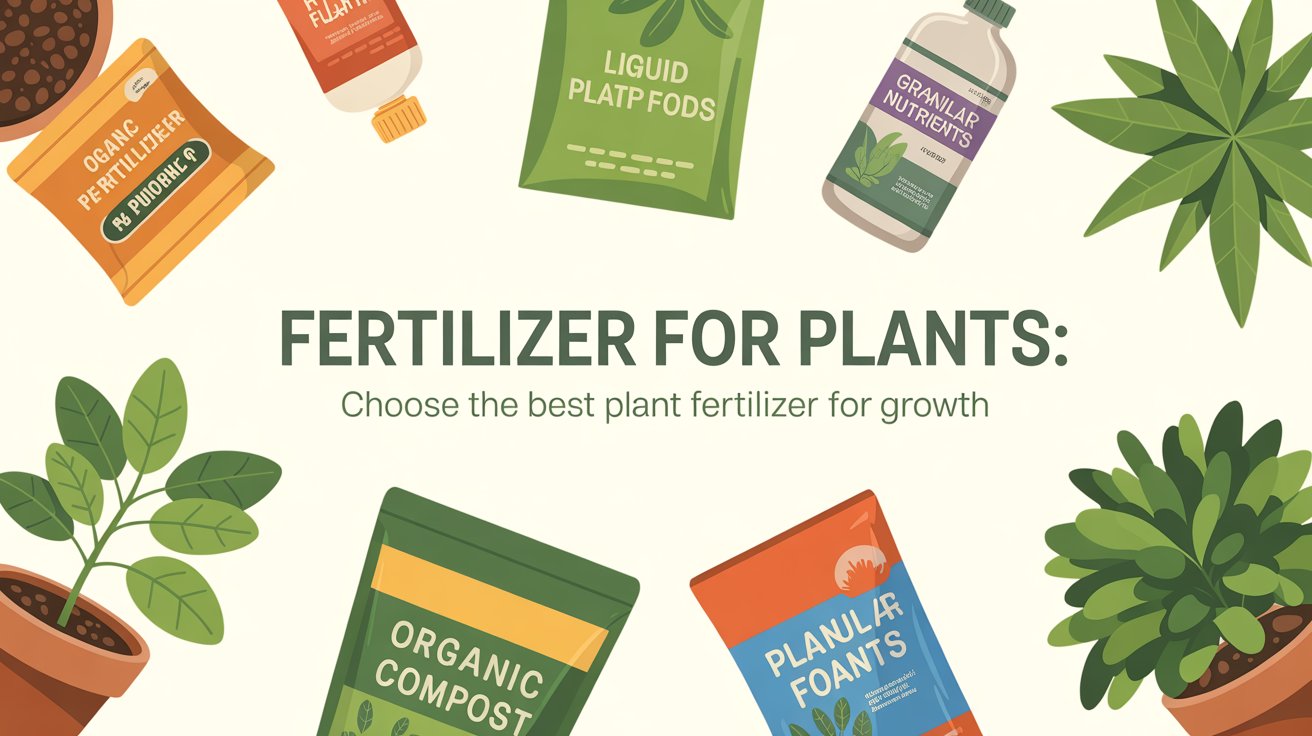
Infertility for plants is an important factor for healthy, lush, and vibrant growth.
Essential nutrients such as - Nitrogen, Phosphorous, and Potassium along with other trace minerals add interest to plant fertilizer as an important component of every gardener’s regimen.
Whether fertilizer for plants is intended for leafy greens, flowering plants, or fruit-bearing plants, an appropriate fertilizer for plants contributes to healthy and strong roots, beautiful blooms, and abundant harvests.
Businesses offer every type of fertilizer ranging from organic compost, and seaweed extract to balanced NPK blends, all to replenish the soil and ensure sustained growth.
When fertilizers are used regularly, the plants’ vigor returns with improved color, growth disciplines, and sustainability – making for a greener, healthier garden naturally!
Understanding Why Fertilizer for Plants is Essential
Plant fertilizer serves as food for your green companions. It provides the nutrients necessary (for them) to grow, bloom, and produce fruits.
Soil contains the base, but often will not contain the balanced nutrition when used continually. A good plant fertilizer can be beneficial and quickly put back that essential ratio of nutrients and enhance the fertility of the soil.
When applied correctly, fertilizers can help keep the balanced nutrients to support a strong root system, fruitful foliage, and showy flowering. Regardless if you have a home garden or are in charge of a large fertilizer plant and large scale agricultural crops, what you nourish with is the difference in the success of your plants.
The Role of Fertilizer in Plant Nutrition
All plants, just like we do, require specific vital nutrients for healthy growth. These vital nutrients are usually categorized into three groups:

Balanced fertilizer for plants ensures that these nutrients are supplied in the right proportions to the plants. For example, nitrogen encourages leaf growth, phosphorus helps root and flower development, while potassium encourages the growth of fruit and seeds.
The plants lacking these nutrients will display signs of weakness - yellow leaves, little flowering, or poor growth; this highlights the importance of applying plant fertilizer at the correct time and applying it properly.
How Fertilizer Plant Boosts Growth and Soil Health
A fertilizer plant does more than support plant health. It rejuvenates the soil as well. As you continue to plant, the soil nutrients become depleted and crop production declines because the crops are weak and poorly nourished. Fertilizers bring these nutrients back, creating an ecosystem in the soil.
The following are ways fertilizers assist with both plant growth and the health of the soil.
- Improved Root Strength: Fertilizers produce soils rich in nutrients, and these soils encourage strong and deep roots.
- Stimulated Microbial Activity: Organic fertilizers provide nutrients to beneficial bacteria that assist plants with nutrient uptake.
- Increased Water Holding Capacity: Balanced nutrition helps to build soil structure, which may improve loosening of the soil allowing for better air/moisture exchange.
- Reduced Nutrient Deficiency: Fertilizers replace minerals that may have been depleted by continuous cropping, vegetation, or erosion.
- Support Sustainable Food Production: Organic plant fertilizers help reduce the application of harsh chemicals while allowing continued production.
Consistent use over time of good fertilizer will provide improved nitrogen or mineral fertility, plant growth, and, ultimately, soil fertility long term—flowers, fruits, and vegetables.
Key Benefits of Using Fertilizer for Plants
Selecting the appropriate fertilizer for your plants helps to keep your garden or field healthy and productive through the growing season.

To summarize, plant fertilizer functions as a growth enhancer, immune booster, and soil protector — all-in-one.
By selecting the proper fertilizer plant products, you will ensure that every seed you sow becomes a healthy, thriving plant that reaches its full potential.
Types of Fertilizers: Finding the Perfect Match for Your Garden
Fertilizers are available in many forms, each form serving a particular function that can support plant health, soil balance, and long-term sustainability of plant growth. Whether you are growing houseplants, vegetables, or ornamental flowers, it is essential to understand the kinds of fertilizer for plants to apply the correct type of fertilizer for your desires and achieve the best results.
Now, let’s investigate how different fertilizers work, and understand what makes each the best plant fertilizer for unique needs.
Organic vs Synthetic Plant Fertilizer
Explanation in Detail:
Organic fertilizers for plant use nourish both the soil and plant, ultimately contributing to increased soil fertility and moisture retention for the sustained use of the nutrient. An organic fertilizer will work slowly to ensure sustained plant growth. Synthetic plant fertilizers, in contrast, react quickly. They deliver nutrients directly into plant roots without delay for immediate improvements.

Use organic if you are looking to enrich your soil naturally; if you want short gains in plant recovery or will visibly see growth in your plant in days, you would want to use a synthetic fertilizer. Often a combination of both provides the best results.
Liquid vs Granular Fertilizer for Plants
In-depth Description:
Liquid fertilizers supply quick results—particularly during growing seasons. They are easy to apply and provide fast recovery from stress.
Granular fertilizer, on the other hand, provides more extended benefits. They trigger nutrition over time and will improve root health and growth.

To achieve the most results, many gardeners will combine - using a liquid fertilizer to meet immediate feeding requirements and then following with granular fertilizer for persistent nutrition.
Slow-Release Fertilizers and Specialized Fertilizer Plant Options
Slow-release plant fertilizer supplies nutrients more evenly than conventional fertilizers, allowing consistent plant feeding without the risk of over-fertilization. It provides an ideal and intelligent way to maintain a garden long-term.

At the same time, modern fertilizer plants are manufacturing highly specialized fertilizers that cater to the precise needs of the crop and maximize yield and quality. Fertilizers exist for any plant, whether it's a rose, succulent, or tomato, to help create the ideal nutrient balance.
Key Nutrients in Fertilizer and Their Role
Fertilizer for plants delivers important nutrients that sustain every moment of a plant's life — from root initiation and development through flowering and fruiting. A balanced fertilizer for plants consists of three major macronutrients: Nitrogen (N), Phosphorus (P), and potassium (K), as well as important micronutrients such as calcium, magnesium, iron, and zinc for plants.
Below is a summary of the key nutrients and their specific roles in promoting plant health:

When you apply a quality fertilizer for plants that contains balanced nutrients, you can rest assured that every leaf, root, and flower will receive the nutrition that it naturally receives.
NPK Ratio Explained and Its Importance
When reviewing the label of plant fertilizer, you often see three numbers, such as 10-10-10 or 20-5-10; these numbers refer to the NPK ratio:
N is for Nitrogen
P is for Phosphorus
K is for Potassium

Having a good NPK balance will sustain prolific growth, better yields, and sustain health. Fertilizer plants engineer their products to obtain this balance for optimal use.
Micronutrients in Fertilizer for Plants
Even though we cannot overlook the importance of macronutrients, micronutrients are like secret superstars working in the background — critical and needed in small amounts, but still very important for balanced nutrition as well. Quality plant fertilizer will have trace minerals to avoid nutrient deficiencies and develop strong metabolic processes.
Here are a few examples of the micronutrients you will need:
- Iron (Fe): Preventing yellow leaves and promoting chlorophyll production.
- Zinc (Zn): Assists in growth hormone production and lengthening internodes.
- Manganese (Mn): Helps improve nitrogen metabolism and the action of enzymes.
- Copper (Cu): Works to increase lignin formation to strengthen stems.
- Boron (B): Increases flower and fruit formation.
- Molybdenum (Mo): Assists in converting nitrogen to usable form.
In conclusion, what you are doing by adding these trace minerals is making sure that each cell is functioning properly so that your plant will perform in many ways — color, strength, and production.
How Fertilizer Plant Ensures Complete Nutrition
A contemporary fertilizer facility merges scientific principles with sustainable practices to maximize and provide thorough nutrition for virtually every kind of plant, whether it be a crop or decorative garden plant.
Below is the way a modern fertilizer factory sits everything up to make the right balance:
- Precise Formulations: Each plant fertilizer is precisely analyzed and tested for the NPK ratios and trace minerals prior to being packaged.
- Uniformity of Nutrients: All granules or liquid blends are developed so that their nutrients distribute evenly throughout soil layers.
- Slow and Fast Release: Each controlled formulation of granules can also ensure adequate nutrient release throughout the growing period.
- Eco-Friendly to Nature: The majority of fertilizer factories today use organic sources; compost, bio-stimulants, and extracts to provide nutrients and improves the performance of soil health.
- Soil Specifics: All custom formulated products are based on local soil tests to combat the deficiencies.
You can guarantee healthy, rapid growth and cement long-term fertility by applying the appropriate fertilizer to a plant. Healthy gardens in a quick way lead to satisfactory harvests and a better world.
How to Apply Fertilizer Correctly for Maximum Results
Applying plant fertilizer correctly guarantees that your garden will absorb the nutrients efficiently producing healthier roots, flowers, and overall growth of your plants. Knowing the correct application methods can be the distinction between lush foliage and stunted plants.
Here are some guidelines for applying fertilizer for plants based on the best results for your plants:
- Read the Directions Carefully Pun intended – Each fertilizer is a different ratio of nutrients and you should understand your ratios before applying.
- Prepare the Soil – Prior to adding the fertilizer for plants, loosen the soil to encourage nutrients to penetrate.
- Put it Around the Root Zone – Spread the fertilizer evenly around the base and not on the stem or leave directly.
- Water After Fertilizing – Watering helps dissolve nutrients and allowing them to be transported quickly to plant roots.
- Watch Regularly for Growth – Watch how your plants respond and adjust the frequency or amount as needed.

Fertilizer Application Tips and Techniques
Proper method is as important as product quality in achieving the utmost use from your fertilizer plant products.
- Uniform Mixing: Apply fertilizer so that they are evenly distributed to prevent imbalances in nutrients.
- Right Tools: Hand sprayers can be used for liquid fertilizer and spreader for granule fertilizer so that it is to apply fertilizer uniformly.
- Use a Combination of Organic and Inorganic: Mixing organic compost fertilizer and mineral fertilizer for your crops can enhance soil structure and fertility.
- Fertilizer for Growth Stages of Plants: Young plants benefit from nitrogen-rich fertilizer while flowering plants benefit from phosphorus fertilizer and potassium fertilizer.
Tip: Apply fertilizer early morning or late evening to help the nutrient components avoid evaporation and prevent burning of the leaves.
Timing and Frequency of Fertilizer Plant Use
The timing of fertilizer application for a plant is dependent on the type of plant, the soil condition, and climate. When fertilizers are applied during the proper timing, nutrients will always be available to plants at the period in which they need the nutrients the most.
During the Seedling Stage: Once roots are established, a mild organic or liquid fertilizer can be used accordingly.
During the Vegetative Stage: A nitrogen-rich fertilizer can be applied every 15-20 days to encourage rapid growth.
During the Flowering & Fruiting Stage: A phosphorus and potassium-rich fertilizer can be applied so plants will increase bloom and yield.

Avoiding Over-Fertilization and Ensuring Safe Us
Excess fertilizer may affect roots, get on the leaves, and ruin soil balance—making your fertilizer less effective for plants.
Here are some ways to safely use fertilizers:
- You will want to start small and then only increase if necessary:
- Take note of any white crust on the surface of the soil: This is salt that has built up from excess fertilizer—flush it away with water.
- Do not fertilize sick or dying plants; wait for them to recover or be adequately watered.
- Do not fertilize during peak summer or frost; moderate temperatures are the best time to fertilize because plants absorb nutrients better.
✅ Safe Practice: Use organics, like compost, cow dung, or biofertilizer plant extracts, to promote long-term soil health.
Troubleshooting Common Plant Problems Related to Fertilization
The dream of every gardener is to have plants that have vibrant green foliage, flowers that are bursting with color and a plant with robust root systems. However, there are sometimes challenges even with the best plant fertilizer and certain reasons, such as unbalanced feeding, when to apply fertilizer, or even soil management. Knowing how to diagnose or fix plant fertilizer and plant fertilizer applications will bring the garden back to life. Here are some typical challenges and solutions associated with the plant fertilizer and for fertilizer plant applications.
Identifying Nutrient Deficiencies in Plants
Plants rely on key nutrients like nitrogen (N), phosphorus (P), and potassium (K) for growth. When any of these are lacking, your plants will show visible signs of distress.

✅ Tip: Regular soil testing helps identify nutrient imbalances before they become visible problems.
Signs of Over-Fertilization in Fertilizer Plants
While nutrients are important, excessive use of fertilizer for plants can lead to “nutrient burn” or toxicity if the salts from plant fertilizer accumulate in the soil and harm the roots.
Signs of Over-fertilization:
- Leaf burn- Brown or crispy edges on the leaves.
- Wilting when there is moisture. Salt buildup is damaging the root's ability to take up moisture.
- White crust on soil surface. Residue left over from excessive chemical fertilizer applications.
- Slow growth or dropping leaves. Overload of nutrients is impacting the plants normal metabolism.
Solutions:
- Flush the soil with clean water to leach salts out of the soil.
- Don't apply any fertilizer for at least 2–3 weeks.
- Consider old fashioned organic or slow release plant fertilizer options.
- Mulch soil to help retain moisture naturally.
Remember: More fertilizer doesn’t mean faster growth—it can actually slow it down.
Correcting Common Fertilization Mistakes
Even experienced gardeners can make mistakes when using fertilizer for plants. Below are frequent errors and how to correct them effectively:

Sustainable and Eco-Friendly Fertilizer Options
Fertilizing plants has advanced much farther than chemical-based fertilizers. These days, gardeners and farmers are looking for biodegradable, eco-friendly plant fertilizers that feed the soil and keep nature healthy.
These eco-friendly fertilizers are usually made from bio-renewable and biodegradable resources that help the soil obtain nutrient values, while not polluting soil or waterways.
Eco-friendly fertilizers usually can be compost, seaweed extract, bone meal, or even worm castings -- natural sources of necessary mineral and organic nutrient values to improve the soil for long-term health of plants.
It's a great solution for gardeners who want wonderful gardens, while not sacrificing the environment.

Sustainable fertilizers are an excellent investment for anyone who supports plant health, and supports a healthy planet.
Benefits of Organic Fertilizer for Plants
Organic fertilizers can feed your garden using materials from either plants or animals. Organic fertilizers use slow-releasing nutrients. Organic fertilizers are “safer” since they are less damaging to plants than chemical fertilizers because they are much more balanced than chemical fertilizers and they are slow-releasing.
Here’s why you should consider organic fertilizer for your plants to revolutionize your garden:
- Increases Soil Health – Organic matter improves soil structure, aeration, and water retention.
- Encourages Microbial Growth – Natural microbes in the soil use organic nutrients to keep plant roots happy.
- Reduces Over-Fertilization Issues – Nutrients in organic fertilizers are slow-release, reducing or eliminating root burn.
- Increases Taste and Yields – Fruits and vegetables grown organically often have more flavor and nutritional density.
- Natural and Safe for the Environment – Organic fertilizers do not contaminate groundwater and do not have an adverse impact on bugs that are good for the environment.
To sum it up, all of these traditional organic fertilizers will create an ecosystem that helps everyone (plants, soil, microbes) thrive together.
Using Fertilizer Plant Responsibly
Although fertilizers can cause growth, overuse can cause damage to both the plants and the planet. A conscientious gardener knows they need a measure of balance.
To effectively and responsibly use any plant fertilizer:
- Test Your Soil: Before any fertilizer for plants is used, it’s best to know your nutrient levels.
- Use the Recommended Amount: Too much fertilizer can damage the root or contaminate your soil.
- Use at the Right Time: Applying fertilizer early in the morning or later in the evening is better than during the heat of the day to minimize evaporation.
- Use the Best Type: Organic or slow release will be better for long-term use!
- Use Composts or Apply Mulch: This will allow better moisture retention, and it will reduce the use of synthetic fertilizer.

Responsible fertilizer usage in the plants you are fertilizing will ensure that your fertilizer strategy is fostering growth in a way that does not degrade the soil or contribute to a loss of biodiversity.
Reducing Environmental Impact with Eco-Friendly Fertilizers
The excessive and unnecessary use of synthetic fertilizers has resulted in contaminated water and, ultimately, greenhouse gas production, along with soil depletion. Fortunately, switching to eco-friendly fertilizers enables people to do their part for the environment without sacrificing productivity.
Here’s how you can take steps to lower your environmental impact:
- Use Biodegradable Fertilizers: Fertilizers that are naturally biodegradable decompose and do not leave toxic residues behind.
- Avoid Runoff: Fortifying your plants with fertilizers should only be done when the soil doesn’t feel wet, even prior to a rain forecast.
- Use Organic Growing Practices: When possible, enrich the soil with compost, rotating crops, or mulching techniques.
- Use Locally Grown Fertilizers: If you purchase fertilizers locally, there will be a lower carbon footprint due to transportation, good for the planet, in addition to supporting a local economy and growing the local circular business economy.
- Recycle Food Waste: Kitchen vegetable cuttings and peels can be composted into homemade fertilizers.
Implementing all of these two steps back-to-back is a small contribution to a bigger sustainable future: where plants thrive and the planet is still virtually protected from using synthetic fertilizers.
FAQs
Q1 What is the best fertilizer for plants?
The best fertilizer for plants is one that balances nitrogen, phosphorus, and potassium (NPK) while matching your soil’s nutrient needs. Organic options like compost or vermicomposting are great all-rounders.
Q2 How often should I use plant fertilizer?
Most plants need fertilizing every 2–4 weeks during their active growing season, but frequency depends on the plant type and fertilizer strength.
Q3Can I use the same fertilizer for all plants?
Not always — leafy greens need more nitrogen, flowering plants need more phosphorus, and fruiting plants need balanced NPK, so choose fertilizers accordingly.
Q4 How does fertilizer plant improve soil health?
A good fertilizer plant enriches soil with essential nutrients, supports beneficial microbes, and improves soil texture for better water retention.
Q5 Are organic fertilizers better for my garden?
Yes, organic fertilizers release nutrients slowly, enhance soil structure, and are eco-friendly—making them ideal for long-term garden health.
Q6 over-fertilization harms my plants?
Yes, too much fertilizer can burn roots, cause leaf yellowing, and reduce nutrient absorption, ultimately stunting plant growth.
Q7How do I choose the right fertilizer for different plant types?
Match the fertilizer to the plant’s needs—use high-nitrogen for greens, high-phosphorus for flowers, and balanced fertilizers for fruits and vegetables.
Conclusion: Give Your Plants the Nutritional Advantage with the Right Fertilizer Choice
Selecting the correct fertilizer to feed plants is not just an act of gardening, it is a commitment to good soil health and long-term plant health. Just like the human experience, plants need a range of nutrients in balance to be healthy. A good plant fertilizer consists of nutrient elements such as nitrogen to promote leafy plant growth, phosphorus for strong roots and flowers, and potassium for vigor and disease resistance. When your plants have the right nutrients, they will grow healthy, strong, and productive.
Whether you are growing vegetables, ornamentals, or indoor houseplants, it is most important to know their unique nutrient needs. Applying the correct type of fertilizer at the right growth stage will provide the most efficiencies and less waste.
Additionally, using some organic fertilizer plant options such as compost, vermi compost or bio-fertilizers, can be a benefit to both plant health and a cleaner environment overall.
Ultimately, the simple secret to a lush and healthy garden is good quality, balance, and sustainability of all of your inputs. By the simple act of providing the appropriate fertilizer you are not just feeding the plant, you are stimulating all of the life from the roots up. Therefore, give your plants the nutritional upper hand and let your garden become a thriving green space.