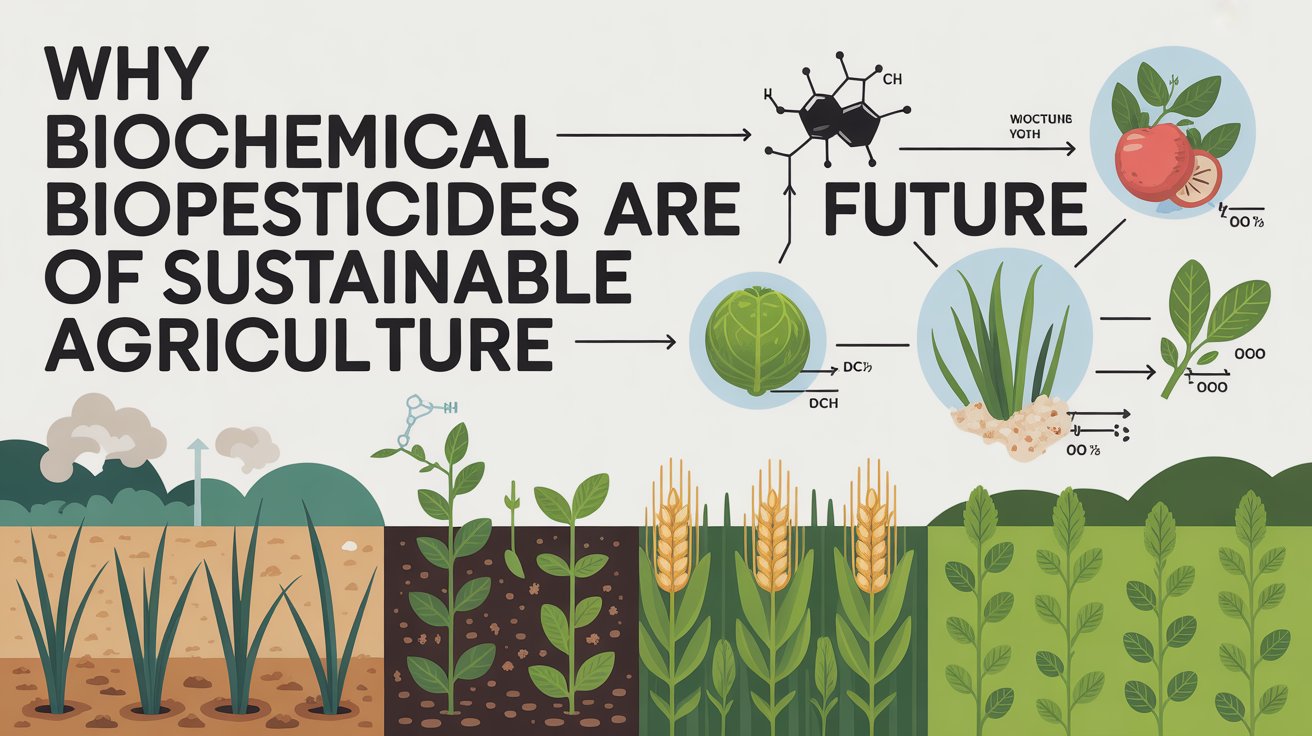
Pheromones and other natural compounds derived from plants can yield pest control strategies using a more eco-friendly means than traditional chemical pesticides, which kill pests through toxic means. Instead, biochemical biopesticides disrupt pests’ behaviour, eating patterns, and reproduction.
Biochemical biopesticides can be made up of plant-based oils and extracts, as well as pheromone traps. They are 100% biodegradable, leave little or no residue on crops, and do not harm beneficial pests like bees, making them an ideal solution for organic and sustainable farming.
Due to their targeted and environmentally safe composition, the use of biochemical biopesticides will help maintain soil quality, minimize pest resistance formation, and support long-term crops. Biochemical biopesticides will be an increasing component of sustainable farming because of consumers’ demand for food with very little or no residues and sustainable food systems.
Understanding Biochemical Biopesticides: Definition and How They Work
Biochemical Biopesticides are a specialized subgroup of biopesticides where naturally occurring materials are used to control pests without introducing living microorganisms into the environment. They work via altering a pest's behavior, growth, or reproductive capacity as opposed to being directly toxic and killing them.
Due to the greater emphasis on sustainable agricultural practices, biochemical biopesticides have become increasingly important as eco-friendly alternatives that do not leave any chemical residues on crops.
What Are Biochemical Biopesticides?
Biopesticides (or biochemicals) are pesticides that are produced from natural sources (i.e. plants) and have a twofold function to control pest populations by controlling their populations while also being less harmful than chemical pesticides (to both the environment and people). All biopesticides may be used in both organic and integrated agricultural systems.
Examples of the common features of biopesticides:
- All biopesticides must be produced from materials found in nature.
- All biopesticides must be non-toxic to humans and other animals.
- All biopesticides must be biodegradable/non-toxic to wildlife.
- All biopesticides must attack only those pests that they are intended for.
Some examples of biopesticides include:
- Neem oil extract
- Essential oil extracts from plants
- Use of insect pheromones to disrupt mating areas.
- Natural growth regulators.
Farmers can utilize biopesticides as an alternative to synthetic chemical products that are available today.
Biochemical Mode of Action in Pest Control
Biochemical biopesticides have a different mode of action compared to chemical pesticides. Biochemical biopesticides work on the principle of changing the insect’s behaviours and biological systems rather than poisoning them.
A Biopesticide’s Pest Control Modes of Action:
- Repelling Insects from Crops
- Disturbing Insects’ Mating Using Pheromones
- Stopping Insects from Feeding
- Disrupting Insects’ Growth and Development
Because of the targeted nature of biochemical compounds as biopesticides, they will gradually reduce pest populations while not harming beneficial insects or soil health.
How Biochemical Biopesticides Differ from Microbial Biopesticides
Although both fall under the category of biopesticides, biochemical and microbial biopesticides differ in composition and action.

The Key Benefits of Using Biochemical Biopesticides in Modern Farming
Modern agricultural needs require pest management systems to be safe and effective, and environmentally sound; chemical biopesticides can satisfy these needs by using targeted pest control that does not involve harsh synthetic pesticides.
As a significant product category within the biopesticide family, biochemical biopesticides allow farmers to maintain their productivity and support their ecosystems and the quality of our food and the health of people that eat food from farms that use cultivation techniques such as conventional agriculture.
Eco-Friendly and Non-Toxic Pest Management
The primary benefit associated with using biochemicals (bio-pesticides) as an alternative to synthetic (conventional) forms of pest control is that they do not harm the environment.
- This is achieved by deriving these substances from naturally occurring plant extracts or organic materials (biochemical or Bio Pesticide) which leaves minimal residue on the environment.
- Biochemicals (bio-pesticides) will not cause pollution; they do not contaminate land or waterways.
- Biochemicals (bio-pesticides) support soil micro-organisms.
Examples of biochemical (bio-pesticide) products like neem oil and pheromone type products work to manage pests through repelling and disrupting pest behaviour instead of killing them. Therefore bio-pesticides are great for sustainable and regenerative farming practices.

Reduced Chemical Residues on Crops
Formatting changes the appearance of your written work and layout usually alters how the reader perceives your message. Food safety has become a worldwide issue and biopesticides provide great solutions to this.
What the benefits of biopesticides are for cleaning up produce are:
- No/very little toxic residues left behind
- Break down rapidly after being applied
- Meet export regulations
- Consumers are more likely to trust the quality of crops treated with biopesticides
For example, using plant-derived insect repellents you will use fewer chemical products to prevent pests from damaging crops.
Crops treated with biopesticides derived from raw materials are not as potentially hazardous for people as conventional pesticides and as a matter of law they meet the required pesticide registration standards.
Safety for Farmers, Consumers, and Beneficial Insects
Biochemical pest control methods offer the opportunity for safer pest control as a whole.
The opportunities for safety include:
- Reduced risk of health concerns for farmers as they relate to exposure
- Reduced need to wear protective clothing/readily available
- Non-toxic to consumers when used properly
- Protection of bee, butterfly, and natural predator populations
Unlike harsh chemicals, biochemical biopesticide products have no negative impact on beneficial species through either exposure or ingestion. Because they affect pest behaviour rather than inducing a response from the nervous system, biochemical biopesticides present a safer and more intelligent alternative to other products in the biopesticide family and allow pest management without harming non-target species.

Common Types and Examples of Biochemical Biopesticides
Biochemical biopesticides comprise a critical group of biopesticides that contain substances produced by nature to fight off pests in a safe, non-toxic manner. These products change the way pests behave and feed, the way they reproduce, and the speed with which they grow, by changing their interaction with natural ecological systems.
The many types of biochemical biopesticides currently in use in sustainable and organic agricultural systems include extracts from plants, as well as pheromone traps.
Plant Extracts and Essential Oils for Pest Control
Biochemical biopesticides originating from plants are one of the foremost types of biopesticides used in the agricultural industry. These natural substances function to repel, deter or inhibit pest activities.
The Mechanism of Action of Plant-Based Biochemical Biopesticides:
- Insects are repelled by strong scents of natural origin.
- Insects have their feeding habits disrupted.
- Insects have their egg-laying behaviour reduced on target crops.
- It is a natural anti-fungal agent.
A sample of plant-based biochemical biopesticides includes:
- Neem oil, or "neem" oil
- Garlic extract
- Peppermint oil
- Citronella Oil
Plant-derived biopesticides are biodegradable and will leave little or no residuals; therefore they can be used on crops that are sensitive to residuals.

Pheromone-Based Biochemical Biopesticides
Pheromone chemicals are new advanced biochemical biopesticides. They affect the communication systems of the insect.
How does pheromone biopesticides work?
- Disrupt the mating cycles of targeted insects.
- Confused male insects.
- Reduced the reproduction rate of targeted insects.
- Monitor the population of pest insects.
These types of biochemical pesticide examples can only target specific insect pests and will not harm the beneficial insects. The use of them is very common in both apple (fruit) orchards and Vegetables as a part of the Integrated Pest Management (IPM) program.

Insect Growth Regulators (IGRs) as Biochemical Solutions
Insect Growth Regulators (IGRs) are biopesticides that interfere with pest development rather than kill them.
How IGRs work:
- Block molting
- Prevent larvae from maturing
- Disrupt hormone function
- Reduce egg hatchability
These biopesticide examples can assist with managing pests during their early life stages and can provide long-term control (i.e., pest suppression) with little to no impact on the environment.

How to Integrate Biochemical Biopesticides into Crop Management
Integrating biochemical biopesticides into crop management requires careful planning (both strategic and timing), and ensuring that they are compatible with other agricultural practices.
These biopesticides differ from conventional chemical pesticide products in that they do not kill pests, but rather affect how pests behave, grow, or reproduce. In general, the proper use of many different types of biochemical pesticides, including neem-based pesticides, pheromones, and plant extracts, can provide pest control that is both effective and sustainable.
Role of Biochemical Biopesticides in IPM Programs
Biochemical pesticides are an integral part of Integrated Pest Management (IPM) programs in which prevention and ecological balance are the center of IPM programs.
Priorities in IPM programs:
- Suppression of Early Stage Insects
- Monitoring Pests with Pheromone Traps
- Reducing Insect Reproduction Cycles
- Lowering Dependency on Conventional Chemical Pesticides
Examples of biochemical pesticides including pheromone traps are used extensively to monitor insect activity prior to being severely infested by pests. This early warning system makes them an ideal IPM tool and allows them to contribute to the long-term success of IPM.

Application Methods and Timing for Best Results
To get the most effective use out of biochemical biopesticides, proper application methods and timing are essential.
Best Application Practices
- Use as a preventative spray, not as a curative spray
- Apply during the early stages of pest life
- Follow dosage and dilution rate recommendations
- Monitor pest levels before and after applying
Due to the gradual action of many biopesticide products, careful, persistent monitoring will ensure optimal results; however, when utilized after a significant pest population has occurred there is little chance of achieving optimum success.

Combining Biochemical Biopesticides with Other Control Methods
Integrating biochemical pesticides (biopesticides) with other methods of pest management provides improved effectiveness in managing pests.
Integrated Combination Strategies
- Crop rotation in conjunction with plant-based repellents
- Utilizing natural predators together with pheromone traps
- Mechanical removal combined with growth regulators
- Reducing the use of chemical pesticides and supplementing with plant-derived sprays
Biopesticides will work effectively when used in combination with other forms of pest management, thereby preserving soil health and protecting beneficial organisms.
The Regulatory Landscape for Biochemical Biopesticides
The regulations governing biochemical biopesticide production are such that they will be demonstrated to meet the full range of sanitary, efficacious, and environmentally responsible criteria before being made available for purchase by farmers. Biopesticides are derived from naturally occurring materials; however, they still require adequate scientific review and compliance checks prior to being approved.
Regulations assuring consistency between biopesticide manufacturers' applications to regulatory agencies for product approval (e.g., submission of appropriate supporting documentation) provide confidence to all parties using chemical biopesticide products on a normal basis (as with neem oil, pheromone products, and other plant-derived products, etc.).
EPA and Global Regulatory Approvals
Regulatory bodies around the globe assess biopesticides to confirm they will be safe for people and the environment.
The following are key elements of biopesticides' regulatory review:
- Scientific evaluation of the active ingredients
- Assessment of the environmental impact
- Evaluation of the toxicity and residue
- Submission of performance data from field testing
In the U.S., the EPA reviews both biochemical and other biopesticides within the regulatory framework for biopesticides. Other global regulatory agencies will also validate the claim of a biopesticide according to regional standards of safety and agriculture.
Organic Certification Standards and Compliance
Many biochemical pesticides can be used in organic farming; however, these products must comply with certain certifying criteria.
Requirements for compliance to the organic industry standard include:
- Derived from naturally occurring, non-synthetic sources
- Free of harmful chemical residues
- Accepted by the certification organisation as acceptable for organic use
- Complete transparency in documenting ingredients
Commonly used biochemical pesticides (for example: neem & pheromone traps) can typically be included in a certified organic system. Therefore, biopesticides play an important role in sustainable/organic agriculture.
Safety Testing, Labeling, and Farmer Guidelines
Low toxicity does not replace the need for safety testing and clear labels for biopesticides.
Key Safety & Compliance Guidelines
- Toxicological Risk Assessment
- Clear Dosage/Application Instructions
- Environmental Hazard Labeling
- Safe Storage & Disposal Instructions
Proper labelling will help farmers with how-to use biopesticides properly and effectively. Though biopesticides are generally safer than chemical alternatives, responsible use will provide the best results and protect crops and the environment.

FAQs
Q1. What are biochemical biopesticides?
Biochemical biopesticides are natural substances such as plant extracts, oils, and pheromones used to control pests through non-toxic biological methods.
Q2. How do biochemical biopesticides work?
They manage pests by disrupting feeding, mating, or growth processes rather than killing them with toxic chemicals.
Q3. What are common biochemical pesticides examples?
Common biochemical pesticides examples include neem oil, essential plant oils, insect pheromone traps, and insect growth regulators.
Q4. Do biochemical biopesticides help manage pest resistance?
Yes, because they act through behavioral and biological mechanisms, they reduce the risk of pests developing resistance.
Q5. Are biochemical biopesticides effective for large-scale agriculture?
Yes, when integrated into IPM programs, biochemical biopesticides are effective for both small and large-scale farming systems.
Conclusion: Make the Switch to Biochemical Biopesticides for a Greener Tomorrow
The use of Biochemical Biopesticides reflects a commitment both to good agricultural practices, and to environmental stewardship through sustainable agriculture. Biochemical Biopesticides are made from naturally occurring materials (such as plant extracts, pheromones and growth regulators) and can be used to provide farmers with an option besides chemical pesticides to control pest problems. Through use of holistic and sustainable cultivation practices, they also offer a way to effectively control pest populations while protecting soil quality, watershed health, and biodiversity.
Many commonly used Biochemical Biopesticides (such as pheromone traps and neem oil) demonstrate that effective methods of pest control are available without utilizing conventional toxic pesticides. By utilizing Biochemical Biopesticides in place of Chemical Pesticides that typically create negative impacts on the environment, farmers will also be able to meet the increasing consumer demand for safe food products that are free from the use of pesticides, as well as establish long-term pest management programs utilizing minimal/occasional pesticide use.
The adoption of Biochemical Biopesticides is critical to creating an agricultural system that is sustainable, providing reliable food sources, and ensuring the continued viability of the agricultural industry. By adopting Biochemical Biopesticide technologies, farmers and agribusinesses will help to lead the way in developing innovative crop protection practices that are both environmentally sustainable and economically viable.
