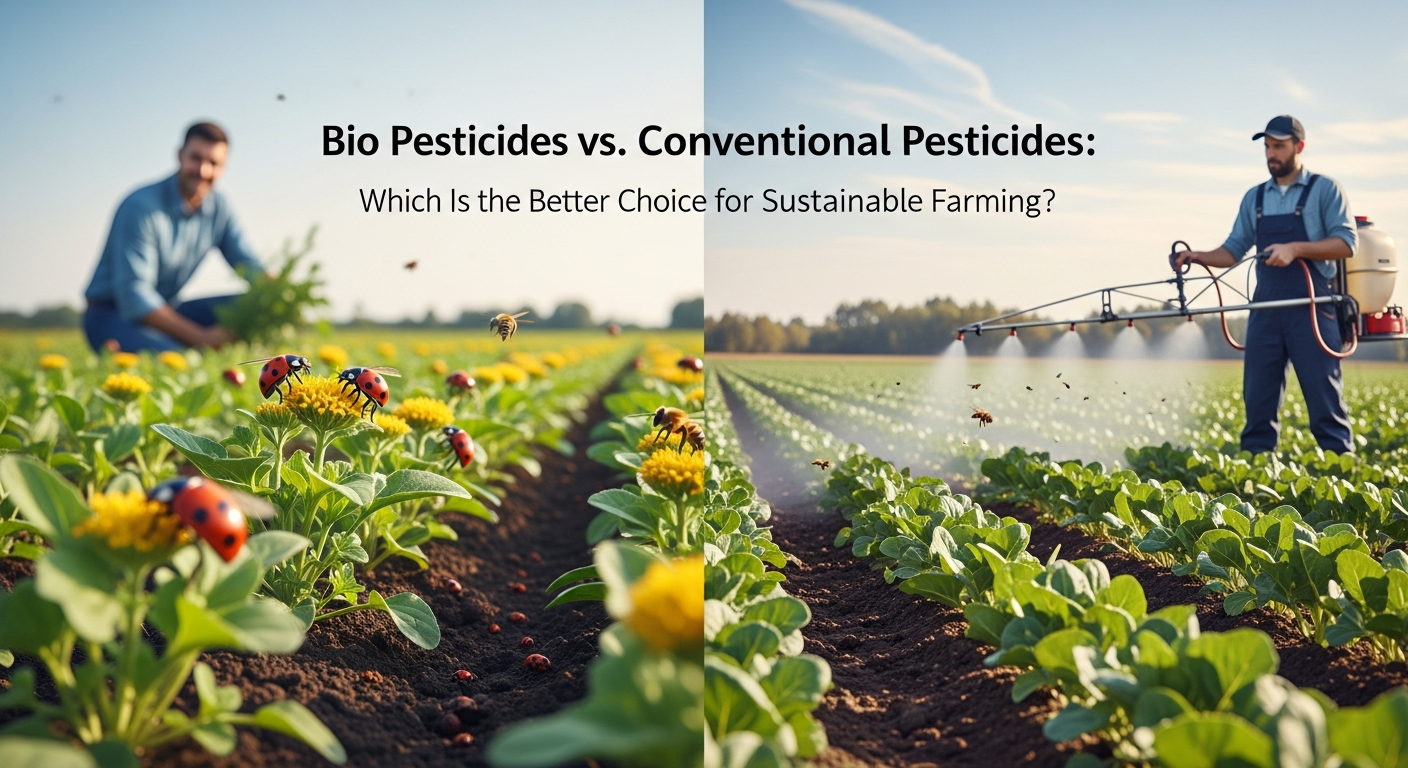
Bio pesticides are environmentally friendly pest control solutions originating from bacteria, fungi, plants and minerals. They are an integral part of biopesticides in agriculture for actively targeting pests without toxic effects on beneficial insects or the environment.
Conventional pesticides are synthetically manufactured chemical formulations that have been used in agriculture for decades. They are extremely potent and deliver fast knockdowns of pests, but their persistent toxic residues pose not only a plethora of concerns for soil health, but they can also increase the risk of having a negative impact on surface and groundwater sources over time.
Like millets, bio pesticides provide a higher and safer nutritional alternative to crops defeated by insect pests. They are easier on the soil, more accommodating for the ecosystem to function and safer for farmers and consumers. Nature breaks down its nutrient ingredient more quickly and yields less pollution in farmland, and more healthy farmland for future generations.
Chemical pesticides can deliver rapid results but are associated with responsive and systematic long-term effects that may be harmful for humans, reduced soil fertility, and pest resistance. This is why more farmers today are selecting bio pesticides over conventional pesticides and beginning their transition to smarter, greener farming practices.
From bacterium-based sprays, to neem extracts, to pheromone traps, every bio pesticide use actively supports healthier crops, cleaner soils, and a less potentially hazardous experience for the consumer.
Understanding Bio Pesticides and Conventional Pesticides
Biopesticides and standard chemical pesticides come in many forms and serve different purposes in protecting crops. Just like millets have specific benefits for babies compared to other grains, these products have different levels of efficacy, safety, and environmental impacts for growers. Biopesticides are low-impact, naturally occurring, and environmentally safe products; whereas standard chemical pesticides are highly active agents, fast acting, and heavily utilized in modern agriculture.
Here's a basic, simplified breakdown of these two options— how they work, what they do for crops, and where they differ.
What Are Bio Pesticides?
Bio pesticides are biological pest control substances that are derived from living organisms including plants, bacteria, fungi and other minerals or natural extracts.
1. Microbial Bio Pesticides
- Similar to ragi being rich in nutrients, microbial bio pesticides too, are rich in beneficial microbes such as Bacillus thuringiensis (Bt).
- The microbes attack specific pests only.
- Naturally safe to use on crops and soils and for the farmer and consumer alike.
Widely used and easy to implement and best suited for organic farmers utilizing biopesticides within agriculture.
Best For: Farmers who want to use nature to protect crops without being toxic to beneficial insects.
2. Botanical Bio Pesticides
- Similar to bajra being packed with iron and fiber, botanical bio pesticides are packed with compounds derived from plants including neem, garlic, and lemongrass.
- They boost plant health, while deterring pests.
- Breakdown is rapid so residual concerns are not.
They are contributing to improved soil health over time.
Best For: Farms that struggle with soft-bodied pests and fungal pathogens.
3. Biochemical Bio Pesticides
- Like foxtail millet is beneficial for energy and brain health, biopesticides utilize naturally derived molecules: pheromones, hormones, oil molecules to alter pest behavior.
- Distractions, confusion, or traps are often used to remove pests; they are non toxic, and safe to all crops when used as directed.
- Suitable for well-organized ecologically-minded farm systems.
Best For: Breeding crops for fruit, vegetable farms, and IPM programs.
What Are Conventional Pesticides?
Conventional pesticides are liquid-ion solutions which are chemically manufactured and have been used for controlling a wide variety of problems for many years.
1. Insecticides
Just as Little Millet is nutrient-dense and well-fibred in easy to digest, insecticides can be the quickest and most effective pesticide. It has an instantaneous impact on pests.
- Insecticides are frequently applied to vegetables, cereals, and fruits. They can be effective, but they can leave residues.
When to best use insecticides: insect problems, where the level is at outbreak and there is the need to act quickly.
2. Herbicides
Just as Barnyard millet is easy on the stomach with a sensitive condition, herbicides are useful for weed control and reducing competition for crops.
- These remove unwanted plant growth.
- Herbicide use will result in reduced number of hands used for weeding.
- There will be a chance for change in soil health if used repetitively.
Best use of herbicides would be in large scale cereal crop production, pulses, or sugarcane.
3. Fungicides
Just as Kodo millet will help to reduce inflammation and reduce cultivation expenses, fungicides are most effective in the case of crops that have been affected by fungal disease and positively allow crops to rot, mold, or under blight.
Fungicides help with the rot and mold, and repeating the fungicide product may lead to resistant cultivars.
Best Fungicides: protectants for growing vegetables, fruits, or greenhouse crops.
Key Differences Between Bio Pesticides and Conventional Pesticides
Bio Pesticides vs. Conventional Pesticides
Though they both make significant contributions to our modern agricultural practices; bio pesticides and conventional pesticides are very different when it comes to their use and impact on the environment and living organisms. The decision of whether to use bio pesticides vs conventional pesticides becomes extremely important for farmers wanting to practice sustainable crop protections. Bio pesticides are gentle, and natural, while chemical pesticides are much harsher and provide much faster results when applied correctly.

The Science Behind How Each Type Works
Both biopesticides and conventional pesticides have their own distinct pest control methods, and by knowing the difference can help farmers make good decisions for safe, smart, and sustainable farms. Biopesticide agriculture systems can provide natural, green protection, while conventional, chemical-based products, while effective, are often quicker but more dangerous. Here’s a summary of how the biopesticide and conventional systems work inside the agri-ecosystem.
Mode of Action of Bio Pesticides
Biological pesticides are naturally occurring, environmentally safe agents derived from plants, microbes, and/or minerals that, in many ways, disrupt pests, without harm to soils, water, farmers or, beneficial insects.
How Bio Pesticides work (Easy points): GRAPHIC POINTS
- Very Specific Action → Affects only the targeted pest causing the damage.
- Natural biological process → like microbes, enzymes, or plant constituents.
- Decomposes quickly → leaves no damaging residues
- Increases the immunity of the crop → allows plants to defend themselves against pests and disease
Biological pesticides work by disrupting specific life processes in pests by feeding behavior, reproduction, or movement. Some biological pesticides produce toxins that are harmful to specific insect targets while some compete for a habitat with harmful fungi or bacteria. Often more palatable to use in a diversified agricultural environment, as bio pesticides are derived from natural processes they maintain a healthy microbiological soil ecosystem, reduce or keep beneficial insects alive (like bees), maintain ecological sustainability.
Mode of Action of Conventional Pesticides
Conventional pesticides are potent chemical formulations that act to quickly kill the pest.
Although they are effective, they typically affect other than the intended pest.

Once conventional pesticides enter a pest’s body by adherence, ingestion, or inhalation, they attack the nervous system, completely stop insect muscle movement, or infect important enzymes resulting in quick death. However, pesticides also negatively impact soil, water, and can bring about pesticide resistance in future pest generations.
Examples (in your requested format):
- Organophosphates
Attack insect nerve cells; very fast acting but toxic to non-target species.
- Carbamates
Attack insect nerve cells, like organophosphates but a little less toxic, also a broad-spectrum.
- Pyrethroids
Last longer than organophosphates and carbamates; used for fast knock-down effects on insects, but harmful to aquatic life.
- Herbicides and Fungi
Kill weeds and fungi by blocking essential nutrients and/or metabolic pathways.
Which is More Effective for Targeted Pest Control?
Full Explanation (Millet-style, simple and descriptive):
Bio pesticides provide improved accuracy and targeting of pest control. They only knock out the problematic pest with none of the collateral damage that affects beneficial insects like bees, monarch butterflies, earth worms and humans. These qualities make bio pesticides a valuable tool in sustainable agriculture and long-term crop protection.
Conventional pesticides will kill the pest fast, but they don’t discriminate between beneficial and harmful insects. Over time, pest populations acclimate and develop chemical resistance forcing an increase in chemical input costs and potentially environmental hazards.
Strategic Pests Control Take Away Points:
- For precision pest control, bio pesticides are far superior.
- For emergency pest control, pesticide work fast.
- For soil health and sustainability, bio pesticides are a clear winner

Environmental Impact: A Critical Comparison
Similar to each of the different millets providing for different efficiencies of growth for a baby , the methods of cultivation are informed by the - right method of pest management or not. When we think about and/or compare, Bio Pesticides vs. Conventional Pesticides, the impact on the environment is usually the most deciding factor. Biopesticides are "gentle, clean, and nature-friendly." As compared to chemical pesticides which are more "- efficient -" and do immediate work, always upon deeper inspection, they usually have long-term negative implications of the environment i.e. soil and water and biodiversity.
Eco-Friendliness of Bio Pesticides
Biopesticides are derived from natural sources such as helpful bacteria, plant extracts, minerals, and fungi.
These natural toxins are gentle on the environment, much like easily digestible millets are on babies.
Key Benefits:
Biodegradable:
- They rapidly break down in soil and water and leave no harmful residues.
- Safe for beneficial insects:
- Bees, butterflies, and earthworms are left unharmed.
Low toxicity:
They are safe for farmers, animals, and their surrounding ecosystems.
Biodiversity support:
They help a natural degree of predators to survive to promote ecological balance.
Why They Are Important:
Biopesticides are the foundation of biopesticides for helping farmers maintain healthy soil for generations, thus supporting sustainable agriculture and farming through biopesticides.
Environmental Damage from Conventional Pesticides
Traditional pesticides are synthetic substances intended for rapid and effective control of pests. However, just like heavy foods that can make a baby’s delicate stomach upset, these chemicals can upset the balance of natural health in the farm.

Sustainable Agriculture and Reduced Chemical Dependency
Sustainable agriculture relies on medium- to long-term soil health—similar to how babies require long-term nutrition. Bio pesticides can help alleviate the reliance on harmful chemicals and create a farming system that self-governs.
What Bio Pesticides Do for Sustainability:
- Enhance soil health through microbial activity
- Reduce the chemical load in crops, soil and water
- Lower pest resistance risk over the long-term
- Increase the balance of natural predator–prey on farms
Benefits to Farmers:
- Reduced input of expensive chemical treatments
- Increased long-term yields through improved soil fertility
- Safer work environment

Human Health Risks: Are Bio Pesticides Safer?
Bio pesticides are ecological, organic, and safe pest management products that are becoming more popular in sustainable agriculture and compared to Conventional Pesticides, bio pesticides are more "gentle" to human health. Bio Pesticides are "easy on the body" like babies can digest millets easy, and it's safer for farmers, consumers, and the environment.
In the following, we have outlined the key points simply and cleanly. Similar to the millet example:
Toxicity of Conventional Pesticides
Traditional pesticides are made from chemicals and they are often rough on the body.
- These chemicals have toxic substances that can make their way into the body through food, water, or even through the skin.
- Toxic compounds can disrupt the body; they can impact organs like the liver, lungs, and/or even the nervous system.
- After a prolonged period of exposure, traditional pesticides can cause headaches, allergies (like breathing issues) hormonal imbalance, and many other health issues.
The “coarse nature”—of traditional pesticides—in the same way we talk about coarse grains, does slow down the human system and these pesticides do build up.
Health Benefits of Bio Pesticides
Biopesticides are derived from natural sources, including beneficial bacteria, plant materials, and minerals.

Their "gentle action" can facilitate their continual use in sustainable farming practices.
Pesticide Residues and Food Safety
Food grown with standard pesticides can often still have residues that linger even after washing.
- Residues can negatively impact immunity, digestion, and overall health.
- Babies, children, and pregnant women are most vulnerable.
- Bio pesticides have little to no residues.
- They can still protect the crop without sticking to it.
- This is a measure to improve food safety and ensure cleaner, healthier produce for consumers.
In the comparison of Bio Pesticides vs. Conventional Pesticides, chemical pesticides rank higher in toxicity. Farmers working with them daily inhale fumes and come into direct skin contact, which may cause discomfort, allergies, or long-term health decline. For consumers, the problem arises when food carries pesticide residues. Even after washing, some chemicals remain inside the produce, making them a hidden health risk.
Efficacy and Cost: Performance in Real-World Farming Scenarios
Bio pesticides and conventional pesticides both play important roles in modern farming. But their real-world performance, cost, and long-term impact vary greatly. Below is a simple, clear breakdown—just like the millet sample—showing how each type works in daily agricultural use.
Effectiveness of Bio Pesticides in Pest Control
Biopesticides are natural, environmentally friendly solutions for pest control in farming without any harm to the farmer, soil or environment.
They exert low dose effectiveness and are suitable for farmers interested in long-term sustainability.

Effectiveness of Conventional Pesticides in Pest Control
Traditional chemical pesticides are fast acting and aggressive in their control.
They are often preferred by field farmers needing immediate suppression on large scale or acreage.
1. Quick & Powerful Cure
Chemical pesticides kill pests quickly, making them appropriate for emergency outbreaks—similar to how Bajra can help elevate hemoglobin rapidly in babies.
2. Immediate Control for Large Acreage
Their strength is key, but they are also easy to spray and work no matter how bad the infestation.
The only downside to using them is the long-term consequences of pesticide residue on crops, and soil damage from chemical pesticide applications.
3. Chance of Resistance
When a pest is exposed repeatedly to chemical pesticides, they can eventually become resistant, which leads to using higher doses or even a different chemical.
Overuse of chemical pesticides can compound risk to human health or the environment.
Cost Comparison: Bio vs. Conventional Pesticides
The cost of pest management depends on many factors—crop type, pest pressure, and farm size.
Below is a simple comparison table based on real-world farming patterns.

Bio pesticides can protect crops and soil in a mild, sustainable manner for the farmer wanting to think about long-term organic and environmentally friendly agriculture.
Conventional pesticides can work fast, but long-term use of these pesticides will affect soil and water quality, and potentially negate the health benefits of the future crops grown in current monoculture crops.
Farmers who choose to use bio pesticides are supporting their safety and health by protecting soil health, food safety, and a sustainable future for agriculture.
Pest Resistance: An Ongoing Challenge in Modern Agriculture
Pests are increasing in strength year after year, and this has emerged as one of the largest issues farmers are facing today. Pests gradually become resistant, or tolerant, when a farmer uses the same pesticide repeatedly over consecutive years. As pest resistance increases, crop protection decreases, yield decreases, and farming costs increase. Understanding better how resistance develops in Bio Pesticides and Conventional Pesticides provides an opportunity for farmers to make better, sustainable choices.
Resistance Development in Conventional Pesticides
Chemical-based pesticides are those that have a speedy action time, but after repeated applications, pests develop more resistance. Eventually, the chemicals lose their effectiveness and farmers either have to use more chemical or take a leap to a more potent chemical. This increases expense and can affect soil and water quality as well as beneficial insects.

Negative Effects of Resistance in Chemical Pesticides:
- Reduced effectiveness overtime
- Increased crop loss
- Increased costs of pest management
- Soil and water pollutants
- Injurious impacts on beneficial insects & pollinators
Pest Resistance in Bio Pesticides
Biopesticides function differently than synthetic pesticides. They use natural microorganisms, plant extracts, oils, and minerals. These natural compounds are transient and operate in different ways, making it less likely for a pest to develop resistance. Therefore, biopesticides in farming are becoming more popular for long-term pest protection.
How Bio pesticide use reduces resistance:
- Multiple Modes of Action: Bio pesticides affect pests physically, biochemically, or biologically, not just chemically.
- Short Environmental Life: They decay in the environment quickly, which prevents the prolonged exposure which leads to resistance development.
- Target Specificity: They only affect pests and do not target beneficial insects.
- Natural Microbial Mechanisms: Microbes can adapt and therefore be efficacious against the pest longer.
Advantages of using Biopesticides:
- Naturally safer for crops and soil.
- More effective long term.
- Less chance of resistance development.
- Environmentally friendly and does not leave residue.
- Safest for farmers and food consumers.
Integrated Pest Management (IPM) and Sustainable Solutions
IPM is a smart farming system that combines biological, cultural, mechanical, and chemical methods to control pests. It reduces dependency on chemicals and promotes the use of bio pesticides for healthier and more sustainable farming.
Key Components of IPM:
- Biological Control
- Using beneficial insects, microbes, natural predators.
- Cultural Methods
- Crop rotation, resistant crop varieties, clean field practices.
- Mechanical Methods
- Traps, barriers, manual removal of pests.
- Selective Chemical Usage
- Chemical pesticides used only when absolutely necessary.
How IPM Helps Reduce Resistance:
- Less repetition of chemical pesticides
- Balanced use of bio pesticides
- Healthy pest population control
- Protection of beneficial insects
- Long-term sustainability in crop production

Pest resistance is a growing issue for farmers worldwide. Just like babies need gentle, easy-to-digest foods, crops also need gentle and sustainable protection. Chemical pesticides may work fast, but they can make pests stronger, leading to long-term crop damage.
Bio pesticides, on the other hand, work naturally and safely. They break down quickly, protect beneficial insects, and reduce the chances of pests becoming resistant. This is why Bio Pesticides vs. Conventional Pesticides is now a major discussion in farming communities.
Farmers are shifting towards biopesticides in agriculture because they support soil health, improve crop quality, and reduce chemical dependency. Using IPM methods helps farmers combine the best of both worlds for smart, sustainable pest management.
The Future of Pest Control: Trends and Innovations in Bio and Conventional Solutions
Pest control is changing rapidly. Just like how different millets support babies at different stages, modern agriculture now relies on new-age pest-control tools that fit different crop needs. From microbial solutions to AI-driven spraying systems—each innovation supports healthier crops and more sustainable farming.
Innovations in Bio Pesticides
1. Microbial Bio Pesticides
- Microbial bio pesticides, including Bacillus thuringiensis (Bt), Trichoderma, and beneficial fungi are quickly becoming a critical component of modern farming practices.
- These beneficial organisms help protect plants by outcompeting harmful pests and diseases.
- Bio pesticides also help bolster natural plant immunity and improve general soil health over time.
- Using microbial bio pesticides is particularly beneficial for farmers transitioning from traditional chemical practices to more eco-friendly options.
2. RNA-Based Bio Pesticides
- RNAi is a development in biopesticides and agriculture that works by silencing key genes present in the targeted pests.
- Highly targeted, RNA molecules will only antagonize a pest species and not beneficial species or humans.
- This ultra-precise, innovative technology is moving us toward next generation crop protection.
3. Botanical Extracts & Plant-Based Sprays
- This category includes compounds/plant essential oils such as neem, karanj, garlic oil, and/or citrus extracts.
- With little risk to health, they can be tolerated in easy to apply formulations.
- These naturally occurring compounds are also environmentally safe and will degrade in the environment.
- Botanical extracts also work on fruits, vegetables, and organic farms.
- Botanical extracts are less harmful (mellow) and they can also be used regularly over the course of the season, completely mitigating concern about chemical residue.
4. Pheromone Traps & Mating Disruption Tools
- These technologies work by confusing insects with the pheromone traps and disrupting their mating cycle.
- Also no chemical residue impact to humans
- Extremely effective on large-acre farms
- Farmers—they often use microbial sprays in combination with pheromone traps and mating disruption tools to eliminate pest insects.
5. Nano Bio Pesticides
- Nano bio pesticides are bio pesticides that have been nano-formulated to have improved solubility, stability, and targeted response.
- They can usually achieve greater efficiency at a lower dosage.
Regulatory Developments in Pesticide Use
Just like babies go from light millets, to more textured, global agriculture, is changing to safer regulations protecting soil, farmers, and consumers.
1. New Rules on Chemical Residues
- Governments are lowering Maximum Residue Limits (MRLs) in countries all over the world.
- Proposes safer food for the consumer
- Promotes the use of biopesticides instead of pesticides
2. Fast-Track Approvals of Bio Pesticides
- Regulators are expediting the registration of bio-based and reduced risk products.
- Faster access to the market
- Enhanced innovation in biopesticides in agriculture
3. Ban on High-Risk Conventional Pesticides
- Various high-risk chemicals are being banned due to environmental and health risks.
- Maintains biodiversity
- Reduces soil and water contamination
4. Global Movement for Sustainable Farming Policies
- Governments are now providing incentives and grants for farmers who use:
- Alternatives to Biopesticides or Conventional pesticides
- Drip Irrigation
- Organic Farming Methods
- Programs that promote safer pest-control practices
Moving Towards More Sustainable Pest Management Solutions
IPM stands for integrated pest management, an innovative agricultural system that incorporates biological, cultural, mechanical and chemical management of pests while fostering a reduction in reliance on chemicals and a higher tolerance for allowing biopesticides to play a featured role in pest control for a healthier, integrated approach.
The components of IPM include:
- Biological Control - Using beneficial insects, microbes and natural predation.
- Cultural Methods - Issue resistant crop varieties, crop rotation and clean field practices.
- Mechanical Methods - Traps, barriers and manual removal of pests.
- Selective Use of Chemicals - Use of chemical pesticides is limited to confirmed need.
How IPM help to reduce Resistance:
- Less repetition of pesticide use,
- Balance bio pesticide use
- Healthy pest population control
- Protect beneficial insects
- Sustainability in the long-term for crop production

FAQs
Q1 What are bio pesticides, and how do they work?
Bio pesticides are natural pest-control products made from microbes, plants, or minerals, and they work by targeting specific pests without harming beneficial organisms.
Q2 Are bio pesticides safer than conventional pesticides?
Yes, bio pesticides are generally safer because they are low in toxicity, eco-friendly, and leave minimal residue on food.
Q3 How do conventional pesticides affect the environment?
Conventional pesticides can contaminate soil and water, harm beneficial insects, and reduce biodiversity over time.
Q4 Can bio pesticides replace conventional pesticides in agriculture?
Bio pesticides can replace many chemical pesticides, but in some cases, both are combined for effective integrated pest management (IPM).
Q5 What are the long-term benefits of using bio pesticides?
They improve soil health, reduce chemical dependency, prevent pest resistance, and promote sustainable farming.
Q6 Are bio pesticides more expensive than conventional pesticides?
They may cost slightly more initially, but they offer long-term savings through reduced environmental damage and better soil health.
Q7 How do bio pesticides contribute to sustainable farming?
Bio pesticides support sustainable farming by protecting crops naturally, preserving ecosystems, and reducing harmful chemical usage.
Conclusion: Making the Right Choice for a Healthier Planet and Future Generations
The decision of choosing between Bio Pesticides vs. Conventional Pesticides is no longer just a decision for technical farming—it’s a major step towards a more sustainable, healthier future. In the future, the world will turn to solutions to grow crops while taking into consideration environmental, farmer, and consumer health. Conventional pesticides provide fast, potent results and every farmer or food producer knows you must limit your decisions to scientific knowledge-based data when producing food for the marketplace. However, the long-term consequences of conventional pesticides, such as soil degradation, water pollution, pest resistance, and health implications, make the use of conventional pesticides unsustainable for future agriculture.
Conversely, bio pesticides provide a more non-toxic, ecological method of pest control that works with nature. Biopesticides target pests on the spot, create biodiversity of soil organisms, and leave little to no labeling regarding a chemical residue on the food, all of which support safer practices for farmers and consumers. Biopesticides when used routinely build resistance in the pest populations while providing significant productivity for the crops. This is why biopesticides in agriculture are occurring on the global market acceptance level as a reliable and powerful solution compared to harsh chemical pesticides.
Sustainably farming is not just about producing higher yields. It’s about stewarding our soil, protecting water sources, and growing food that is safe, fresh and nutritious. When farmers take a step towards solutions with bio-based solutions they benefit from a cleaner ecosystem, healthier farmland, and a reduced chemical workload on the land, in as much as they could imagine.