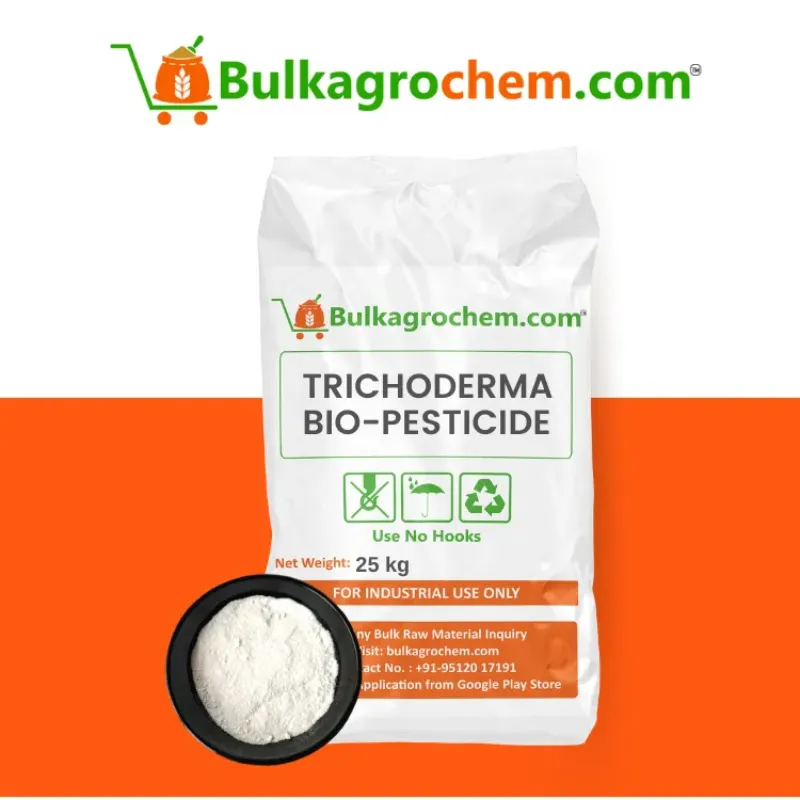
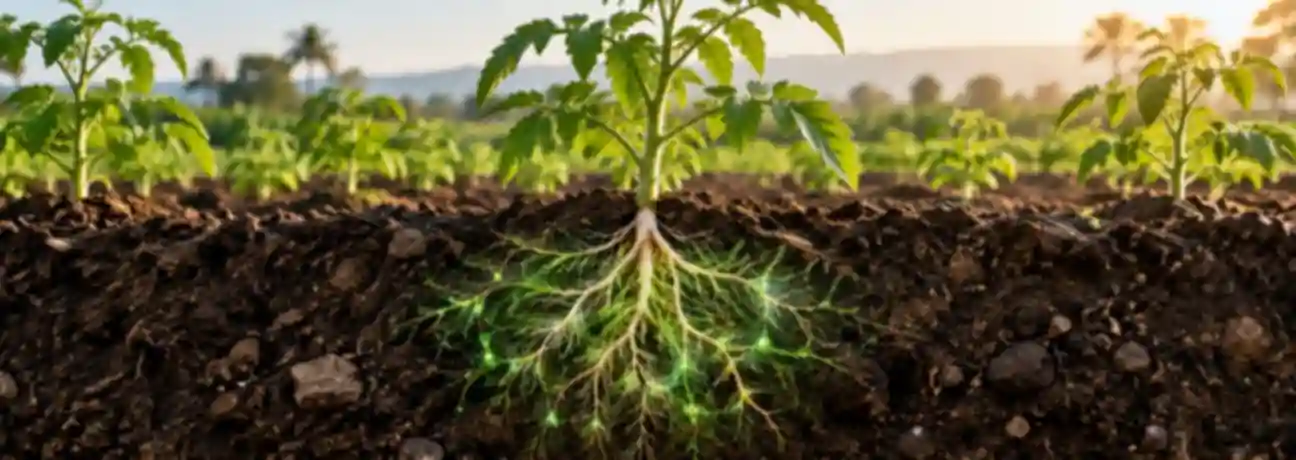
Trichoderma bio-pesticide is one of the most widely used biological crop protection inputs on Indian farms, and it earns that position season after season. Trichoderma is a naturally occurring beneficial fungus that lives in soil, colonises the root zone and works against the soil-borne pathogens behind damping off, root rot, wilt and collar rot. For growers who want fewer chemical drenches, healthier seedlings and a root zone that defends itself, Trichoderma is usually the first biological they add. This guide covers how it works, the diseases it helps manage, correct dosage and application methods, and what to verify before buying it in bulk.
What Is Trichoderma Bio-Pesticide?
Trichoderma bio-pesticide is a formulation of living spores of beneficial Trichoderma fungi, most commonly Trichoderma viride or Trichoderma harzianum, carried on a powder, granule or liquid base. Once applied to seed, soil or nursery media, the spores germinate and rapidly colonise the area around seeds and roots.
Unlike a chemical fungicide that acts once and degrades, Trichoderma is a living organism: it establishes, multiplies and keeps working in the root zone for weeks, which is why it is treated as a preventive input rather than a rescue treatment.
How Trichoderma Protects Your Crop
Trichoderma defends plants through several modes of action working together:
- Competition – it occupies the root surface and uses up food and space before harmful fungi can establish
- Mycoparasitism – it physically coils around pathogenic fungi such as Fusarium, Pythium and Rhizoctonia and breaks down their cell walls
- Antibiosis – it releases natural compounds that suppress pathogen growth in the surrounding soil
- Induced resistance – root colonisation switches on the plant's own defence responses, so the crop resists infection better on its own
- Growth promotion – many strains also solubilise nutrients and stimulate root growth, giving visibly stronger seedlings
Because several mechanisms act at once, pathogens do not easily develop resistance to Trichoderma the way they can against single-site chemical fungicides.
Key Benefits of Trichoderma for Farmers
1. Protection Against Soil-Borne Diseases
The main reason to use Trichoderma is consistent suppression of damping off in nurseries, root rot and collar rot in field crops, and wilt complexes in vegetables and pulses. Applied early, it sharply reduces seedling mortality.
2. Healthier, Stronger Root Systems
Colonised roots branch more and go deeper. Farmers typically notice better germination, more uniform nursery stands and quicker establishment after transplanting.
3. Residue-Free Crop Protection
Trichoderma is a biological input with no chemical residue, making it suitable for organic production, export crops with strict residue norms, and vegetables harvested at short intervals.
4. Improved Soil Health Over Seasons
Regular use builds a beneficial microbial population in the soil. It works alongside bio-fertilizers such as mycorrhiza and PSB, and fits naturally into integrated disease management programs.
5. Low Cost Per Acre
Seed treatment needs only a few grams per kilogram of seed, so the cost of protecting an acre through seed treatment is among the lowest of any crop protection input.
Diseases and Pathogens Trichoderma Helps Manage
| Problem | Common Pathogens | Typical Crops Affected |
|---|---|---|
| Damping off | Pythium, Phytophthora | Nursery vegetables, chilli, tomato, papaya |
| Root rot / collar rot | Rhizoctonia, Sclerotium | Groundnut, chickpea, cotton, soybean |
| Wilt complex | Fusarium | Tomato, banana, chickpea, pigeon pea, cumin |
| Seed rot / seedling blight | Seed-borne fungi | Wheat, paddy, maize, pulses |
Trichoderma works preventively against these problems. Once a plant is severely wilted, no treatment reliably recovers it, so timing is everything.
How to Use Trichoderma: Methods and Dosage
Doses below are common label ranges for powder formulations; always follow the rate printed on the specific product you buy, since spore concentration (CFU count) varies.
Seed Treatment
The most economical method. Mix about 5–10 g of Trichoderma powder per kg of seed with a little water or rice gruel to coat the seeds, shade-dry briefly and sow the same day. This places the protective fungus exactly where the seedling root will emerge.
Nursery and Seedling Treatment
Drench nursery beds or seedling trays with a suspension (commonly around 5–10 g per litre), or dip seedling roots in the suspension for 15–20 minutes before transplanting. This is standard practice for tomato, chilli, brinjal and other transplanted vegetables.
Soil Application
Mix 1–2 kg of Trichoderma powder with 25–100 kg of well-decomposed FYM or compost, moisten, keep shaded for about a week so the fungus multiplies, then broadcast over one acre and incorporate before sowing or at planting. This is the preferred method for orchards, sugarcane and crops with a history of soil-borne disease.
Drip / Drenching in Standing Crop
Fully wettable formulations can be delivered through drip or as a root-zone drench at label rates during the growing season, especially after conditions that favour root disease such as waterlogging.
Crops That Benefit from Trichoderma
- Vegetables – tomato, chilli, brinjal, capsicum, cucurbits, onion and all nursery-raised crops
- Pulses and oilseeds – chickpea, pigeon pea, groundnut, soybean, mustard
- Field crops – cotton, wheat, paddy, maize, sugarcane
- Fruit crops – banana, papaya, pomegranate, citrus and new orchard plantings
- Spices and export crops – cumin, turmeric, ginger, cardamom, where soil disease pressure and residue norms are both high
Do's and Don'ts for Best Results
Trichoderma is alive, so handling decides how well it performs.
- Do apply with moisture available – moist soil or media is where the fungus establishes fastest
- Do combine with organic matter such as FYM or compost, which feeds the growing colony
- Do store packs in a cool, dry, shaded place and use before the expiry date
- Don't mix it in the same tank with chemical fungicides – most will kill the spores; keep a gap of several days between a fungicide drench and Trichoderma application
- Don't leave treated seed or suspension in direct hot sun for long periods
- Don't expect curative action on an already-collapsed plant – apply preventively at sowing, transplanting or early growth
What to Check Before Buying Trichoderma in Bulk
Quality decides results with any living product. Bulk buyers should confirm:
- Species and strain – the label should state the species (e.g. Trichoderma viride or harzianum) clearly
- Spore count (CFU) – the colony-forming units per gram printed on the label, with batch documentation to back it
- Manufacturing and expiry dates – viability drops with age; fresher stock performs better
- Formulation quality – a fine, uniform powder that suspends well in water without clumping
- Packing – sealed, moisture-proof packs that protect the living spores in transit and storage
At BulkAgroChem we supply Trichoderma Bio-Pesticide Powder Formulation along with a full range of bio pesticides, with bulk pricing tiers for dealers, FPOs and large growers.
Frequently Asked Questions
Is Trichoderma a fungicide or a bio-pesticide?
It is a biological pesticide – a living beneficial fungus that suppresses disease-causing fungi. It gives fungicide-like protection against soil-borne diseases but works preventively and leaves no chemical residue.
What is the dosage of Trichoderma for seed treatment?
Common label rates are around 5–10 g of powder per kg of seed. Coat the seed evenly with a little water, shade-dry briefly and sow the same day. Always follow the rate on your specific product's label.
Can I mix Trichoderma with chemical fungicides?
No. Most chemical fungicides kill Trichoderma spores in the tank. Apply them separately with a gap of several days, or use Trichoderma on seed and reserve chemical sprays for the foliage.
Can Trichoderma be used with bio-fertilizers?
Yes. It is compatible with mycorrhiza, PSB, Rhizobium and other biologicals, and with organic manures. Mixing it into FYM before application actually multiplies the fungus and improves results.
Is Trichoderma safe for organic farming?
Yes. Trichoderma is a naturally occurring soil fungus and Trichoderma-based bio-pesticides are widely used in organic and residue-conscious production. Check the certification status of the specific product if you need certified-organic compliance.
How long does Trichoderma survive in the soil?
Under favourable conditions – moisture, organic matter and moderate temperatures – it establishes and remains active in the root zone for several weeks to months, and repeated seasonal use builds its population in the field.
Conclusion
Trichoderma bio-pesticide gives Indian farmers a low-cost, residue-free way to prevent the soil-borne diseases that quietly take the biggest toll on stands and yields. Used preventively – on seed, in the nursery and through compost-based soil application – it protects the crop where chemicals struggle to reach and keeps working all season.
Ready to add Trichoderma to your input stock? Browse our range on the BulkAgroChem shop, place a fast repeat purchase through Quick Order, or contact our team for bulk pricing and dealer enquiries.