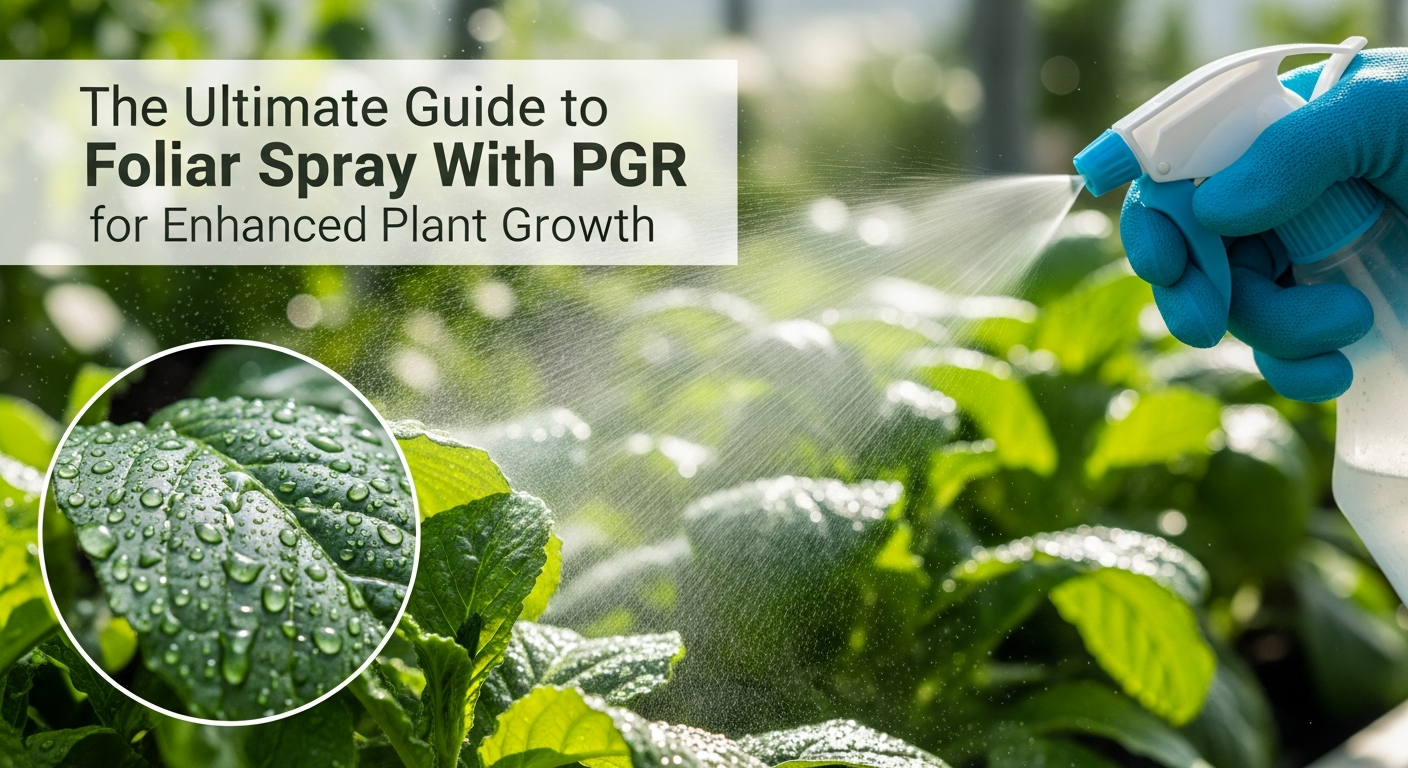
Applying PGR by using foliar spray continues to be one of the most effective modern agricultural techniques for enhancing crop growth, flowering and productivity. When applied directly to plant leaves, the plant can absorb nutrients and hormones more rapidly, which produces faster physiological response times and healthier plant development. This method has been widely used in agriculture and horticulture as well as commercial farming due to its quick and obvious results.
Foliar applications of PGR give farmers the ability to supply nutrient and growth stimulants to crops at the time of their greatest need. Foliar application will improve the efficiency of nutrient absorption because unlike soil applications that may lose a percentage of nutrients due to leaching or fixation; foliar application enables the plant to absorb nutrients immediately through the leaf surface. Thus, it enables the plant to maintain balanced growth rates even during periods of environmental stress.
There are many different types of PGR products used in foliar spray. Auxins, cytokinins, gibberellins and ethylene inhibitors are the primary types of PGR used in foliar spray programs. All of these PGR will significantly affect root development, stem elongation, flowering, fruit set and stress tolerance. When used properly, they can maximize crop quality, yield, and marketable value.
Nowadays, foliar application with the use of PGR has become an important practice for growers hoping to reach their goals of sustainable agriculture and high productivity. Proper selection of products, dosage and timing, are critical to the success of foliar feeding programs.
Understanding Foliar Spray and Plant Growth Regulators (PGR)
The foliar spray application method involves the direct deposition of PGRs (plant growth regulators) onto the leaf surfaces of the target plant for rapid absorption and quicker plant response as compared with application to soil. Plant growth regulators are commonly utilized to encourage crops to grow, flower, uptake nutrients and resist stress.
By using the foliar spray method, crops receive specific hormonal influence during key developmental periods. As a result, crops generally perform better and have greater flexibility to adapt to changing environmental conditions.
What Is Foliar Spray With PGR and How Does It Work?
Utilizing a foliar spray containing the plant growth regulator (PGR) allows for direct delivery of plant hormones to leaf tissue resulting in a rapid absorption rate and immediate response from the plants. Applying nutrients using this method will increase the efficiency of nutrient use and enhance crop development during specifically defined critical periods (first and second periods).
The advantages of foliar spray applications include:
- Direct absorption of both nutrients and hormones
- Faster plant response compared to soil applications
- Increased growth and flowering of crops
- Increased productivity of crops.

Understanding the Foliar Spray Method in Agriculture
Agriculture employs foliar sprays, a common technique for quickly delivering nutrients and growth stimulants to plants. Nutrient loss can be reduced, and foliar sprays can provide immediate support to plants experiencing stress.
Advantages:
- Rapid delivery of nutrients
- Applicable my all plant lifecycle stages
- Minimum nutrient waste
- Assistance in managing plant stress

Role of Plant Growth Regulators in Foliar Feeding
Growers use plant growth regulators to manage root development, blooming, and fruit production and its ripening processes. Foliar application of PGR to plants also aids the key processes involved in metabolism of the plant; therefore enhancing the performance, growth, and strength of crops as a whole.
Summary Points:
- Hormone Balance is Enhanced
- Flowering and Fruit are Produced Better
- Tolerance to Stress is Improved
- Balanced Growth Is Achieved

Benefits of Using Foliar Spray With PGR in Agriculture
There are numerous benefits of using a foliar spray with a Plant Growth Regulator (PGR). This process will greatly improve your crops due to fast delivery of both nutrients and hormones, resulting in high-quality plant crops and higher quality produced from those crops.
When utilizing the foliar spray method, you are able to enhance nutrient efficiency, as you will deliver the nutrients directly to the plant without any soil-related nutrient loss. While the plant is experiencing stress, it will also benefit by supporting the crop through the entire growth cycle by providing a balanced level of growth.
Improved Nutrient Absorption and Faster Plant Growth
Plants' tissue will absorb nutrients and hormones through foliar feeding, allowing them to grow vegetatively more quickly and to have better crop establishment.
Main benefits:
- Quick uptake of Nutrients
- Shoot growth quickly
- Better Vigorous plants
- Faster metabolic rate
Enhanced Stress Resistance and Crop Health
Application of foliar PGRs can enhance a crop's resistance to drought, salinity and temperature stress by enhancing the plant's defence systems, and by minimising potential damage caused by these stresses.
Key Points:
- Improved drought tolerance
- Increased disease resistance
- Reduced impact of environmental stresses
- Increased recovery potential

Better Yield, Flowering, and Crop Quality
PGR foliar treatment improves the uniformity of flower production and leads to better fruit set on crops resulting in quantity of produce, crop quality and increased market value.
Benefits:
- Increase in the retention of fruits
- Uniform flowering
- Improvement in overall quality of crops
- Increased productivity

How Foliar Spray With PGR Enhances Plant Development
PGR’s foliar treatment stimulates growth and hormones while utilizing nutrients effectively to facilitate important aspects of plant growth such as root and shoot growth and reproduction.
By applying PGR foliar treatment while in active growing stages of development, growth stimulants are applied quickly, which allows for improved growth (balanced), and improved physiology (performance).
Hormone-Based Growth Stimulation in Plants
Vegetation hormones dictate how plants grow, including how to process and increase cell size. PGR coatings stimulate these hormones for increased growth rates and good plant health.
The key advantages of PGR are:
- Stimulating active growth
- Stimulating cell elongation
- Stimulating tissue development
- Improving overall plant balance

Accelerating Root, Shoot, and Flower Development
Application of plant growth regulators through foliar application will result in improved development of the root system, increased shoot growth, and improved flowering. Plants with good nutrition will be stronger and will have a better reproductive efficiency.
Benefits:
- Increase Root System Development
- Increase Rate of Shoot Growth
- Increase Flower Production
- Improve Plant Shape and Structure

Improving Photosynthesis and Nutrient Efficiency
Foliar feeding results in greater chlorophyll production and improved absorption of nutrients by plants. This leads to increased photosynthesis and productivity of crops.
Some of the benefits of foliar feeding include:
- Improved chlorophyll activity
- Higher efficiency of nutrient use
- Greater production of energy
- Increased vigor of crops

Types of Plant Growth Regulators Used in Foliar Sprays
Using foliar sprays containing plant growth regulators will help control a variety of functions within a crop’s physiology such as rooting, flowering, ripening, and tolerance to stress. Due to direct hormone delivery to the leaves of a plant for rapid uptake and immediate response, PGRs can enhance the efficiency of crop growth.
Each formulation of PGR will be selected based on the type of crop, stage of growth and purpose of production. The use of foliar application of a PGR is very common in both agricultural and horticultural settings and is primarily used to improve the quality, yield and stress tolerance of crops in a variety of environmental conditions.
Auxins, Cytokinins, and Gibberellins Explained
Auxins help to promote root growth, while cytokinins encourage cells to divide. Gibberellins are responsible for stimulating stem and flower height growth. Collectively, these hormones work with one another to keep the plant growing in a balanced manner and to enhance the productivity of crops.
Benefits of using plant hormones include:
- Stimulating the formation of roots
- Enhancing the formation of new shoots
- Improving how well a flower develops
- Supporting healthy overall growth of the plant.

Ethylene Inhibitors and Ripening Regulators
Ripening Process Agent, or ripening regulator. Agents that regulate the ripening process in fruits by performing the following functions:
- Delaying premature ripening through regulation of respiration
- Increasing the time fruit can remain in storage after being harvested without dropping below acceptable levels
- Increasing the overall quality of harvested fruit
- Decreasing post-harvest losses in the production, handling, and sale of fruit

Synthetic vs Natural PGR Formulations
Artificial plant growth regulators ("PGRs") will provide rapid and specific response to application, while natural products will help support environmentally-sustainable practices in crop production. Each type has equal usage based on production systems and crop requirements.
Key Messages:
- Rapid response from hormone treatment
- Supports organic production systems
- Flexibility in managing crops
- Improved health of plants

Best Practices for Applying Foliar Spray With PGR
When a PGR is correctly applied as a foliar spray, then more nutrients can be absorbed by the plant and hormones regulated efficiently resulting in the maximum response of the crop. Dosage, timing and spray techniques are critical to achieve optimal plant growth and yield.
Environmental conditions also contribute to the effectiveness of foliar sprays. Farmers should aim to have a uniform application; maintain correct concentration and keep equipment in good working order to reduce the risk of stress on the crop and ensure safe application.
Correct PGR Concentration and Dosage Guidelines
Using the right PGR level is also important for preventing plant injury, as well as promoting a successful response from the crop. Proper dosage will result in nutrient use efficiency and balanced plant growth.
Summary:
- Preventing overapplication side effects
- Enhancing spray efficiency
- Promoting healthy crops
- Reducing chemical waste
Ideal Timing and Environmental Conditions
Spraying leaves is best performed in cool, still weather. The right time of year allows for increased absorption and decreased evaporation of the spray from leaf surfaces.
Key Points:
- Apply in the morning or evening.
- Avoid hot weather.
- Minimize the risk of spray drift.
- Provide better absorptive qualities for leaf surfaces.

Spray Equipment and Application Techniques
Sprayers that are set up appropriately provide uniform application of products over crops. Good techniques used while spraying will give you better coverage which makes a given application of PGR work better.
Benefits:
- Calibration of sprayers
- Nozzle maintenance
- Uniformity of application
- Eliminate spray wastage
Common Crops That Benefit Most from Foliar Spray With PGR
Crops that need balanced flowering, setting of fruit and vegetative growth can greatly benefit from the application of a PGR through foliar spraying. The response of individual crops to the use of a PGR will vary with the state of the crop's physiology at the time of the application and the growth stage of the crop.
In commercial agricultural production, foliar spraying is used extensively for many types of fruits and vegetables, cereals, ornamental plants and nursery production to improve both the quantity of the crops produced and the quantity and marketability of the crops produced.
Fruit Trees and Flowering Crops
During flowering and the fruit development phases, the application of foliar applied PGRs has been shown to enhance responses from fruit crops. By reducing flower drop, improving consistency in flower development, and enhancing the overall quality of the crop, applications of foliar applied PGRs can produce a better yield.
Benefits:
- Increased number of fruit
- Increased intensity of flowering
- Decreased flower drop
- Improved quality of fruit

Vegetables, Cereals, and Field Crops
Field crops such as vegetable and cereal crops receive numerous benefits from increased nutrient uptake and improved rates of vegetative growth. The use of PGR (plant growth regulators) as foliar applications to field crops allows for increased yield and better stress tolerance.
Benefits of using these PGR products on your field crops include:
- Quicker Growth Rate
- Increased Nutrient Use Efficiency
- Improved Stress Resistance
- Increased Yield of Your Crops

Ornamental Plants and Nursery Applications
The commercial value of ornamental plants relies on having a good balance of growth and quality flowering. PGRs are sprays that can help you to improve the shape of your plants, the performance of your flowers and to establish plants in your nursery.
Benefits of using these products:
- Improve appearance of plants
- Encourage compact growth
- Increase the quality of flowering
- Support growth in the Nursery

Potential Risks and How to Avoid Common Mistakes
Farmers need to know what common mistakes farmers make with vegetable spray applications so they are able to avoid creating additional crop stress/plant stress and contributing to their environment.
PGR products should be used safely and responsibly to achieve effective crop growth while maintaining environmental sustainability. PGR products must be applied using proper training and according to recommended application guidelines.
Over-Application Risks and Phytotoxicity
Too much PGR application can injure the plant's tissue and cause slow growth. Some of the ways in which PGR's will cause phytotoxicity include leaf brown out, leaf transfiguration and abnormal growth patterns of plants.
Key points:
- Cause of the damage to leaves
- Resulting in a decrease in the quality of the crop
- Disruption of hormone balance
- Increase stress on crops

Environmental Impact and Residue Management
Use of incorrect spray methods can have an unhealthy influence on soil, water and connected ecosystems; responsible application of pesticides leads to fewer problems related to contamination and residue.
Benefits:
- Reduces drift of chemicals
- Protects existing ecosystems
- Reduces ability of residue to accumulate
- Promotes sustainable agriculture

Safe Usage Guidelines for Farmers
Farmers can responsibly and properly manage PGR products by following safety procedures. Protection from harm lowers the chance of bodily injury, while safe use also enhances the success of the application.
Benefits:
- Wear protective attire
- Comply with label guidelines
- Securely store products
- Service the sprayers

Choosing the Right Foliar Spray and PGR Products for Your Crops
The type of plant growth regulator (PGR) or foliar spray to use is completely contingent on crop type, growth stage, and your production goals. Different crops will respond best to specific combinational use of hormones.
Before a farmer applies any PGR or foliar product, they should determine if the product is of high quality, compatibility, and formulation type. By selecting high quality and reliable products, the grower can improve the performance of the crop while reducing the risks of improper use.
Crop-Specific Foliar Spray Formulations
To promote optimal growth of various plants, custom-made applications of foliar sprays may be required. Tailored crop-based combinations of PGRs lead to flower, fruit and vegetative development improvements.
Main points:
- Tailored crop nutritional applications
- Better crop hormone balance
- Greater reaction by the crop
- Higher yield of crops

Organic vs Synthetic PGR Products
Organic plant growth regulators enhance sustainable agriculture while synthetic products allow plants to respond quickly to crop development. Organic and synthetic plant development regulators must be selected based on the growers' objectives and the plants' needs.
Major advantages:
- Support sustainable agriculture
- Help to improve the ability for crop modification
- Allow for a quick response in growth rate
- Maximize productivity

Product Quality and Brand Selection Tips
Reliable performance of a crop can be attributed by the use of quality factors that include safe application and general quality issues associated with agricultural chemicals. Trusted brands can provide reliable results and increased productivity.
Benefits:
- Certify product quality
- Verify ingredients identified on product label
- Select quality brands
- Follow label limitations

FAQs
Q1. What is foliar spray with PGR?
Foliar spray with PGRs refers to the application of plant growth regulators (PGRs) to a plant's leaves to encourage the development of a crop.
Q2. What is the foliar spray method?
The foliar spray technique applies nutrients or PGRs directly to the foliage of the plant.
Q3. How does PGR improve crop growth?
Using plant growth regulators is a proven way to improve the overall productivity of a crop in terms of flower quality, crop production, & crop development.
Q4. Which crops benefit most from foliar spray with PGR?
Foliar spraying PGRs has shown the greatest increases in production for the following crops (cotton, soybean, vegetable crops, & fruit crops, and cereals).
Q5. Can foliar spray with PGR increase yield?
Yes, applying foliar PGRs helps improve overall crop health and increase yield levels.
Conclusion: Maximize Crop Health and Yield by Integrating Foliar Spray With PGR into Your Farming Practices Today
Farmers using foliar sprays that contain PGR can expect a significantly increased rate of crop response, better-balanced growth, and improved quality of harvest from foliar spray treatments when applied correctly.
Strongly recommended are proper application techniques, accurate dosage management, and using products developed for specific crops before using PGR as foliar spray. Responsibly applying foliar spray products will increase crops’ resistance to stress and improve yield while promoting sustainable agricultural practices.
