



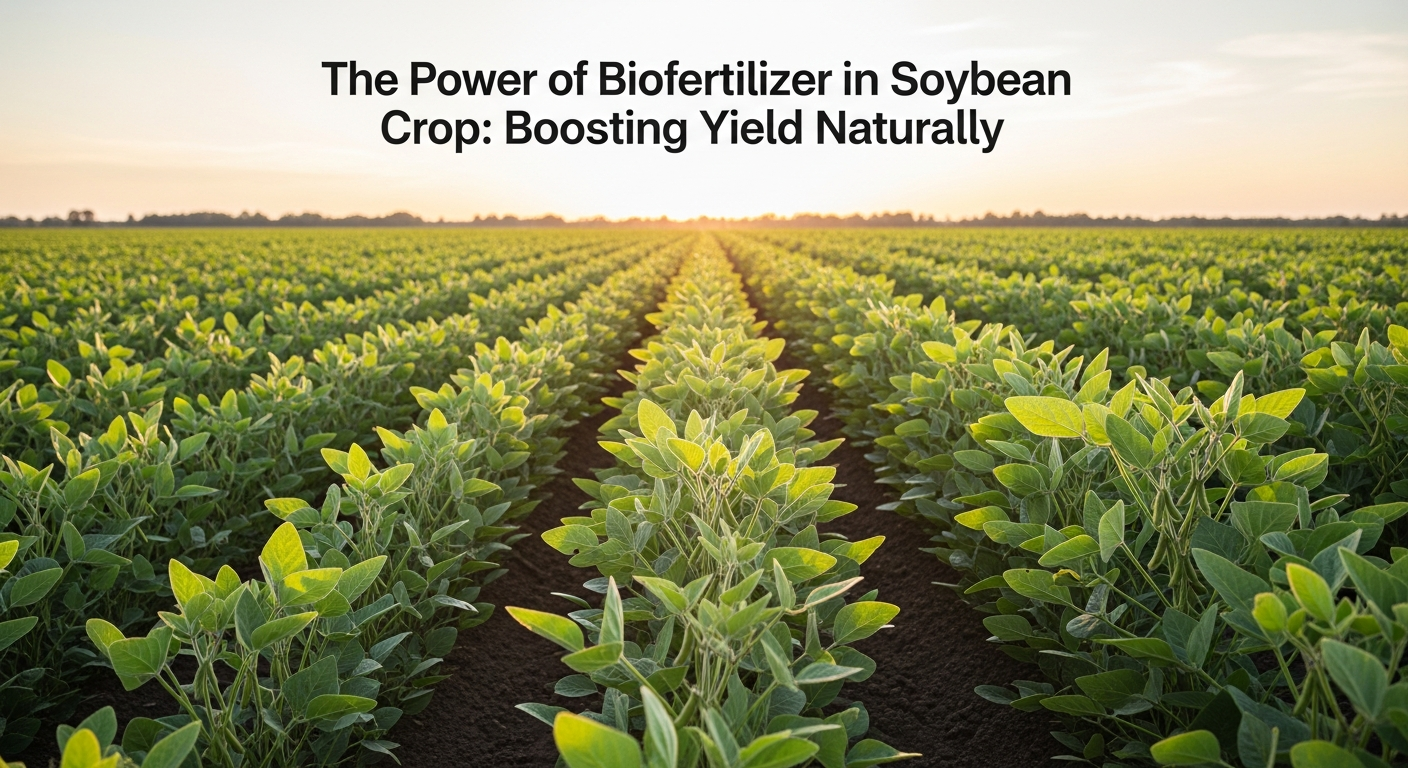
Soybean cultivation now sees a shift towards using biofertilizer as a key element of sustainable agriculture and will help with natural improvement of soil fertility and productivity.
Soybeans are often referred to as a high nitrogen and phosphorus-demanding crop that require sufficient amounts of both nutrients for optimal growth. The use of beneficial microorganisms as biofertilizers aids in improving fixation of nitrogen, stimulating root development, increasing levels of nutrient absorption efficiency from soils by soybean plants, and aiding in soil microbe development and ultimately providing long-term improvements to soil fertility.
By using biofertilizers in soybean production, farmers are reducing their dependency on chemical fertilizers which, if used too aggressively, will damage the physical characteristics of the soil and cause reduced microbial diversity within the growing system. The use of biofertilizers will restore the biological equilibrium of the soils and, as a result, support environmentally-sound agricultural systems that promote sustainable agricultural productivity.
Farmers can greatly improve the quality and quantity of their crop yields from combining biofertilizers with balanced soybean fertilizers and maintaining good crop production practices. By adopting the use of biofertilizers, a farmer can produce healthier plants, develop a stronger root system, create increased levels of nodules and benefit from increased economic return in addition to a decreased impact on the environment as they continue to work with the use of biofertilizers in their farming practices.
Understanding Biofertilizers and Their Role in Soybean Cultivation
There are many different types of microbial formulations that improve nutrient availability and plant growth, they’re called biofertilizers. Biofertilizers are especially important for soybean cultivation to support nitrogen fixation and soil fertility and increase crop productivity via natural biological processes.
The use of biofertilizers in soybean crops can help create sustainable systems due to reduced use of chemicals and greater long-term health of the soils. They also improve the efficiency of nutrient use and support improved resiliency in the crops themselves, as well as promoting greater biodiversity in the soils.
Definition of Biofertilizer
Biofertilizers consist of living organisms capable of enhancing the natural growth of plants. These organisms contribute to the soil and its quality by supporting biological nutrient cycling within the soil.
Key Points:
- Provides beneficial microorganisms
- Enhances the availability of nutrients
- Improvement of root development
- Promotes sustainable agriculture

Importance of Biofertilizer in Soybean Crop
Using biofertilizer for growing soybeans increases the amount of nitrogen fixed and encourages good root nodule development; this leads to increased nutrient uptake and increased overall crop yield.
The major benefits of using a biofertilizer are:
- Increase nitrogen fixation.
- Increase root nodules' ability to form.
- Maximize crop production.
- Decrease reliance on fertilizers.

Role in Sustainable Farming
Through improving soil fertility and decreasing the amount of chemical fertilizers used, biofertilizers promote an eco-conscious way to grow food. Biofertilizers also help create sustainable agriculture in the long term.
Main Ideas:
- Lowers chemical waste
- Improves soil biodiversity
- Promotes organic farming
- Improved agricultural sustainability

How Biofertilizers Improve Soybean Crop Growth and Yield
Soybean growth can be improved with the use of biofertilizers, as biofertilizers increase the availability of essential nutrients, aid in microbial populations and processes in soils, facilitate nitrogen fixation, and enhance nutrient cycling.
Soybean plants benefit from the use of microbial inoculants, as these microbial inoculants help establish a stronger root system, enhance nutrient uptake by the soybean plants, and improve overall crop resilience. Ultimately, these factors all contribute to an increase in plant vigor and quality of grain produced.
Nitrogen Fixation in Soybean
Soybean roots develop nodules which are occupied by nitrogen-fixing bacteria that convert atmospheric nitrogen into a form of nitrogen that can be used by plants; this natural process has a profound impact on plant nutrition.
- Converts Atmospheric Nitrogen
- Enhances Plant Nutrition
- Increases Nodulation
- Decreases Need for Synthetic Nitrogen

Enhanced Nutrient Uptake and Soil Fertility
The availability of nutrients and higher soil microbial activity are aided by biofertilizers. The result is greater solubility of phosphorus and an improved efficiency of nutrient absorption.
Biofertilizer Benefits Include:
- Increased Phosphorus Uptake
- Promotes Soil Microbiota
- Improves Nutrient Use Efficiency
- Enhances Root Development
Improved Plant Growth and Yield
Soybeans treated with bio fertilizers exhibit enhanced vegetative growth, increased vigor of stems, and greater yield potential. Increased efficiency of nutrient utilization promotes good crop growth.
General Points:
- Improves Crop Vigor
- Improves Plants Growth Rate
- Improved Grain Quality
- Increases Yield Potential

Types of Biofertilizers Suitable for Soybean Cultivation
The different kinds of biofertilizers utilized for soybean agriculture are chosen according to the requirements of each crop as well as existing soil conditions. These microbial inoculants promote greater availability of nutrients and thereby support healthy growth of soybeans.
It is vital to select the appropriate strain of biofertilizer in order to achieve effective levels of nodulation, nutrient uptake, and crop productivity. Properly formulated microbial products will assist to improve long-term soil fertility.
Rhizobium Inoculants for Soybean
Bacteria from the genus Rhizobium form a symbiotic relationship by affixing to the roots of soybeans and assisting in nitrogen fixation. Soybean growers rely heavily on these biological inoculants.
The following are some benefits of using these biological inoculants:
- Creation of root nodules;
- Atmospheric nitrogen fixation;
- Improved crop nutrition; and
- Increased yield.

Phosphate Solubilizing Bacteria and Azotobacter
These microorganisms enhance both nutrient solubility and availability to promote and support healthy root development. They provide an improved ability for soybean plants to uptake nutrients efficiently.
Some example benefits are as follows:
- Improved solubilization of Phosphorus
- Enhanced nutrient uptake
- Increased microbial activity
- Improved root development
Mycorrhizal Fungi and Organic Biofertilizers
By increasing the root surface area, mycorrhizal fungi are able to increase the absorption of nutrients in a plant. Organic biofertilizers help sustain soybean production over time.
Mycorrhizal fungi and organic biofertilizers have several advantages:
- Increase water absorption
- Increase absorption of phosphorus
- Support the development of stronger roots
- Promote the use of sustainable farming practices

Application Techniques and Best Practices for Using Biofertilizers
Soybean biofertilizer application methods are critical to enhancing the effectiveness of soybean biofertilizer applied in conjunction with soybean crops. The most used methods are seed treatment and soil application.
The application of biofertilization requires appropriate timing/amounts and suitable storage conditions to maintain the viability of the biofertilizing microbe and to enhance the crop response. Producers may comfortably integrate the application of biofertilizing agents with the application of other soybean fertilisers to yield optimal benefits.
Seed Treatment Methods
When seeds are treated with beneficial microorganisms, they contact soybean roots directly at germination, subsequently leading to better nodulation and root colonization.
Method:
- Microbially attached to the seed
- Colonization of roots improved
- Improved early growth
- Improved nodulation

Soil Application and Dosage Recommendations
By applying biofertilizers directly to the soil, these products can help stimulate and increase the development of beneficial organisms in the rhizosphere. The proper amount of biofertilizers must be used for optimal nutrient benefits.
Key Points:
- Increases soil fertility;
- Improves the cycling of nutrients;
- Promotes microbial life; and
- Enhances nutrient use efficiency.

Compatibility with Soybean Fertilizers
Combining biofertilizer and balanced soybean fertilizers will improve nutrient management. Using the right combination of these products can improve your crop yield by improving compatibility between them.
Key Takeaways:
- Providing integrated nutrition
- Reduced reliance on chemical fertilizer
- Increased efficiency of fertilizers
- Improved response from crops

Economic and Environmental Benefits of Using Biofertilizers
Farmers can save money on fertilizer, boost their profitability, and be environmentally responsible through biofertilizers.
Farmers who use biofertilizers will also see many benefits to the environment such as reduced soil degradation, decreased pollution levels, and an increase in biodiversity. By maintaining an ecological balance over time, biofertilizers provide long-term benefits to the agricultural system overall.
Reduced Dependency on Chemical Fertilizers
Biofertilizer use in soybean farming will lessen the reliance on excessive chemical fertilizers, which will help protect the environment and enhance sustainability through continued application of biofertilizers.
Advantages:
- Less Chemical Use
- Better Soil Quality
- Pollution Reduction
- Support of Organic Agricultural Practices

Cost-Effective and Sustainable Farming
By utilizing bio-fertilizers, farmers can reduce their fertilizer costs, while also achieving greater yield or productivity from their crops.
Some of the benefits of Cost Effective and Sustainable Farming are:
- Lower costs for inputs
- More productive yields
- Greater profit potential
- More sustainable practices

Environmental Advantages
Environmental biofertilizer helps protect our environment by decreasing chemical exposure and increasing biological activity in soils.
Benefits of Environmental:
- Increase Biodiversity
- Decreased Contamination of Runoff
- Enhances microbial function of soil
- Supports Eco-Friendly Farming

Common Challenges and Solutions in Soybean Biofertilizer Use
Biofertilizers have many advantages; however, there are still obstacles to their success due to storage methods, temperature and moisture levels in the environment, and farmer awareness. For biofertilizers to have an impact; they must be properly handled so that the microbes remain alive.
Providing training to farmers on how to correctly use and apply biofertilizers and developing quality assurance standards will allow farmers to get the most out of using biofertilizers for growing soybeans.
Storage and Shelf-Life Issues
The effectiveness of biofertilizers will be diminished by poor storage conditions resulting in less survivability of microbes therein. Proper handling will improve the shelf life of biofertilizers.
Key points for storage and shelf-life:
- Protect the biofertilizer from sunlight
- Store in a cool environment
- Avoid contamination
- Maintain moisture balance

Climatic and Soil Factors
Soil quality, moisture levels, temperature, and soil pH all greatly influence the survival of microorganisms in the environment and their performance as biofertilizers on soybean farms.
Key Points About Soil and Climatic Factors Are:
- Soil Quality
- Moisture Content
- Temperature
- Soil pH

Quality Control and Farmer Awareness
Both quality assurance and farmer education must be present in order for biofertilizer use to be successful and for soybeans to be grown well.
Key points of Quality Assurance and Farmer Education:
- Utilize only certified products
- Train farmers appropriately
- Monitor the microbial quality of biofertilizers
- Increase awareness through educational programs

FAQs
Q1. What is biofertilizer in soybean crops?
Bio-fertiliser is a means of helping soybean plants to obtain nutrients naturally.
Q2. Which biofertilizer is best for soybean cultivation?
Rhizobium is the best type of bio-fertiliser for producing soybeans.
Q3. How does biofertilizer improve soybean yield?
Bio-fertilisers help improve the nutrient uptake of the plant and promote the growth of the plant through the use of nitrogen.
Q4. Can biofertilizers replace soybean fertilizers completely?
Bio-fertilisers will not completely replace the need for synthetic fertiliser on soybean crops, but they will help reduce the amount of fertiliser required.
Q5. When should biofertilizer be applied to soybean seeds?
The best time to apply bio-fertilisers to soybean seed is prior to sowing when treating seeds.
Conclusion: Embrace Biofertilizer in Your Soybean Crop for Higher Yields and Sustainable Farming
The usage of biofertilizers for soybean crop cultivation provides an environmentally friendly, sustainable way to increase productivity, improve soil fertility, and decrease reliance on chemical fertilizers. Beneficial microorganisms help increase nutrient availability, strengthen the root system, and promote healthy crop growth during the growing season.
Farmers who use biofertilizers in combination with properly balanced soybean fertilizers will realize greater yields, healthier soils, and higher economic returns. This method promotes environmentally sound agriculture while maintaining the long-term soil productivity and environmental sustainability of the farm.