


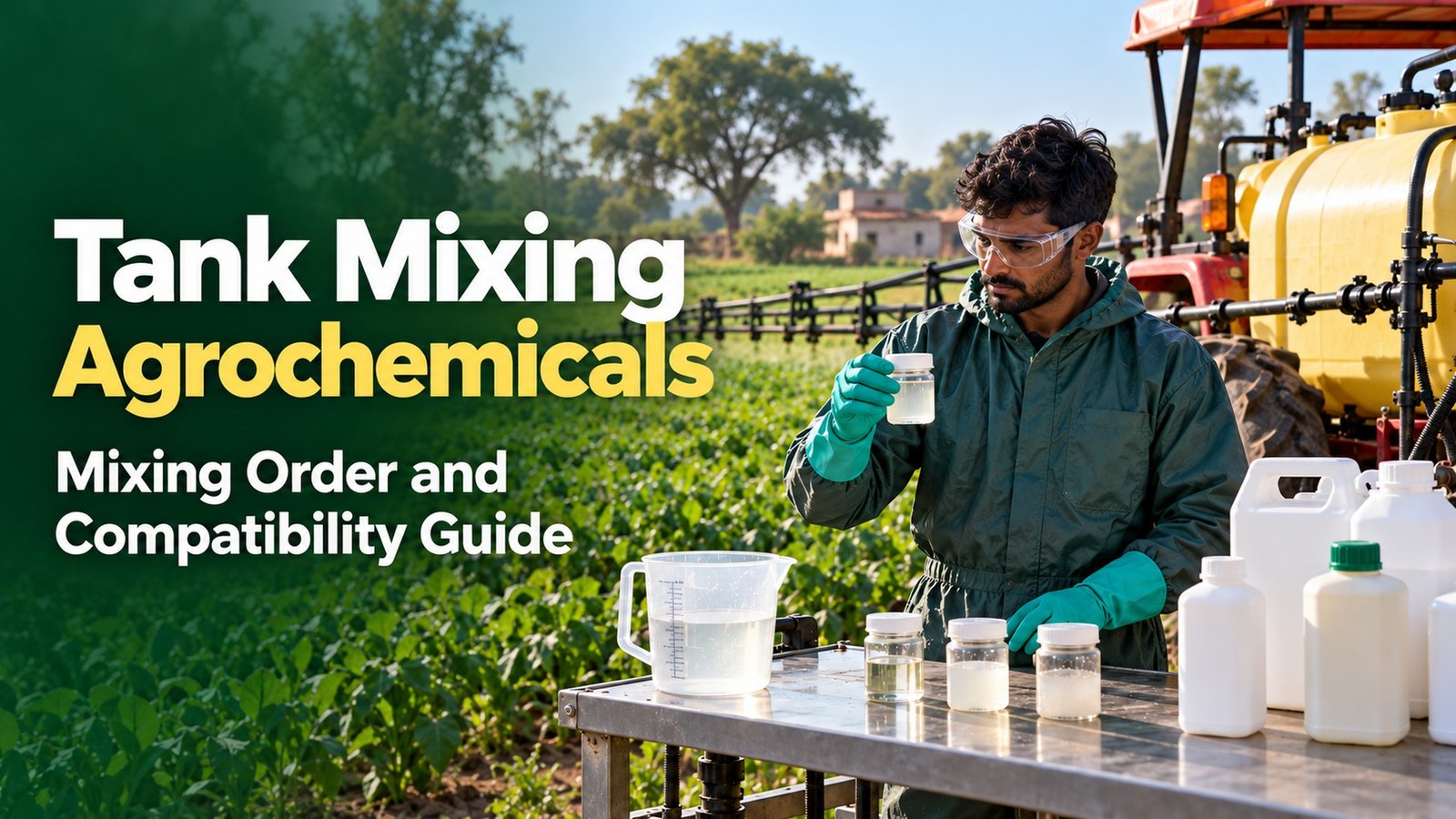
Combining two or more crop protection or crop nutrition products in a single spray tank is one of the most common practices on modern farms. A well-planned tank mix can save time, fuel, labour and machine passes over the field. A poorly planned one can clog nozzles, leave sludge at the bottom of the tank, reduce the effectiveness of the products, or even damage the crop.
This guide explains the basics of tank mixing agrochemicals: what compatibility means, how to check it with a simple jar test, a widely used mixing order, and practical habits that help growers and applicators get consistent results. It is a general guide only. The product label always comes first, and where a label gives specific mixing instructions, those instructions override anything here.
Why Tank Mix?
Growers usually tank mix for practical reasons:

These benefits only hold if the products work well together. That is where compatibility comes in.
Understanding Compatibility
There are two kinds of compatibility to think about:
Physical compatibility
Physical compatibility is about whether the products mix evenly and stay mixed. Signs of physical incompatibility include flakes, crystals, gel formation, oily layers, foam that will not settle, or sediment that sinks to the bottom and does not re-suspend with agitation. These problems can block filters and nozzles and lead to uneven application.
Chemical and biological compatibility
Chemical compatibility is about whether the products react with each other in a way that reduces their activity or increases the risk of crop injury. This is harder to see. A mix can look perfectly fine in the tank but still perform poorly in the field or cause leaf burn. Label statements, manufacturer guidance and local agronomic advice are the best sources of information here.
Run a Jar Test First

If the mix separates but re-suspends easily, it may still be usable with continuous agitation. If it forms gels, lumps or sludge, do not mix it in the sprayer. Dispose of jar test contents according to label directions and local regulations.
A General Mixing Order
Many extension services and manufacturers recommend a mixing order based on formulation type. A commonly used sequence is often remembered by the acronym W-A-L-E-S:

Add one product at a time and allow each to mix fully before adding the next. Some product labels specify a different order, and some adjuvants must be added first or last. Always follow the label where it differs from this general guide.
Water Quality Matters
Water makes up most of the spray solution, so its quality affects how products perform.
- Hardness: calcium and magnesium in hard water can bind with some active ingredients and reduce their activity. Some labels recommend a water conditioner such as ammonium sulphate for this reason.
- pH: some active ingredients break down faster in alkaline water. Check the label for any pH guidance and consider testing your water source.
- Suspended soil or organic matter: muddy water can bind certain actives and block filters. Use clean water wherever possible.
- Temperature: very cold water can slow the dispersion of dry formulations.
Practical Tips in the Field
- Read every label in the mix before you start. Note restrictions on tank mixing, crop stage, re-entry intervals and pre-harvest intervals.
- Start with a clean sprayer. Residues from a previous product can react with the new mix or injure a sensitive crop.
- Keep agitation running from the moment the first product goes in until the tank is empty.
- Pre-slurry dry products in a small amount of water if the label allows it, to help them disperse.
- Mix only what you can spray the same day. Many mixes are not stable if left standing overnight.
- Keep records of products, rates, order, water source and results. They help you repeat successful mixes and avoid problem ones.
- Check filters and nozzles after the first tank of any new combination.
Common Mistakes to Avoid

Frequently Asked Questions
Can I tank mix any insecticide with any fungicide?
No. Some combinations are compatible and some are not. Check both labels for tank mix statements, run a jar test, and ask the manufacturer or a qualified agronomist if you are unsure.
Does a successful jar test mean the mix is safe for my crop?
Not necessarily. A jar test checks physical compatibility only. It does not show whether the mix will reduce product performance or cause crop injury. If there is any doubt, test the mix on a small area of the crop first and observe it for several days.
Can I add foliar fertilisers or micronutrients to a pesticide tank mix?
Often yes, but not always. Some nutrient products can change water pH or react with certain formulations. Check the labels, run a jar test, and add nutrients in the order recommended by the product guidance.
What should I do if the mix separates in the sprayer?
Keep agitation running and check whether the mix re-suspends. If it forms gels, lumps or sludge, stop and do not spray. Contact the product supplier for advice on safe handling and disposal according to local regulations.
Conclusion
Tank mixing is an efficient way to protect and nourish crops, but it rewards careful planning. Read every label, test new combinations in a jar, follow a logical mixing order, pay attention to water quality, and keep good records. These simple habits reduce the risk of blocked equipment, wasted product and crop damage.
Safety note: agrochemicals must be handled, mixed, applied and stored strictly according to their labels and local regulations. Always wear the recommended personal protective equipment, and consult a qualified agronomist or the product manufacturer before trying an unfamiliar tank mix. For help choosing products suited to your crops, contact the Bulk Agro Chem team.