
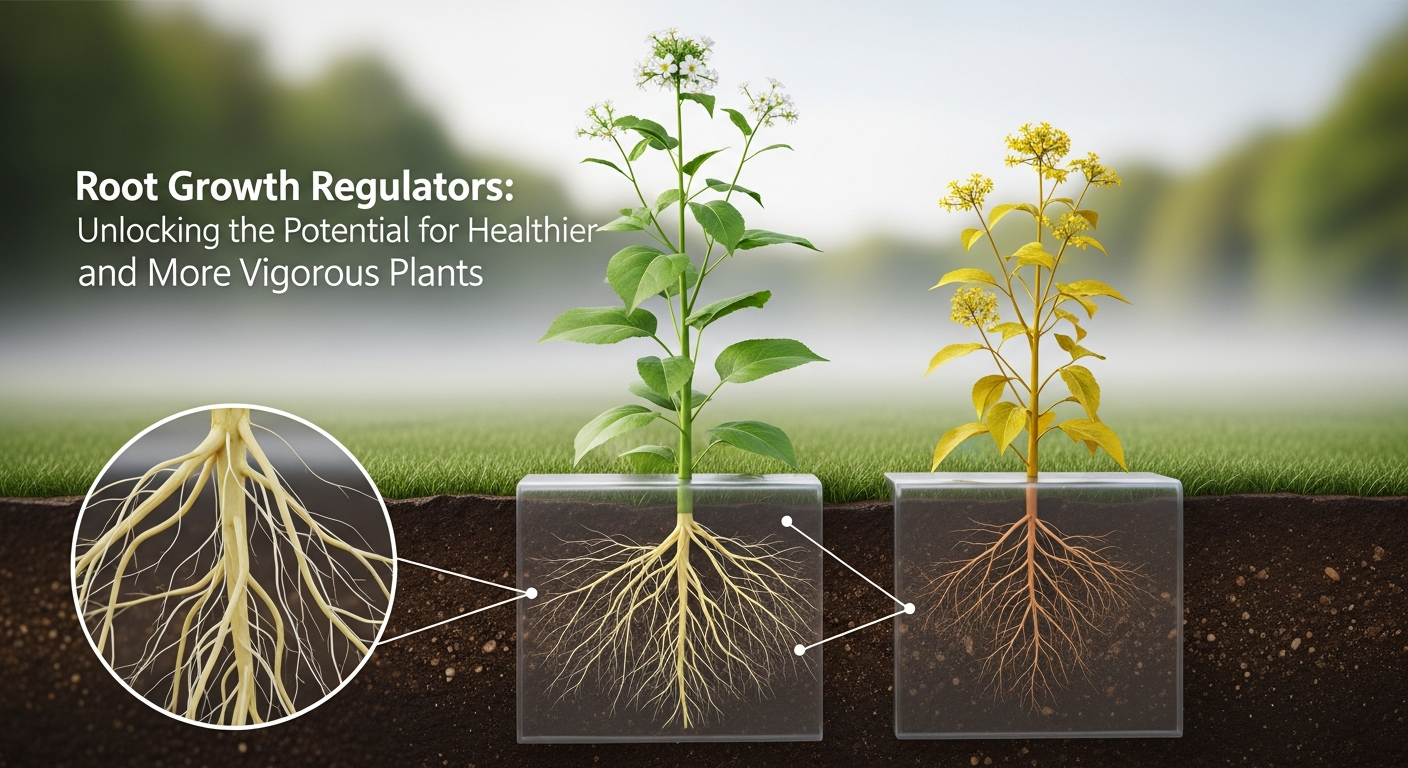
Root growth regulators are key components of modern agronomy, and help enhance root growth and establishment in order to enhance overall health of your plants by improving their ability to draw in and absorb nutrients and water.
The action of root growth regulators on plant hormones allows their use in even very low concentrations to effectively stimulate rapid establishment and development of plants.
Increase in root length and improved soil interaction make root growth regulators an essential tool for producing stronger, more stabilized crops that yield higher.
Understanding Root Growth Regulators and Their Role in Plant Development
Root growth regulators are unique materials that promote strong and efficient root systems for healthy growth and increased production. These regulators work by positively influencing the plant hormones that govern root initiation, elongation, and branching.
The knowledge of root growth regulators allows growers to establish plants in a manner that improves overall performance. The importance of the growth regulator for plants is critical from early seedling development through to mature plant stabilization and assists in increasing root growth and ultimately helps crops to be successful over the long-term.
What Are Root Growth Regulators and How Do They Work?
Root growth regulators are chemical compounds that promote and regulate the development of roots by influencing hormonal activity in plants.
They result in:
- increased root initiation and development
- increased root length and branching
- improved water and nutrient uptake by plants
- improved establishment of plants earlier
- increased stability of the plant within the soil.
Role of Plant Hormones in Root Growth
Hormonal substances produced by plants have an important role in regulating root development, and plant hormone growth regulator has a direct impact on those substances. There are several different hormones that will help stimulate and/or regulate root formation and/or root expansion.
The following is a summary of the information regarding the effects each of the following hormones has on roots:
- Auxin: Stimulates the beginnings of roots (initiation) and helps to elongate roots (elongation).
- Cytokinin: Works with Auxin to help balance the growth of roots and shoots.
- Gibberellin: In conjunction with the other hormones, supports overall plant growth.
- Ethylene: Affects root hair development
- Abscisic Acid: Allows for the survival of roots under drought and/or other stressful growing conditions.

Importance of Root Development for Plant Health
The foundation for healthy plants starts with their roots, which are responsible for the uptake of nutrients, water absorption, and plant stability. Root growth regulators increase the depth of root systems while improving root efficiency.
Benefits:
- Increase in efficiency of nutrient uptake
- Increase in the ability to absorb water
- Increase in plant stability and anchoring
- Increase in ability to tolerate drought or other stressful conditions
- Increase in yields and quality of crops.
The Science Behind Root Growth Regulators: How They Stimulate Healthy Root Systems
Root growth regulators are formulated for the purpose of enhancing or regulating root development by modifying internal physiological processes of plants.
Root growth regulators work in conjunction with the plant’s internal hormonal systems and cellular processes to produce a more extensive, stronger and more efficient root system. Understanding how root growth regulators work provides farmers and growers with important information for establishing plants more effectively and increasing productivity.
By improving root depth to increase nutrient uptake from the soil, root growth regulators are essential for stimulating root growth and increasing overall plant performance.
Mechanism of Root Growth Regulators in Plants
The chemical substances known as root growth regulators, or RGRs, promote the activation of specific biochemical pathways in plants that promote root growth. Root growth regulators provide the plant with an increased amount of energy in order to promote rooting during the early stages of growth.
RGRs act to:
- Activate root initiation zones
- Increase the number and length of root branches
- Increase the plant’s ability to acquire nutrients and moisture from the soil
- Improve the depth and stability of the root system
- Increase the rate at which the plant establishes new roots.

Hormonal Interaction and Root Elongation
Plant hormones influence the elongation of roots. Growth-regulating chemicals enhance the ability of plant hormones to promote greater root length and function. Auxins are the major hormones responsible for root development and they also create a balance between the various types of plant roots (primary, secondary, etc.) by influencing the other hormones that support root development.
Some important points to note:
- Auxins support root elongation through their activity
- Cytokinins provide a balance between the growth of roots and the growth of shoots
- Gibberellins provide help with normal root development
- Ethylene regulates the production and development of root hairs in roots
- In order to grow; the levels of the hormones must remain consistent so that roots can grow evenly.

Cell Division and Root Structure Development
Root growth has a significant dependence on both cell division and expansion. Both cell division and expansion will be influenced directly by root growth regulators. Root growth regulators will facilitate sufficient multiplication and development of both cells and root structure.
Summary:
- Stimulates rapid mitosis and cell division in root tips.
- Enhances root strength through thicker roots.
- Improvements in root architecture and structure.
- Root surface area is increased as well.
- Better penetration through the soil.
Benefits of Using Root Growth Regulators for Agriculture and Gardening
Regulators of root growth provide tremendous benefits in both horticulture and agronomy by fostering root systems that are more robust, deeper, and more efficient at finding resources.
They also aid in plant establishment, enhance nutrient uptake, and contribute to overall plant vitality from the very beginning of growth development. By being able to understand the advantages of root growth regulators; cultivators will be able to utilize them to achieve maximum yield and performance from their plants.
From enhancing interaction with the soil to increasing resistance—a plant growth regulator is significant to enhancing the growth of roots and securing the long term success of crops.
Improved Root Biomass and Plant Stability
Root growth regulators help to fend off environmental stress and the effects of soil disease by creating an effective root system that will allow the plant to endure some very difficult conditions, such as drought, salinity, freezing, etc.
Key points include:
- Increase in drought tolerance and overall stress tolerance
- Increase in resistance to root rot due to the presence of soil pathogens (bacteria/fungi)
- Assist in recovering from adverse conditions
- Increase in plant defense and resistance to disease
- Maintain consistent growth even under stress.

Enhanced Nutrient Uptake and Water Efficiency
The absorption of water and nutrients is highly dependent on the presence of efficient roots. Therefore, the use of plant growth regulators greatly enhances this process.
An improved root system allows the plant to absorb greater levels of nutrients and utilize available water more effectively.
- Increase the ability to absorb nutrients
- Increase the ability to utilize water efficiently
- Increase the amount of surface area on the roots
- Improve the interaction between the roots and soil
- Decrease the waste of nutrients
Increased Stress Tolerance and Disease Resistance
Regulating root growth aids in the production of a strong root system that helps plants withstand adverse conditions (e.g., drought, salinity) and infection with pathogens that cause root disease in soil. A well-developed root system helps the plant endure difficult environments (e.g., dry).
Key Items – Stress Tolerance
- Improves drought and stress tolerance
- Enhances ability to resist root disease from pathogens in soil
- Assists in (recovering) from adverse environmental conditions
- Enhances plant immune system
- Provides continuous growth even in areas of stress.
Types of Root Growth Regulators and Their Specific Applications
There are several types of root growth regulators that have different functions, but all are used to improve the overall health and performance of your plants by enhancing and encouraging healthy root development.
This is done through plant hormones and other growth processes that affect the roots. With many options available, knowing the differences between the types of root growth regulators will allow growers to select the appropriate type for their plants to achieve enhanced results.
Growth Regulator for Plants – uses different types of both natural plant hormones and synthetic combined to influence root development and to enhance root growth and increase crop yields.
Auxins, Cytokinins, and Gibberellins Explained
The following are the major hormones employed in root growth regulators, which serve to regulate various phases of plant growth. Auxins promote root formation, cytokinins regulate and balance growth and development, and gibberellins aid in overall plant growth.
Some Key Points
- Auxins are responsible for stimulating both root initiation and elongation of the roots.
- Cytokinins produce a balance between the roots and the shoots of a plant.
- Gibberellins are responsible for assisting a plant's growth and development.
- Improve root structure and density and branching.
- Improve nutrient uptake and water uptake by a plant's roots.

Natural vs Synthetic Root Growth Regulators
Root regulating substances can be categorized into two groups according to their origin to be either natural or synthetic with each having its own advantages and specific application. Natural root regulators originate from plants or other organisms, while synthetic regulators are developed for the purpose of achieving rapid and accurate results.
Major Facts:
- Natural root regulators provide an environmentally friendly and slower acting effect
- Synthetic root regulators provide a faster and more exacting result than natural root regulators
- Both types of root regulators will assist in developing healthy roots and improving plant health
Declaratives of both natural and synthetic root regulators are appropriate for use in most types of agricultural production systems Natural and synthetic root regulators are utilized within all forms of agriculture and gardening.
Choosing the Right Growth Regulator for Plants
Using a growth regulator for rooting that is suitable for the plant species and stage of growth will help you attain the expected outcome based on your choice of a regulator. Different crops, soils, and growth stages of those crops require different growth regulators.
The key to maximizing root development is:
- Identification of the species of plant and stage of growth;
- Evaluation of soil and environmental conditions;
- Use of recommended application rates and methods;
- Integration with proper nutrient management;
- Observation of plant response in order to achieve expected outcomes.
Practical Applications: How to Apply Root Growth Regulators Effectively
By using proper timing, methods, and dosages, you can apply root growth regulators effectively and achieve optimal plant growth and production results.
Using the best time to apply plant roots growth regulators will help to establish healthy roots, enhance their ability to absorb nutrients and water, and encourage new root formation.
Applying root growth regulators to plants throughout their lifecycle will result in healthy, vigorous roots, regardless of how they are applied (seedling treatment in the soil, top-dressing to foliage, etc.).
Foliar Application vs Soil Treatment Methods
Root growth regulators can be applied to crops by means of either a foliar spray or a soil treatment, depending on the specific needs of the crop and its growth stage. Each application method provides a different way to deliver nutrients to the plant and to stimulate root development.
Key Considerations:
- Foliar Application – Rapid absorption at the leaf level
- Soil Application – Target nutrients directly into the root zone
- Foliar Method – Getting results quickly
- Soil Method – Establishing roots for future growth
- Selection will be determined by the specific stage and health of the crop.

Seed Soaking and Early Stage Application
Proper use of root growth regulators early in the growing cycle establishes a strong root system at an early age. When treating seeds or soaking seeds prior to germination, plants have the opportunity to develop roots shortly after germination.
Key Points:
- Encourage quick root development
- Increase the percentage of seeds that germinate
- Increase the growth potential of seedling
- Create a uniform growing crop
- Establish a solid basis for the crop.
Dosage Guidelines and Timing of Application
Correct application of root growth regulators is essential to their successful use. Incorrect timing and overdosing will cause the chemical to be less effective; proper application will provide maximum results.
Important Points:
- The best time to apply a root growth regulator is when the plant is in the early growth phase.
- Always use the recommended application rate.
- Avoid using too much of the regulator to prevent plant injury.
- Always apply the regulator uniformly across all plants in the crop.
- Always observe the plant’s response to the application.
Common Challenges and How to Overcome Them When Using Root Growth Regulators
The improper application of plant root growth regulators can not only prevent maximum performance; it can also result in reduced yield or crop damage.
Having an awareness of common problems associated with root growth and applying proper application techniques will lead to improved root development, improved overall health of the plant, and more uniform growth of crops.
When applying any growth regulator on plants, growers need to consider their dosage, whether or not they are compatible with one another, as well as any adverse effects on the environment they may create during use.
Risks of Overapplication and Misuse
Applying too many root growth regulators adversely affects plant development. Appropriate application of these substances aids in sustaining a well-functioning hormonal system of the plant.
Here are some important points to keep in mind:
- Too much of a good thing can limit a plant’s natural growth.
- Too much of a good thing can cause root injury and create imbalances within the root system.
- Incorrectly timed application results in reduced effectiveness of the root-growth regulator.
- Misuse of the root-growth regulator can cause plants to develop inconsistently throughout the crop
- Can result in increased cost without any corresponding return on investment.

Environmental Impact and Safety Considerations
When utilizing plant growth regulators properly, they are generally safe. However, improper use or handling can adversely affect the soil and the surrounding environment. To ensure ongoing more sustainable agricultural methods, responsible application must occur.
Some of the key points to responsible use of plant growth regulators are:
- Do not Overapply Products in Order to Protect Soil Microorganisms
- Prevent Run Off from Entering Water Bodies
- Use Recommended/Environmentally Safe Formulations
- Follow All Safety Guidelines During Application
- Store Plant Growth Regulator Products Diligently in Order to Prevent Lost of Quality of Product
Compatibility with Fertilizers and Crop Protection Products
It is very important to consider proper compatibility between root growth regulators and other products (fertilizers, pesticides) before mixing them together. Properly matched mixtures produce better results and reduce the likelihood of an adverse reaction.
Key Points:
- All root growth regulators are compatible with most fertilizers and pesticide products
- Mixing root growth regulators with highly acidic or otherwise incompatible products should be avoided.
- Conduct a small test for compatibility prior to mixing.
- Will improve overall efficiency of mineral nutrient application, when used properly.
- Will improve the effectiveness of crop protection programs when applied in combination with other materials.
Selecting the Best Root Growth Regulator for Your Crops
In order to achieve the best plant performance and consistency from all crops, it is important to have the proper root growth regulator (RGR).
Different crops, different soils, and different environmental conditions necessitate the use of individual formulations in order to achieve effective root growth. By selecting the appropriate RGR for the plant, the farmer may be able to improve nutrient uptake, root strength, and overall plant health as well.
When selecting the right RGR, the farmer can expect to have improved yields, healthier and stronger plants, and long-term success in agriculture.
Crop Type and Soil Condition Considerations
Crop response to plant growth regulators is highly variable depending on the type of crops and the soil characteristics. Comprehending crop needs and also understanding soil health assists in determining what type of product may be best used.
Here are some key points of consideration:
- Different crops require varying hormone types
- Soil fertility affects root growth
- Sandy soils need moisture retention assistance
- Clay soils require assistance for better root penetration
- Using appropriate products compatible with individual crops will achieve higher.
Environmental Factors and Climate Impact
Environmental factors like temperature, precipitation and humidity have a huge impact on the efficacy of root growth regulators. Selecting based on climate can help you achieve consistent responses from your plants, and reduce stress effects.
Key Points:
- High temperatures will affect the rate of absorption
- Rainfall can dilute or wash away the application
- The humidity level impacts the efficiency at which the plant absorbs nutrients
- Drought conditions require a more developed root structure
- Product development that is specific to your climate will perform better.
Product Quality and Regulatory Compliance
The effectiveness and safety of root growth regulators can be affected by the quality of the product. Purchasing certified and compliant products provides assurance that they will deliver reliable results as well as protect the crop and the environment.
Key Points:
- Select products manufactured by reputable companies
- Obtain products that have been approved by a regulatory agency and/or certified
- Verify that the composition and quality of the formulation are adequate
- Avoid using products that are not of sufficient quality or have not been verified.
- Follow the label directions carefully and consistent
FAQs
Q1. What are root growth regulators?
Root growth regulators are substances that stimulate and enhance root growth and development in plants.
Q2. How do root growth regulators improve plant health?
They improve nutrient uptake, water absorption, and overall plant strength by promoting better root systems.
Q3. Which hormone is best for root growth?
Auxins are the most effective hormones for promoting root growth in plants.
Q4. Can root growth regulators increase crop yield?
Yes, they enhance root efficiency, leading to better growth and higher crop yield.
Q5. Are root growth regulators safe for all crops?
Yes, when used correctly and in recommended doses, they are safe for most crops.
Conclusion: Harness Root Growth Regulators to Maximize Plant Health and Yield Today
Modern farming relies heavily on the roots that root growth regulators (RGR) provide, which are used to bolster the foundation of plant growth through the development of strong and vigorous root systems and, consequently, promote healthy plant development through RGR's ability to promote root development.
RGR enhances the ability of a plant to absorb nutrients, utilize water more efficiently, and achieve full plant vigor, resulting in better crop performance and increased resistance to environmental stresses. Proper use of RGR allows for the continuous and sustainable performance of crops produced by farmers.
Selecting an appropriate RGR for plants to incorporate into your crop management plan will provide a basis for long-term soil health and increased productivity. When RGRs are selected, applied, and timed appropriately, they create an increase in yield while improving crop quality, making them an important and valuable resource for progressive farmers with profitable operations.