To aid the growth of plants, using plant-based nitrogen fertilizer as part of a balanced fertilization program is very important for growers. The correct application of nitrogen increases plant growth, yield, and farm production.
Combining plant nitrogen fertilizer with insect control through insecticidal bio pesticides maintains soil health, while protecting crops. The integrated use of both reduces the environmental impact of farming and supports long-term success in agriculture.
Farmers who utilize responsible management of fertilizers and environmentally friendly crop protection methods will obtain improved production and soil quality and sustainable agriculture.
Understanding Insecticidal Bio Pesticides and Their Role in Agriculture
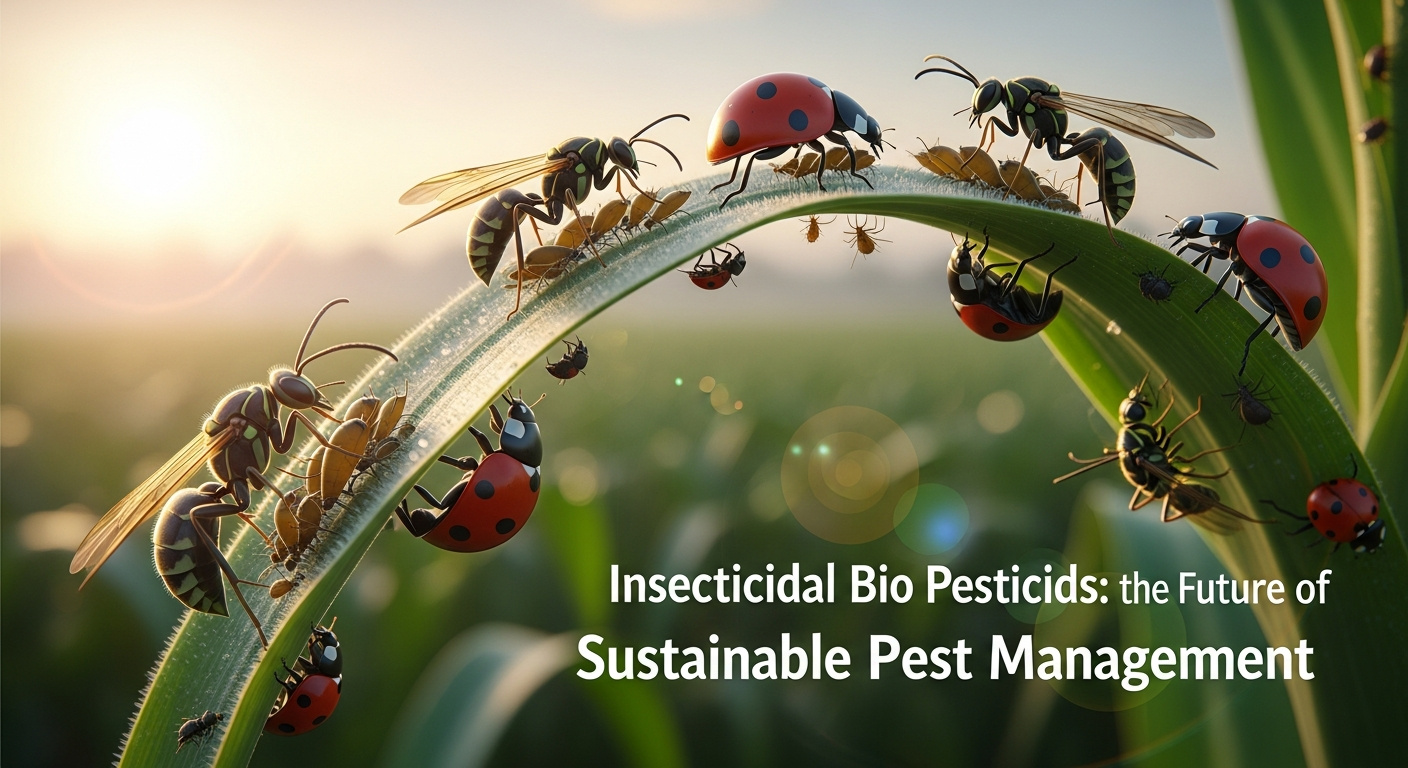
Due to its environmentally friendly qualities and effectiveness in agricultural production, the use of insecticidal biopesticides is becoming increasingly significant in modern agriculture today. BG Biopesticides come from natural origins such as plants, microorganisms, and minerals; hence, they are being produced by farmers to use as a way to successfully manage pest populations while preserving soil and crops.
Biopesticides Definition and Core Concepts
The term biopesticides refers to organic pesticides that can be used on crops without negatively impacting the environment and beneficial organisms.
Key Points on Biopesticides Include:
- Biopesticides are derived from organic sources such as fungus, bacteria and plants
- Biopesticides are made to target specific types of insects and other agricultural pests
- Biopesticides can quickly disintegrate in the environment and are non-toxic to the environment
- Biopesticides support sustainable agricultural production systems.

Importance of Natural Pest Control Solutions
Using biopesticides as a natural solution for pest control in agriculture is crucial to decreasing reliance on chemical pesticides while also improving the safety of crops.
Benefits:
- Reduced amounts of toxic chemical residues left on crops.
- Protected beneficial insect species and wildlife habitat.
- Improved soil quality over the long-term.
- Supporting long-term sustainable agricultural practices.
Role of Biopesticides in Agriculture Systems
Farmers are increasingly using biopesticides as they choose to use more eco-friendly ways of protecting their crops.
Key Benefits Include the Following:
- Control pests while not affecting the crops adversely.
- Increase the quality of crops and crop yields.
- Be utilized with Integrated Pest Management (IPM).
- Help promote organic and sustainable types of farming.

Main Types of Insecticidal Bio Pesticides and How They Work
Biopesticides are an effective control method for pests and sustainable farming. Biopesticides are made from natural materials and use their own unique biological process to control pests; they lower the use of chemicals and enhance the crop’s health.
Bacterial and Microbial Bio Pesticides
Due to their ability to specifically target pests, as well as their safety to non-target pests (such as humans and beneficial organisms), bacterial and microbial biopesticides have become an important component of integrated pest management systems.
Key Features:
- Made from microorganisms (including bacteria) such as Bacillus thuringiensis (Bt)
- Target specific insect larvae and pests during the larval stages of development
- Safe for human and non-target organisms
- Highly effective when used properly in conjunction with other pest management activities

Fungal, Viral, and Biological Agents
Biopesticides that utilize fungal or viral microorganisms naturally will infect and kill off pest species.
The following characteristics represent these agents successfully attacking and killing the pest population:
- Fungi produce infections in the host pest
- Viruses have specific host insects that are infected by the particular virus
- They are effective against larval stage pests and soil-dwelling pests
- They work best at high levels of humidity; in controlled environments

Botanical and Plant-Based Insecticides
Bio-pesticides that target insects are derived from plant material and refer to bio-based (non-synthetic) pesticides.
Main Points:
- Derived from natural plant sources (e.g. neem leaves, various types of herbs, etc.)
- Insect-repellent properties and many contain growth-regulating factors
- Safe to use around humans and the environment
- Biodegradable, easy to apply

Key Benefits of Using Insecticidal Bio Pesticides Over Chemical Alternatives
Insecticidal bio insecticides are becoming more prevalent in agriculture because farmers are looking for safe and sustainable ways to control pests. Biopesticides in agriculture provide effective pest management that minimizes potential negative impacts on the environment, and improves crop quality than chemical pesticides.
Environmentally Safe Pest Control
Insecticidal Bio-Pesticides are environmentally friendly pest management alternatives. Bio-Pesticides are designed to kill pests; however, they do not harm the environment.
Benefits Include:
- Do Not Hurt Beneficial Insects (like Bees And Predatory Insects)
- Little Or No Environmental Pollution
- Biodegradable And Non-Toxic (And Are Therefore Safer For The Environment Than Chemical Pesticides)
- Promotes Biodiversity In Agriculture Systems

Reduced Chemical Residues on Crops
One of the main benefits associated with biopesticides in agriculture is that they reduce harmful residues found on food crops.
Some advantages of biopesticides are as follows:
- They provide consumers with safer food
- They decrease the risk of chemicals contaminating the crops
- They are appropriate for organic farming
- They improve the overall quality of products exported

Sustainable Agriculture and Soil Health
The use of biopesticides is critical within the agricultural industry, as they help produce healthy soils that can sustain crops for many years.
Some of the main advantages of biopesticides include:
- Increasing the activity of soil microbes.
- Decreasing soil erosion.
- Supporting integrated pest management (IPM).
- Increasing the amount of food that can be produced by crops.
Applications and Effectiveness in Crop Protection
Insecticidal incorporated biopesticides are increasingly important to modern crop production systems and an effective way to manage pests on farmed crops while protecting both the environment and promoting sustainable agricultural production methods. By applying biopesticides correctly, they help with promoting the health of crops and increasing the total productivity of a farm.
Application Methods and Field Practices
To achieve optimum effect in the field from the use of insecticide bio-pesticides, correct
Use requires that the following practices be followed:
- Pests need to be directly contacted through foliar applications.
- Soil application will provide control at the root zone for various pests.
- Seeds treated will provide early-stage protection from pests and should be applied early upon detection of infestation.

Role in Integrated Pest Management
Insecticidal biopesticides are important components of Integrated Pest Management (IPM) for the reduction of our dependence upon chemical pesticides.
They:
- Are used in conjunction with cultural and biological controls.
- Help to reduce the evolution of pest resistance.
- Support environmentally safe pest control methods.
- Help to maintain ecological balance.

Crop-Specific Usage and Field Effectiveness
How insecticidal biorational pesticides perform depends on the type of crop and the amount of pest pressure present.
Key Facts:
- Can be used on a wide range of crops including fruit, vegetable, cereal and pulse crops
- Depends on the formulation for use against individual insect pests
- Must have the right environmental conditions to work best
- Must be applied repeatedly for consistent results

Effective Application Techniques for Maximum Results
Proper application of insecticidal bio pesticides is critical to ensure maximum efficacy in pest management. Biopesticides used in agriculture perform best when applied at appropriate times, in suitable amounts and in accordance with compatibility protocols, which enables farmers to increase the level of crop protection they provide while ensuring sustainability.
Timing and Dosage Guidelines
To get the most out of using insecticidal bio pesticides you'll want to observe the following rules of thumb concerning proper timing and application dosage.
Recommended Practices are:
- If the pest population is in its early stages,
- apply the appropriate amount of spray in the morning or late afternoon,
- and do not apply in areas that could be affected by a heavy rain or storm prior to spraying.

Compatibility with Other Crop Treatments
Biopesticides for insects can be used along with the treatments of any other crops, therefore increasing the efficiency of the entire plantation.
These biopesticides are compatible with:
- The majority of both fertilizers and micronutrients
- All organic crop input
- Strong chemical pesticides (avoid)
- Conducting a small compatibility test prior to actual mixing

Best Practices for Farmers and Growers
The use of insecticidal biopesticides can produce consistent results when best practices are adhered to by the farmer.
Best Practices:
- Monitor levels of pests consistently to detect changes
- Use the recommended spraying apparatus or device
- Rotate different types of biopesticides to minimize development of resistance
- Properly store products before use

Challenges and Considerations in Adoption
Though biopesticides are a sustainable and environmentally-safe way to control pests, there are some challenges when implementing them in farming systems.
Knowing these limitations will help farmers more effectively apply biopesticide technology within their operations and enable them to make informed choices regarding the long-term protection of crops against pests and diseases.
Shelf Life and Storage Limitations
The major obstacle for biopesticide development is the biological sensitivity to environmental conditions that impact their volatility, storage, and shelf-life.
Significant Limitations -
- Shorter shelf-life than chemical pesticides
- More susceptible to temperature, moisture and light
- Proper storage conditions required to maintain efficacy
- Limited degree of stability after a recommended time

Cost and Market Availability
The uptake of biopesticides in the agricultural sector is often influenced by two variables: cost and accessibility; especially in developing parts of the world.
The following are important considerations when looking at these factors:
- In most cases biopesticides have higher initial costs than some types of chemical products.
- There is limited availability of biopesticides for purchase in rural or remote locations
- In some applications, biopesticides must be applied multiple times.
- There are significant supply chain and distribution issues surrounding biopesticides.

Regulatory and Awareness Barriers
The use of biopesticides will be impeded by two main factors; inadequate information and regulatory limitations.
Barriers to Adoption:
- Low level of understanding as a result of limited exposure to DP's
- Complex processes to receive product registration and approval
- No training or technical support for growers to use DP's
- Believing that DP's do not provide the same level of control that registered chemical products provide

FAQ
Q1.What are insecticidal bio pesticides?
Natural pest control agents derived from plants, microbes, or biological sources.
Q2.How do biopesticides work against pests?
They control pests by infecting, repelling, or disrupting their growth and life cycle.
Q3.Are insecticidal bio pesticides safe for humans?
Yes, they are generally safe when used as per recommended guidelines.
Q4.Can biopesticides replace chemical pesticides?
They can reduce chemical use significantly but may not fully replace them in all cases.
Q5.What crops can use insecticidal bio pesticides?
They can be used on a wide range of crops including fruits, vegetables, cereals, and pulses.
Conclusion: Embrace Insecticidal Bio Pesticides Today for a Healthier Environment and Sustainable Farming Future
Insecticidal biopesticides represent a wise investment towards creating a greener and safer agricultural system. In addition to effectively controlling pests, these natural pest control solutions can minimize the negative impacts that conventional pesticides have on soil, crops, and the environment.
Because farmers are more concerned with the long-term viability of their operations, biopesticides will provide an affordable means to protect crops over the long haul.
By incorporating biopesticides into their normal farming procedures, growers can enrich the soil and help maintain beneficial organisms while producing clean crops (with no pesticide residue). As a result, not only will the grower’s crop be of higher quality; the grower will also receive higher prices for their crop, thus fostering consumer confidence in safe and sustainable food.
By using insecticidal biopesticides now, we are investing in a sustainable farming future that will provide farmers with more productive farming operations and will reduce the amount of natural resources that future generations will need.