
Humic Acid Fertilizer: Benefits, Uses and Soil Application Guide
Humic acid fertilizer is used in crop production to support soil condition, nutrient availability and root-zone performance. Humic substances are formed through the long-term decomposition of organic material and are commonly included in soil conditioners, organic-input programs and fertigation systems.
Humic acid is not a complete fertilizer by itself. It does not replace nitrogen, phosphorus, potassium or micronutrients. Its main value is in supporting the soil environment and nutrient-use efficiency when combined with a balanced crop nutrition program. This guide explains how humic acid works, where it may help, how it can be applied and what growers should avoid.
What Is Humic Acid Fertilizer?
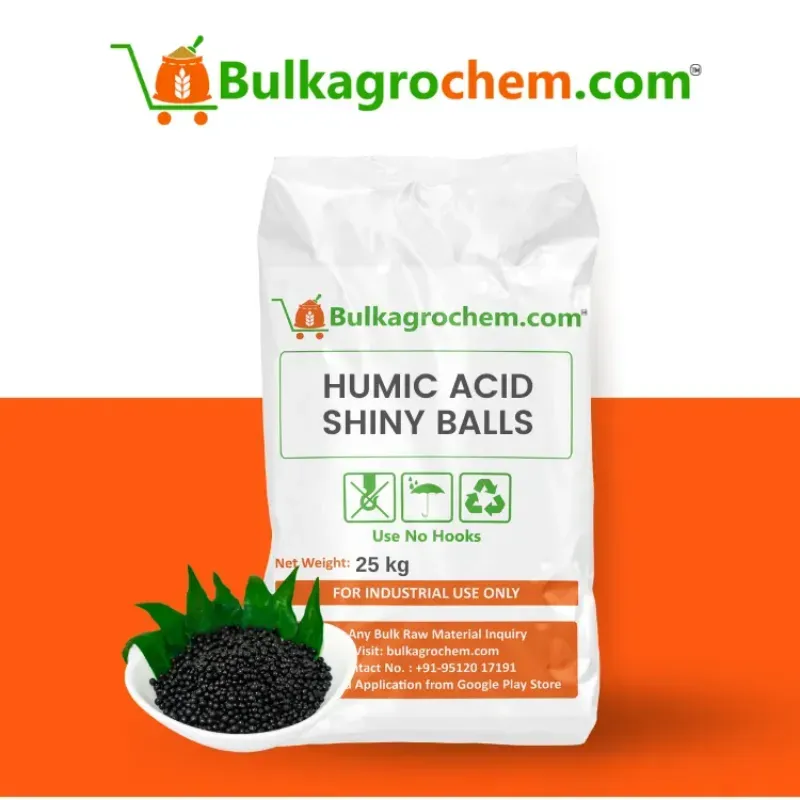
Humic acid refers to a group of complex organic compounds found in humus, peat, lignite and other decomposed organic materials. Agricultural humic products may be supplied as powders, granules or liquids and are often formulated for soil application, fertigation or use alongside fertilizers.
Humic acid products differ in concentration, solubility and raw material source, so buyers should compare the actual specification rather than assuming all products perform the same way.
How Humic Acid Works in the Root Zone
Humic substances can interact with soil particles, nutrients and roots. Their practical effect depends on soil type, organic matter, pH, crop and application rate.
Supports soil aggregation
Humic substances can contribute to the formation and stability of soil aggregates. Better aggregation may improve aeration, infiltration and root penetration, particularly in soils with poor physical condition.
Supports nutrient retention and availability
Humic substances contain functional groups that can interact with nutrient ions. This may help retain some nutrients in the root zone and reduce losses under suitable conditions.
Supports root activity
Humic products are commonly used to support root growth and root-zone activity. A healthier root system can improve the plant's ability to explore soil for water and nutrients.
Benefits of Humic Acid Fertilizer
When used in the right situation, humic acid can provide several practical benefits as part of a broader soil-fertility program.
- Supports soil structure: may improve aggregation and root-zone physical condition.
- Supports nutrient-use efficiency: can help keep some nutrients available in the root zone.
- Supports root growth: widely used in programs focused on stronger root development.
- Complements fertilizers: works alongside mineral and organic nutrient sources.
- Useful in fertigation: soluble humic products can be incorporated into drip and irrigation programs.
- Supports soil biological activity: humic substances can contribute organic carbon and a more favorable soil environment.
Humic Acid vs. Conventional Fertilizer
Humic acid and conventional fertilizer serve different purposes. Understanding that difference helps prevent unrealistic expectations.
| Factor Humic Acid Conventional Fertilizer | ||
| Primary role | Supports soil and nutrient-use efficiency | Supplies essential plant nutrients |
| Main contribution | Organic humic substances | N, P, K and other nutrients |
| Can replace NPK? | No | Forms the core nutrient supply |
| Typical use | Soil conditioning and root-zone support | Crop nutrition |
Humic acid is most useful as a complementary input, not as a substitute for the crop's actual nutrient requirement.
Where Humic Acid Can Be Most Useful
Humic acid can be considered in soils where root-zone condition, nutrient retention or organic matter management is a concern.
Sandy or low-organic-matter soils
These soils often have lower nutrient-holding capacity. Humic substances may help improve the root-zone environment when combined with appropriate organic matter and fertilizer management.
Compacted or poorly structured soils
Humic substances may support aggregate formation and soil physical condition, although severe compaction still requires proper mechanical and agronomic correction.
Intensive fertigation systems
Soluble humic products are commonly used in fertigation programs because they can be delivered into the active root zone with irrigation water.
How to Apply Humic Acid to Soil
Soil application is one of the most common ways to use humic acid. The objective is to place humic substances where they can interact with soil particles, nutrients and plant roots.
Good soil-application practice includes:
- Apply close to the active root zone where practical.
- Use the product rate stated on the label.
- Apply with adequate soil moisture or irrigation where recommended.
- Combine with a complete crop nutrition program.
- Repeat only according to crop need and product guidance.
Using Humic Acid in Fertigation
Many soluble humic products are designed for drip irrigation or fertigation. This approach can place the product directly into the wetted root zone.
Before using a humic product through irrigation:
- Confirm that the formulation is fully soluble or suitable for the system.
- Check water quality and filtration.
- Avoid excessive concentration that could create deposits or clogging.
- Check compatibility with other fertilizers in the stock tank.
- Flush irrigation lines according to system requirements.
Can Humic Acid Be Used as a Foliar Spray?
Some humic and fulvic formulations are marketed for foliar application, but performance depends heavily on formulation and concentration. Humic acid molecules are relatively large compared with fulvic fractions, so foliar products are often designed specifically for leaf uptake.
Always follow the exact product label and avoid assuming that every soil-applied humic product is suitable for foliar spraying.
Humic Acid vs. Fulvic Acid
Humic acid and fulvic acid are both humic substances, but they differ in molecular size and solubility.
| Feature Humic Acid Fulvic Acid | ||
| Molecular size | Generally larger | Generally smaller |
| Main use | Soil conditioning and root-zone support | Nutrient transport and foliar/soil applications |
| Solubility | Depends on pH and formulation | Typically more soluble across a wider pH range |
Many commercial products combine humic and fulvic fractions because they can provide complementary functions.
Humic Acid and Nutrient Availability
Humic substances can interact with nutrients in several ways. They may help retain cations, influence micronutrient availability and support root activity. However, humic acid does not create nutrients that are absent from the soil.
If a crop is deficient in nitrogen, phosphorus, potassium, zinc, iron or another essential nutrient, the deficiency still needs to be corrected with an appropriate fertilizer or micronutrient source.
Common Mistakes to Avoid
Using humic acid as a complete fertilizer
Humic acid supports the soil environment but does not supply a complete nutrient package.
Expecting instant soil transformation
Soil improvement is usually gradual. Humic products work best as part of a longer-term soil-health strategy.
Ignoring product concentration
Different products can contain very different levels of humic substances. Compare active content, solubility and formulation before purchasing.
Overlooking compatibility in fertigation
Concentrated humic products can react differently with fertilizers depending on pH and formulation. Check compatibility before mixing in stock solutions.
Humic Acid Products from Bulkagrochem
Bulkagrochem supplies agricultural inputs for growers, distributors and bulk buyers, including soil conditioners and crop nutrition products. Buyers evaluating humic acid should compare concentration, solubility, application method and intended crop use before selecting a formulation.
For complementary crop nutrition options, explore the Bulkagrochem fertilizer range. For bulk enquiries, availability and purchasing support, use the Bulkagrochem contact page.
Best Practices for Better Results
- Start with soil condition. Identify the actual soil or root-zone problem first.
- Use the right formulation. Choose powder, granule or liquid according to application method.
- Follow the label. Concentrations and rates vary significantly between products.
- Combine with balanced nutrition. Humic acid complements fertilizer; it does not replace it.
- Check fertigation compatibility. Avoid mixing concentrated products without verification.
- Track crop response. Evaluate roots, crop vigor and nutrient status over time.
Frequently Asked Questions
1. What is humic acid fertilizer used for?
It is used to support soil structure, nutrient retention, root development and nutrient-use efficiency as part of a balanced crop-management program.
2. Is humic acid a fertilizer?
It is better described as a soil conditioner or biostimulant-type input. It does not replace the essential nutrients supplied by fertilizers.
3. Can humic acid be used in drip irrigation?
Yes, many soluble formulations are suitable for fertigation. The product must be compatible with the irrigation system and other fertilizers being used.
4. Can humic acid improve root growth?
Humic substances are commonly used to support root-zone activity and root development, although the response depends on soil, crop and formulation.
5. Is humic acid the same as fulvic acid?
No. Both are humic substances, but fulvic acid generally has a lower molecular weight and greater solubility than humic acid.
6. Can humic acid replace NPK fertilizer?
No. Humic acid can improve the soil environment and nutrient-use efficiency, but crops still require adequate nitrogen, phosphorus, potassium and other nutrients.
7. How often should humic acid be applied?
Frequency depends on product concentration, crop, soil condition and application method. Follow the product label rather than using one universal schedule.
Conclusion
Humic acid fertilizer is most useful as a soil-support input that helps improve root-zone condition and nutrient-use efficiency. Its value is highest when combined with good soil management, balanced fertilization and proper irrigation.
For growers and bulk buyers, the key is to choose the correct formulation, apply it in the right place and avoid treating humic acid as a substitute for essential crop nutrients.
Need humic acid or related agricultural inputs in bulk? Contact Bulkagrochem for product availability, purchasing support and crop-input requirements.