
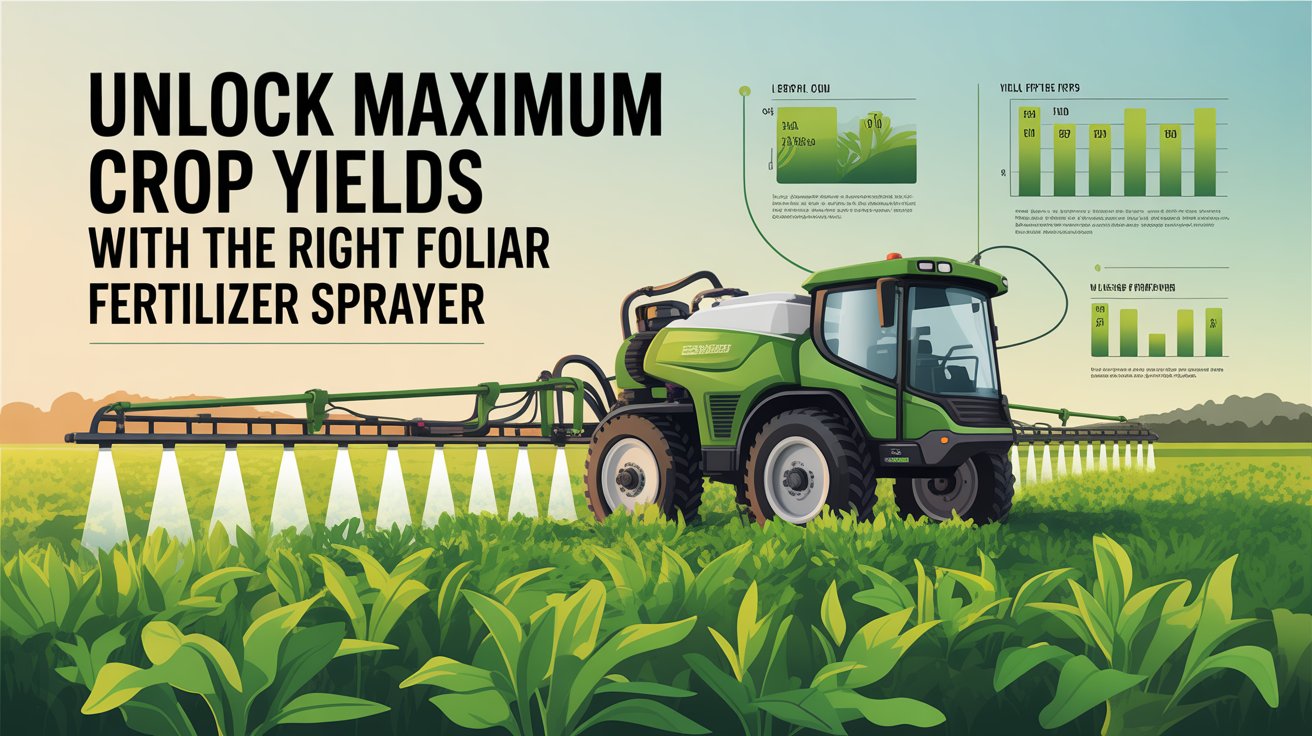
Foliar fertilizer sprayers are an essential tool for applying nutrients directly to the leaves of plants for quick and effective absorption. The use of foliar fertilizer is very effective and efficient because unlike soil-based fertilizers, which must be absorbed through the soil; when a foliar fertilizer is applied to the foliage of a plant, the nutrients can be quickly absorbed during critical stages of plant growth or when the plant is lacking essential nutrients.
Foliar fertilizer sprayers can provide the necessary nitrogen, potassium, micronutrient and specialty formulations to enhance plant vigor, increase photosynthesis and support flowering/fruiting of plants needing an immediate boost of nutrition due to non-optimally growing conditions. This method of applying fertilizer directly to the leaves also allows growers to decrease the dependence on soil conditions for nutrient absorption while maximizing fertilization efficiency.
With the right sprayer and properly mixed fertilizers, farmers will produce healthier crops with a higher level of stress resistance and greater yield potential.
You can use the right foliar fertilizer sprayer to transform how you fertilize your crops, whether you are trying to correct nutrient deficiencies or maximize your yields. By choosing the right sprayer, you will be able to apply fertilizer quickly and accurately to your crops, leading to increased crop performance year after year.
Understanding Foliar Fertilizer Sprayers: What They Are and Why They Matter
The world of agriculture is becoming more precision-driven and efficient; therefore, the requirement for rapid nutrient delivery has never been more prevalent. The use of a foliar fertilizer sprayer is to provide quick access to the plant’s leaves so that nutrients can be applied directly for rapid absorption of the nutrients. The use of a foliar fertilizer sprayer is different from that of traditional soil applications because the foliar application of fertilizers will provide quick entry of the nutrient into the plant’s system. This is especially true during critical growth stages or if the plant has visible nutrient deficiencies. The foliar application of fertilizer increases the efficiency of a crop’s nutrients and decreases the wastage of fertilizer in the soil.
The use of foliar feeding by farmers is becoming more common as a way to improve crop health, increase crop yield, and help farmers manage nutrient stress more effectively.
What Is a Foliar Fertilizer Sprayer?
A foliar fertilizer sprayer uses liquid fertilizer solutions to help the plant absorb nutrients through their leaves. The liquid will help a plant to absorb the necessary nutrients quickly and in large quantities, as plant leaves can take up dissolved nutrients through both their stomata (pores) and cuticle.
Some of the features of a foliar fertilizer sprayer are:
- Adjustable or interchangeable nozzles to create different spray patterns/styles.
- Fine mist output helps in improving absorption of the fertilizer by the leaves.
- Able to adjust spray pressure assist in providing more accurate amounts of fertilizer.
- Can use micronutrients as the type of fertilizer to use in combination with the use of liquid fertilizers.
When utilized correctly, the use of a foliar fertilizer sprayer will help provide for even coverage of fertilizer application, which will be maximized in effectiveness of the application through the foliar method of applying fertilizer.
Foliar Feeding vs Soil Fertilization
Both foliar and soil fertilization methods are important, but they serve different purposes in crop nutrition.

Importance of Foliar Application of Fertilizer in Agriculture
The role of the foliar Fertilizer application in today's agriculture is crucial to improving the efficiency of nutrient utilization and reducing losses from leaching or soil fixation.

Farmers can have healthier plants and produce more high-quality crops through the incorporation of the foliar Fertilizer sprayer into their crop management practices. The combination of soil fertilizer with foliar application creates a balanced and effective nutrient management strategy that is essential to the long-term viability of agriculture.
The Science Behind Foliar Feeding: How Sprayers Boost Plant Health
Foliar feeding is a scientifically proven method whereby nutrients can be deposited onto the leaf surfaces of plants so that they can absorb those nutrients directly into their system at a faster rate, thereby improving the efficiency with which these essential elements are obtained. The application of foliar fertilizers can be accomplished through the use of foliar fertilizer sprayers which disperse dissolved nutrient solutions uniformly over the leaf surfaces of crops.
As the plants absorb the dissolved nutrients in a manner that does not rely on the available conditions in the soil, the use of foliar fertilizer applications provides an important alternative to traditional fertilizers for correcting deficiencies rapidly as well as providing support to the crops during critical periods of growth.Traditional fertilization relies on uptake through the roots, while with foliar feeding there are no limitations imposed by soil conditions related to nutrient fixation, leaching, poor root activity.
How Nutrients Are Absorbed Through Leaves
The stomata are small openings located on the surface of the leaves that allow dissolved nutrients to be pulled into the plant tissues, while the semi-permeable outer layer (cuticle) permits the penetration of liquid fertilizers via the stomata.
This entire nutrient absorption process is accomplished by several steps:
- The nutrient solution is evenly distributed throughout the leaf surface
- Dissolved fertilizer enters through the stomata or cuticle
- Nutrients are absorbed into the vascular system and. cell of the plant.
- Nutrients are quickly distributed throughout the plant to the growing areas.
Therefore, the ability of the plant to directly absorb nutrients through their leaves, using foliar fertilizer method, is a quick and easy way to achieve results with micro-nutrients such as zinc, iron and manganese.
Rapid Nutrient Uptake and Improved Efficiency
One of the main advantages of foliar feeding is speed. Nutrients applied to leaves can be absorbed within hours, compared to days or weeks through soil fertilizer methods.

When Foliar Application of Fertilizer Works Best
In order to optimally use foliar application of fertilizer, it should only be used on crops when:
- The soil has low nutrient availability.
- The plants are growing rapidly.
- The plant is in a flowering or fruit-setting period.
- There are deficiency symptoms present in the crops.
- Environmental stress conditions exist (e.g., drought or poor soil conditions).
To achieve the maximum benefit:
- Use the sprayer early in the morning or late in the day.
- Avoid using the sprayer during periods of extreme heat.
- Use the recommended fertilizer concentration for foliar application.
Adding a foliar fertilizer sprayer to crop management will help achieve better balance of nutrition, improved health of the plants and higher yielding crops. Together with using soil (ground) fertilizer application methods, the use of foliar feeding will be a most effective method of achieving sustainable and productive agricultural systems.
Types of Foliar Fertilizer Sprayers: Finding the Perfect Fit
Finding the best foliar fertilizer sprayer depends on your farm's size, the crops you are growing, and how often you fertilize using foliar applications. By choosing the right sprayer, you will be able to achieve more accurate spraying and optimize your plant's response to the nutrients in the fertilizer.
Depending upon the size of your farm or garden and the way you want to use the fertilizer, there are many types of foliar fertilizer sprayers to choose from, each with unique benefits and features.
Manual and Handheld Foliar Sprayers
If you own a small farm, nursery, or home vegetable garden, then you should consider using a handheld or manual sprayer to apply your fertilizers as it will give you good control of your fertilizer application in a small area.

Using a sprayer (whether it be handheld or manual) is great for applying micro-nutrient fertilizer solutions on a small number of plants.
Backpack and Electric Sprayers for Fertilizer Use
Backpacks and electric sprayers are good for medium-sized farms or orchards because they allow for better coverage than a manual sprayer and can be used at a constant pressure throughout the application of the fertilizer.
Advantages of backpack and electric foliar fertiliser sprayers include:
- Larger tank sizes
- Even distribution of spray over the field
- Less physical effort
- Allows for recurrent applications of fertiliser

Tractor-Mounted Sprayers for Large-Scale Farming
Tractor-mounted sprayers can provide excellent coverage at a high speed. Tractor-mounted sprayers are available for commercial farms that need to apply fertilizer on a large scale.
Advantages
- Ability to cover a large area quickly
- Consistent spray pressure (no matter how quickly you're spraying)
- Excellent for applying fertilizers that are used at high rates
- Labor and time savings
These advanced sprayers are preferable for large scale farming when rapid and consistent applications of fertilizer are needed.
Key Features to Look For in a Quality Foliar Fertilizer Sprayer
The right foliar fertilizer sprayer is an essential component in getting uniform fertilizer distribution and maximum nutrient uptake. The quality of the foliar application of fertilizer largely depends on spray droplet size and spray pressure and distribution; therefore it is critical to have the proper equipment to ensure that your plants receive their nutrients quickly and without any waste. In addition to helping to improve the performance of your fertilizer, a properly designed sprayer can also help to save time, money, labor, and all input costs.
By being familiar with the key features of a quality sprayer, you will be better able to make knowledgeable decisions to achieve ongoing success in agriculture.
Adjustable Spray Patterns and Droplet Size Control
The number one feature of a foliar fertilizer sprayer is having the ability to control the spray pattern and droplet size.
Why droplet size is important is as follows:
- Fine droplets means better leaf coverage.
- Uniform mist equals better fertilizer absorption.
- Less runoff means nutrients will not be wasted.
- Lower chances of leaf burn.
High-quality sprayers that have adjustable nozzles enable the user to change from misting or jet spraying depending on the type of crop and its stage of growth. This is essential for the proper application of fertilizer via foliar means and should be done in a manner that will promote plant health as well as fertilizer effectiveness.
Coverage Efficiency and Nozzle Selection
Application of fertilizer efficiently means applying to every leaf (the top and bottom surface of leaves).
Coverage efficiency affected by:
- Nozzle shape (e.g. cone, fan, and hollow cone)
- Spray pressure consistency
- Tank and tank flow rate
- Crop height and density

Durability, Ease of Cleaning, and Maintenance
A sprayer with long-lasting performance and accurate delivery of liquid fertilizer will allow for years of dependable use. Since liquid fertilizers have the potential for clogs or corroded parts, it’s important to choose a sprayer that has been designed with maintenance in mind.
Important features that contribute to a durable sprayer:
- Materials that resist corrosion
- Seals that do not leak
- Strong pumping mechanism
- Tank and filter designs that facilitate ease of cleaning
Cleaning the sprayer after each use of a foliar fertilizer application will prevent the build-up of residues that would otherwise impair the performance of the unit in subsequent applications. By purchasing a quality sprayer, you will reduce down time through repair while extending the life of the spraying equipment.
Environmental and Economic Benefits of Foliar Fertilization
Environmental Benefits of Foliar Fertilizing Fertilizers can have benefits from an environment and economic standpoint when it comes to foliar fertilizing practices being used in today's agriculture systems. Farmers are able to utilize a foliar fertilizer sprayer to apply fertilizers directly onto plant leaves that minimize fertilizer loss by leaching through soil, running off, or being held within soils due to their physical nature (fixation). A direct application of nutrients allows farmers to maximize nutrient effectiveness with less fertilizer utilized on their crops.
Foliar fertilizing is increasingly becoming a critical component of sustainable agricultural practices in order to create an equilibrium between efficient production systems and environmentally sustainable practices.
Reduced Fertilizer Waste and Soil Runoff
Soil fertilizer methods typically lose nutrients due to leaching and runoff, especially with high amounts of irrigation and rain. Foliar application helps reduce this process dramatically.
Benefits to the environment include:
- Less leaching of nutrients into groundwater
- Less build-up of soil nutrients
- Reduced risk of contaminating water sources
- Better efficiency of nutrients absorbed

Cost Savings Through Efficient Nutrient Use
When nutrients are delivered efficiently, the result will be lower costs. Much of the time nutrients are absorbed by the leaves, so you will not need to use as much fertilizer.
- Reduced Fertilizer Expenses
- Reduced Labor Cost due to Less Time to Apply
- Improved Crop Response and Yield
- Reduced Need for Corrections
Foliar application of fertiliser can improve ROI and maximise nutrient use efficiency.
Sustainable Agriculture Benefits of Foliar Feeding
Sustainable farms are becoming increasingly popular. By adding a foliar fertilizer sprayer to your farming practices, you're giving back to the land in a way that will allow for the continued health of that land well into the future, as well as reducing the stress on the environment.
Advantages of Sustainability:
- Integration with nutrient management
- Facilitating crop survival during times of stress
- Reduces reliance on heavy soil fertilization
- Promoting proper use of fertilizers
Farmers can legally combine traditional soil fertilizers with foliar feeding on their farm to be more productive while preserving natural resources. Foliar fertilizing provides farmers with a good, environmentally friendly way to be more efficient with their money in the agricultural field while achieving their sustainable farming goal or objectives.
FAQs
Q1. What is a foliar fertilizer sprayer used for?
A foliar fertilizer sprayer is used to apply liquid fertilizer directly to plant leaves for fast nutrient absorption and quick deficiency correction.
Q2. Is foliar application of fertilizer better than soil application?
The foliar application of fertilizer is faster for correcting deficiencies, but soil fertilizer remains essential for providing base nutrients.
Q3. When is the best time to use a foliar fertilizer sprayer?
Early morning or late afternoon is ideal for using a foliar fertilizer sprayer to ensure better absorption and prevent leaf burn.
Q4. Can all fertilizers be applied using foliar sprayers?
No, only water-soluble and specially formulated liquid fertilizer products are suitable for foliar spraying.
Q5. Does foliar spraying increase crop yield?
Yes, proper foliar application of fertilizer can improve plant health, enhance flowering and fruit set, and ultimately boost crop yield.
Conclusion: Invest in a High-Quality Foliar Fertilizer Sprayer for Thriving Crops All Season Long
A quality foliar fertilizing sprayer is not simply a piece of machinery—it is a tool for optimizing your crop productivity and nutrient use effectively. By utilizing a good quality foliar fertilizer sprayer, producers can apply fertilizer directly to the foliage of their crops, which enables rapid uptake by the plants and results in quicker responses during critical growth phases of the crop. Using the foliar method of fertilization leads to enhanced plant growth, a quicker recovery from nutrient deficiencies, stronger vegetative growth, better flowering, and improved fruit production.
The initial investment in a good foliar applicator eliminates wasted fertilizer, reduces costs of inputs, and minimizes the effect on the environment. Partnered with a balanced soil fertilization program, foliar fertilization provides producers with a complete nutrient management program that improves plant health and increases yield potential. Key features of a foliar application system include adjustable spray patterns, rugged build quality, and highly efficient nozzle systems that improve the accuracy of application and provide years of reliable performance.
By properly selecting high-quality foliar applicators, using the correct timing and rates for all types of foliar fertilization practices, and implementing proper management of crops, producers can produce consistent crops and have a high level of productivity for all seasons. Making the right investment in sprayers results in healthy crops, increased harvests, and successful and sustainable agriculture for years to come.