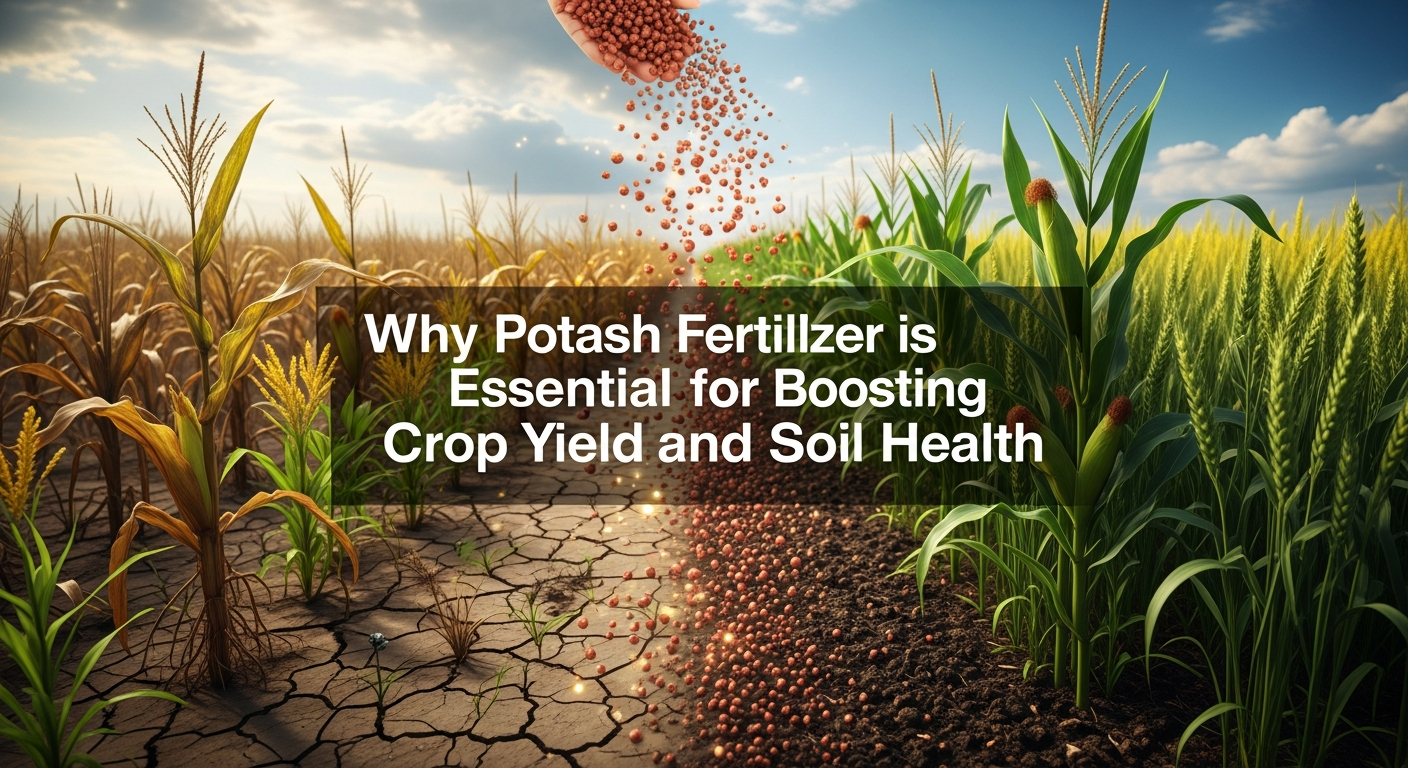
The importance of potash as an essential fertilizer for plants cannot be overstated. A large number of farmers use potash fertilizer in their fields because it helps enhance crop quality, provide resistance to pests and diseases, and increase overall productivity.
The potassium found in potash is vital for the regulation of water balance, the strengthening of the structure of plant cells, and the movement of nutrients within the plant.
The many benefits of potash fertilizer make it essential to the healthy growth of plants, for greater tolerance to stress, and for the increased yield potential of a variety of crops.
From increasing fruit size and quality to increasing drought tolerance—the knowledge of the price of potash and how best to use it will allow farmers to achieve the maximum level of return on investment (ROI) and maintain soil fertility for future generations.
Understanding Potash Fertilizer: What It Is and Its Role in Agriculture
Potash fertilizer is a significant contributor to potassium in all of the agronomic inputs used in contemporary agricultural production systems, supplying essential amounts of potassium to improve plant quality and productivity by improving plant growth properties while also enhancing the resistance to environmental stressors.
A complete understanding of potash fertilizer—its characteristics and use in the agricultural industry—enables farmers to better assess their decisions regarding fertilizer nutrient efficiency and price.
Potash Fertilizer Definition and Composition
Potash can be thought of as potash fertilizer. Potash is the term used for all solid and liquid fertilizer materials containing potassium (K). Potassium is one of the three primary nutrients (P, N, K) needed for plant growth.
- The major chemical forms of potash fertilizer are chloride, sulfate, and nitrate.
- Potash is 100 percent water soluble, which allows for fast uptake by plants through their root systems;
- Therefore, it is often blended with other forms of fertilizer to provide balanced nutrition to crops.

Importance of Potassium Nutrients in Soil
Potassium has a critical function in supporting healthy plants and maintaining soil health. In contrast to nitrogen, potassium does not enter into the construction of plants, but regulates important physiological processes within plants.
Functions of potassium in soil and plants:
- Water balance improvement and drought resistance
- Enzyme activation and nutrient transportation improvement
- Strengthening plant cell walls and reducing lodging
- Improvement of fruit quality, size, and colour
Advantages of using potassium rich fertilisers:
- Greater pest and disease resistance
- Greater crop yield and quality
- Better root development
- Better photosynthesis efficiency
Types of Potash and Their Agricultural Role
There are various options for fertilizing with potash based on the requirements of crops, soils, and costs, including the price for potash fertilizers.
The main fertilizers (and the crops for which they are appropriate) include:
- Muriate of Potash (MOP) – the most widely used potash fertilizer; used on wheat, rice and maize due to its low cost.
- Sulphate of Potash (SOP) – used primarily on fruits, vegetables and cash crops due to sensitivity to chloride.
- Potassium Nitrate – used with high-value crops and via fertigation systems that provide rapidly available nutrients.

The Benefits of Using Potash Fertilizer for Crop Growth and Quality
Potash fertiliser is very important as a crop enhancer by creating better crops through stronger plants, more efficient use of nutrients and ultimately increasing the productivity of the crop. In addition to being a key nutrient source, potash fertiliser also aids in plant metabolism and, therefore, helps crops resist environmental stress.
With this knowledge of the benefits of potash fertiliser and an understanding of the prices associated with potash, farmers can properly utilise this material to generate high profitability at a low cost.
Crop Yield Improvement and Better Productivity
Fertilization using potash provides a direct correlation to yield through increased plant growth and development. Potash fertilizer enhances the strength of roots and provides improved distribution of nutrients throughout the plant.
By using potash, you can increase crop yield through:
- Increases size, weight and uniformity of your crops
- Provides for healthy root development
- Assists in the setting of flowers and fruiting
- Improves crop productivity overall

Improved Nutrient Uptake and Photosynthesis
Potassium is an important nutrient that activates enzymes and controls critical processes in plants such as photosynthesis and nutrient transport.
Potash fertiliser contributes to the healthy growth of plants in four ways:
- By increasing chlorophyll production, plants can perform photosynthesis more efficiently.
- By allowing nutrients to be transported more effectively throughout the plant.
- By helping plants use water more efficiently.
- By providing energy for the growth of the plant.
Disease Resistance and Drought Tolerance
Potash fertiliser increases plant defense systems; thus, making the crop more resilient to disease and environmental conditions.
Advantage of Stress Resistance:
- Improved resistance to fungal and bacteriological diseases
- Increased tolerance for drought and heat stress
- Strengthening of plant cell walls
- Reducing damage to crops during adverse conditions
Types of Potash Fertilizers: Choosing the Right One for Your Soil and Crops
In order to achieve the highest possible yield from crops and to optimize both their quality and the health of the soil, selecting a suitable potash fertilizer is the first step.
The different types of potash fertilizers that are available can have different benefits based on the type of crop being grown, the condition of the soil, and other factors such as budget (e.g., cost of potash fertilizer).
By understanding the different types of potash fertilizers, farmers can make a more informed choice to assist with effective nutrient management.
Muriate of Potash (MOP) and Its Uses
Due to MOP's 60 percent content of potassium, it is an ideal choice for general crop nutrition as a potash fertilizer as well as being one of the most widely used potassium sources. It is also the most economical form of potassium fertilizer, making it a good option for large-scale agricultural operations.
- MOP provides potassium (K₂O) which supports plant health and growth;
- it is suitable for crops that produce wheat, rice and maize;
- soil application is best performed.
- The availability of MOP to farmers is easy.
Sulfate of Potash (SOP) for Sensitive Crops
Sulphate of Potash (SOP) is a high-quality potassium fertilizer that is used in crops that need quality and have high sensitivity to chloride. It will also help with the development of fruits and improve the health of crops.
Key attributes of SOP include:
- Has approximately 50% potassium
- Contains no chlorides
- Great for fruit and vegetable crops
- Contributes to the quality and taste of the crops
- SOP has a higher price compared to conventional potash fertilizers

Comparing Potash Fertilizer Options
The price and efficiency of various kinds of potash fertilisers vary. Therefore, the selection of an appropriate fertiliser type will result in the best outcome and the best use of resources.
Key Points:
1. MOP is a cost-effective alternative.
2. SOP is more appropriate for high-quality crops.
3. Potassium nitrate has a rapid effect.
4. Choose the fertilizer based on your soil and types of crops grown.
5. It is essential to balance cost and output.
How to Apply Potash Fertilizer Effectively for Maximum Results
Utilizing potash appropriately is pivotal for attaining greater yield and higher quality crops, as well as fostering long-term soil health. Potassium plays key roles in plant functions, including regulating water balances, assisting in nutrient transfer, and providing protection against plant stress.
However, it is not sufficient for farmers to just apply fertilizer; the effectiveness of this application is highly dependent on timing, amount, and method of application.
Application Timing and Crop Stages
When you apply potash fertiliser at the right stage of growth, it results in greater uptake and better plant performance. Applying at the correct time will improve plant growth and decrease the loss of nutrients.
Important points:
- Apply during the early growth stage
- Apply before flowering and fruiting
- Split applications provide the best results
- Avoid applying heavy amounts late in the growing season
- Apply according to the desired timing for each crop type

Proper Dosage and Soil Testing
Fertilizer NPP relies heavily on the type of application. It is important to follow recommended rates of NPP to minimize nutrient losses and provide adequate nutrition to your potential crop.
Key points:
- Use recommended rates
- Avoid overapplication of fertilizer
- Conduct soil testing
- Adjust fertilizer application as per crop needs
- Improve nutrient efficiency, which helps to produce a better bottom line for your company.
Best Practices for Fertilizer Application
Using proper methods of applying fertilizer will allow for the effective transfer of nutrients to crops, as well as promote the long-lasting health of the soil itself.
Important points to remember:
- Apply fertilizer uniformly throughout the soil.
- Use fertigation to improve efficiency.
- Do not apply any fertilizer prior to heavy rains.
- Use organic inputs along with synthetic fertilizers.
- Regularly monitor the crop's response.
Environmental Impact and Sustainable Use of Potash Fertilizer
The addition of potash to crop production is a major contributor as it relates to increasing yield for crops. However, not using Potash properly, can create challenges for the environment including soil deficiencies and nutrient depletion. Therefore, sustainable application of fertilizers is necessary to support the health of soils, maintain surface water, and promote future crop productivity.
If farmers follow a sustainable practice, they will utilize potash effectively without putting pressure on the environment. An efficient means of managing nutrients, applying potash properly, and knowing the cost of potash will assist in providing an appropriate balance between increased agricultural production and sustainability.
Reducing Nutrient Runoff and Soil Degradation
The application of fertilizers improperly can result in an excess of nutrients washing off into surface waters and damaging soils, which will affect the productivity of crops and the health of the environment. By applying potassium fertilizers and managing them properly, we can greatly reduce this risk.
Key points:
- Do not use more than necessary.
- Use in smaller amounts over several applications.
- Mix with soil prior to planting crops.
- Do not apply just prior to a heavy rainfall.
- Maintain the structure of your soil.
Sustainable Fertilization Practices
Sustainable farming strives for improved fertilizer usage along with protecting the environment/improving repeated soil productivity using innovative methods such as:
- A mixture of organic/inorganic fertilizer together
- Precision agriculture techniques
- Application of fertilizer based on soil testing
- Utilisation of controlled-release fertilizer
- Development of organic matter on soils

Balancing Productivity with Eco-Friendly Farming
The goal of modern agricultural practices is to obtain maximum crop yield, while also protecting the environment. Balanced usage of potash fertilization will benefit agricultural production, through continued crop productivity and environmental sustainability.
Important Items:
- Always use recommended dosages of fertilizers
- Monitor crops for their nutrient requirements and adjust accordingly
- Minimize chemical dependence in growing crops
- Maintain long term soil fertility through balanced applications of potash fertilizers
- Optimize the cost versus return of your applied potash fertilization
The Economic Benefits of Using Potash Fertilizer on Your Farm
Using a fertilizer like potassium (K) is not solely to improve a farm’s overall plant health; it also provides farmers an opportunity to increase their profitability as well as the longevity of the land they farm. This is because potassium assists in increasing the quality of the crops and the number of crops produced while also improving the plant's resistance to stressors.
These benefits provide farmers with increased revenues through the sale of their products because they produce and sell more.
When farmers select the highest quality fertilizer and manage potash fertilizer prices effectively, they will experience a greater return on their investment (ROI) by the end of the growing season.
Cost-Effectiveness and ROI
Investing in potash fertilizer will generate profitable returns due to its ability to increase efficiency & lower unused inputs into fertilizer.
Key Points:
- Increased efficiency of fertiliser
- Reduced wastage of nutrients
- Maximum optimised input costs
- Improved outputs from crops
- Increased return on investment per acre.
Increased Profitability Through Better Yield
Potash fertilizers are essential for helping farmers to achieve higher yields, better quality crops, improved market prices, and greater profits.
- Higher crop yield
- Better quality/size of crop
- Improved market value of crops
- Reduced crop loss
- Increased income for farmer
Long-Term Value of Balanced Fertilizer Use
Proper distribution of fertilizers, including potassium fertilizer, helps achieve long-term sustainability in agriculture and consistent levels of productivity over time.
Key Points:
- Helps to keep the fertility of soil
- Minimises over-use of fertilisers
- Assists with maintaining good long-term yields
- Helps promote sustainable farming practices
- Maximises return on investment for potassium fertiliser costs

FAQs
Q1. What is potash fertilizer used for?
Potash fertilizer is used to improve plant growth, enhance crop quality, and increase resistance to stress.
Q2. How does potash fertilizer improve crop yield?
It boosts nutrient movement, strengthens plants, and improves fruit size and overall yield.
Q3. What affects potash fertilizer price?
Price depends on type (MOP/SOP), demand, import cost, and market availability.
Q4. Which crops benefit most from potash fertilizer?
Fruits, vegetables, sugarcane, wheat, and rice benefit the most.
Q5. Can too much potash fertilizer harm plants?
Yes, excess fertilizer can cause nutrient imbalance and reduce crop growth.
Conclusion: Invest in Potash Fertilizer Today to Enhance Your Farm’s Productivity and Sustainability
Using potash fertilizers can have a major impact on increasing crop yields, developing crop quality, and strengthening the plant's ability to withstand stress (droughts, disease). Potash provides potassium, which helps maintain proper water levels in crops by controlling water and nutrient flow within them, leading to improved overall health.
Farmers who develop and use potash fertilizer in conjunction with their overall fertilizer management strategy will be able to grow their crops more uniformly and reduce input costs, increase productivity and value for the final product when sold to the market.
The true benefits of using potash fertilizers are achieved through the proper balance of different nutrients in relation to the natural conditions of the soil and specific requirements of each crop species, as well as taking into consideration the price of potash fertilizer. Farmers should also practice sustainable growing methods, such as soil testing, split applications, and the use of organic fertilizing products to preserve soil fertility over time, regardless of production practices.