One of agriculture's biggest contributors to crop growth and increasing crop yield is the use of nitrogen fertilizer, with millions of years of use among farmers worldwide for enhanced plant health, leaf formation, growth and yield
nitrogen is also a major component of nitrogen-containing fertilizers that are essential for many processes that relate directly to crop performance.
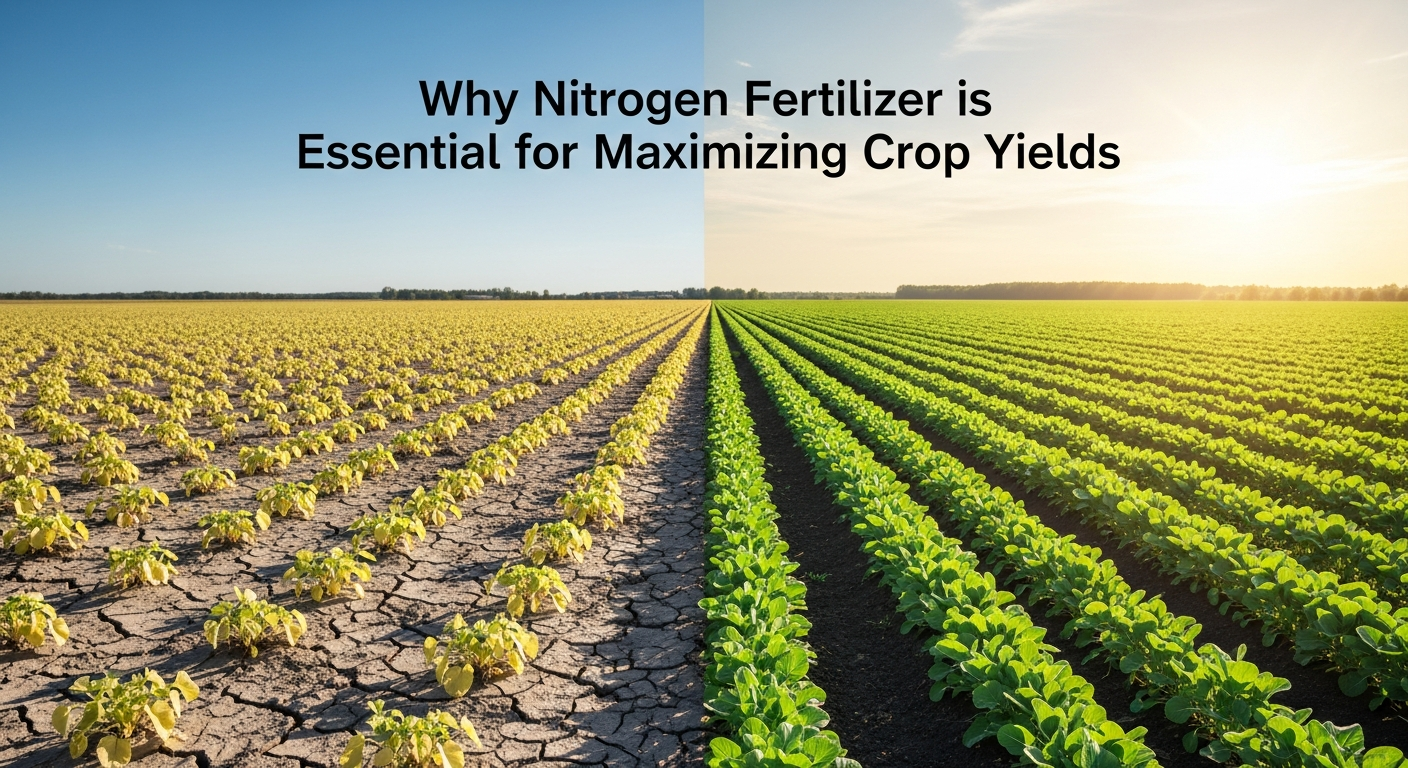
In relation to growth, all plants need nitrogen to produce chlorophyll, the compound responsible for capturing sunlight and using it as energy through photosynthesis; therefore, nitrogen fertilizer is vital to producing vigorous green plants with healthy vegetative growth and greater yields.
The proper amount of fertilizer used from plant establishment until full development maximizes both crop yield and quality, whether it be legumes, nuts (cereals), or fruit trees; adequate nitrogen supplied at the correct time will maximize plant health, quality of final yield, and returns from agricultural products.
Understanding Nitrogen Fertilizer: What It Is and Why It Matters
Nitrogen fertilizer is extremely important for modern farms because it allows plants to grow stronger and produce more crops. Nitrogen is one of the three primary nutrients that plants need; without it the leaves of the plant will be thin and weak, photosynthesis will be diminished, and the overall health of the plant will decline.
Proper use of nitrogen fertilizers provides the necessary nutrients to allow the crop to reach full potential and also to produce higher yields.
Definition of Nitrogen Fertilizer and Its Role
Examples of nitrogen fertilizers would include sources of nitrogen containing ammonium (NH₄⁺) and/or nitrate (NO₃⁻) that are readily available for uptake by plant roots. Nitrogen is one of the key limiting nutrients in many soils and plays a major role in plant metabolism.
Key roles/properties of nitrogen fertilizers:
- Promotes leafy and vegetative growth
- Increased production of chlorophyll leading to enhancements in photosynthesis
- Increases or supports the formation of proteins and enzymes
- Increased yields/bio-mass of crops

Importance of Nitrogen in Plant Growth
Plants require various nutrients to grow and produce food through a process called “photosynthesis,” and nitrogen is possibly the most critical nutrient. The absence of adequate nitrogen will prevent a plant from developing correctly.
Why nitrogen is necessary:
- Promotes green leaf development and canopy growth
- Promotes crop development and early vigour
- Promotes fruit and grain development
- Increases total yield potential
Signs of nitrogen shortage:
- Older leaves will become yellow
- Weak and stunted growth
- Reduced yields and low quality crops
If plants receive the proper amount of nitrogen fertilizer, they will grow and thrive through all growth stages. However, nitrogen is most critical during the vegetative phase of plant development.
Nitrogen Cycle and Soil Interaction
The nitrogen cycle helps us grow crops by converting nitrogen from the atmosphere into forms that can be used by plants as soil nutrients through natural biological abilities of bacteria. To be able to manage and efficiently use nitrogen fertilizer, it is important to have some basic knowledge about how nitrogen cycles through the environment.
There are four distinct stages of the nitrogen cycle:
- Fixation- Conversion of nitrogen from the atmosphere into a usable form for plant uptake
- Mineralization- Transformation of organic material to ammonium.
- Nitrification- Conversion of ammonium into nitrate.
- Denitrification- Loss of nitrogen back into the atmosphere.

The Benefits of Using Nitrogen Fertilizer in Agriculture
By providing the opportunity for plants to grow quickly and perform better overall at the crop level, nitrogen plays an important role in boosting agricultural productivity.
Nitrogen is among the most important nutrients and is directly related to the development of leaves, photosynthesis and biomass production. The proper use of nitrogen fertilizer will ensure that crops will be healthier, stronger and more productive in different production systems.
Crop Yield Improvement and Faster Growth
Vegetative growth is driven primarily by nitrogen, making it a key factor in growing various crops, including wheat, rice, maize, and all vegetables. In fact, sufficient nitrogen will produce both faster growth and increased crop yield.
Major advantages of nitrogen in crop growth include:
- Rapid production of both leaves and stems
- Increased chlorophyll production, promoting photosynthesis
- Increased tillering and branch development
- Increased production of grains and fruits

Enhanced Nutrient Absorption and Plant Health
Not only does nitrogen promote plant growth, but it also enhances a plant's capacity to take up the other nutrients that are essential for plant survival. Because nitrogen is important for creating a balanced nutrition system for plants, healthy plants will also maintain good health.
The following are some of the benefits of nitrogen for plant health:
- Nitrogen helps develop roots to support optimal uptake of nutrients from the soil.
- Nitrogen assists with the synthesis of enzymes and proteins.
- Nitrogen contributes to the production of healthy, vibrant vegetative foliage.
- Nitrogen improves a plant's ability to withstand environmental stressors.

Soil Fertility and Long-Term Productivity
Essentially, proper management of nitrogen fertilizer will provide both short term benefits (enabling the crops to be harvested sooner rather than later) and long term benefits (maintaining and enhancing soil fertility for future generations).
Long-term benefits include:
- Improving soil microbial activity by adding organic materials
- Assisting with maintaining healthy nutrient cycling in the soil
- Improving soil structure by combining with organic fertilizers
- Maintaining stable crop productivity over multiple seasons.

Different Types of Nitrogen Fertilizers and Their Best Applications
There are different types of nitrogen fertilizers available depending on the crop, soil, and farming practice; it is important to select the correct type of nitrogen fertilizer to optimize nutrient use and reduce losses.
When a farmer has a better understanding of the nitrogen types available and the fertilizer that is most appropriate for their crop and environmental conditions, they will be better able to apply the appropriate plant nitrogen fertilizer to their crop.
Urea Fertilizer and Its Uses
The main nitrogen fertilizer choice for most farmers is urea. This is because it's relatively inexpensive and has such high nitrogen content (46%). Urea is an excellent form of concentrated nitrogen.
Urea is a convenient source of N for many farmers, for:
- Rapid growth(Plants use urea nitrogen content much faster than other sources.)
- is readily available across the country (It's available in most regions for most crops.)
- Can be used effectively for different types of crops - cereal, vegetable and cash crops.
- Can be applied as both a basal and top-dressing N source.
Things you can do when applying urea to be most effective:
- Apply urea and then irrigate or wait for today’s rain; this will help reduce the amount of N that gets lost.
- Incorporate urea into your soil to reduce volatilising.
- Split your urea applications up, as it generally gives you a better overall efficiency of nutrient usage.

Ammonium-Based Fertilizers
Fertilizers that contain ammonium as their source of nitrogen (ammonium, NH4, vs Nitrate, NO3) are a better source of nitrogen because they can readily be taken up by plants and are less likely to leach out of the soil than nitrate nitrogen.
Some examples include:
- Ammonium Sulfate
- Ammonium Nitrate
- Calcium Ammonium Nitrate (CAN)
Some of the advantages of using ammonium based nitrogen fertilizers include:
- They provide a continual source of nitrogen to the soil
- They may help to increase the acidity of the soil, (especially Ammonium Sulfate)
- They reduce the amount of nitrogen that gets lost through leaching
- They can be used on many different types of plants

Slow-Release and Liquid Nitrogen Fertilizers
To enhance the efficiency of applied nutrients, to minimize losses; and to provide either a controlled or speedy response to crop nutrient requirements will be dependent upon the way a nitrogen fertilizer has been made.
Slow-release nitrogen fertilizers:
- Provide for nutrient release at a slower rate over an extended period of time
- Will require fewer applications
- Will minimize nutrient leaching and volatilization
- Are very well suited for long-term crops
Liquid nitrogen fertilizers:
- Will be quickly taken in by the plant after application.
- Can be applied by means of foliar feeding.
- Can be used as a rapid correction of crop nutrient deficiencies.
- Will be readily applied to the crop using application equipment.

How to Apply Nitrogen Fertilizer Effectively for Optimal Results
To achieve maximum production, maximum nutrient utilization and minimum loss of crop yield, a proper method of applying nitrogen fertilizer is important.
A wrong method of application can result in wasted nutrients, environmental harm and reduced crop yield. An effective nitrogen fertilizer management strategy for field crops involves ensuring that succulents have an adequate supply of nutrients at all times for production.
Application Timing and Crop Stages
Timing is critical when it comes to nitrogen fertilizer application as crops require nitrogen at different stages of growth, particularly during the vegetative development phase and early growth phase.
Key stages of crops for applying nitrogen are:
- Before planting - supports root development (establishment)
- Vegetative stage - Supports growth of stems and leaves
- Tillering/branching stage - Adds density to the plant stand
- Pre-flowering stage - Supports reproductive development
In terms of best practices for timing fertilizer applications:
- Apply prior to being irrigated or rained on, so that it can be properly absorbed
- Apply to crops when there are not extreme temperatures or dry weather conditions
- Timing of fertilizer application is coordinated with the crop’s nutrient needs.
Proper Dosage and Split Application Methods
It's important to apply the right dosage of nitrogen fertilizer so there is no excess or need for additional applications. Using a split application is often the best method for obtaining maximum use of nutrients.
The following are benefits of using a split application:
- Reduces the loss of nitrogen through leaching
- Provides a continuous supply of nitrogen
- Increases the efficiency of nitrogen uptake by crops
- Reduces the negative impact on the environment
Here is an example of a split application strategy:
- 30-40% at the final base
- 30-40% during the vegetative stage
- Remaining at pre-flowering stage

Soil Testing and Precision Fertilization
Soil analysis uses science to accurately assess how much fertilizer you need to put into the soil so that farmers can use nitrogen fertilizer effectively and efficiently.
Soil analysis helps:
- Find out if there are any nutrient deficiencies
- Prevent using too much fertilizer
- Improve the cost-effective use of fertilizer
- Increase crop yield and quality
Tools used for precise fertilizer applications include:
- Using soil test reports to prepare fertilizer for your crops
- Determining the amount of nutrients to apply based on each crop.
- Using new technologies like GPS to apply nutrients
- Regularly monitoring crops to adjust their nutrient application accordingly.

Sustainable Use of Nitrogen Fertilizers: Minimizing Environmental Impact
Sustainable nitrogen fertilizer utilization is paramount in both preserving high agricultural productivity and supporting good environmental quality. While nitrogen fertilizer contributes greatly to promoting crop growth, the improper application of nitrogen fertilizer can cause many negative consequences including degradation of the soil, water contamination and greenhouse gas emissions.
As such, implementing sustainable practices guarantees a responsible and effective use of plant nitrogen fertilizers and conservation of natural resources.
Reducing Nitrogen Runoff and Leaching
Nitrogen run-off and leaching are significant problems in agricultural fields located in ecosystems where heavy rainfall or inadequate irrigation occur. If Nitrogen is not properly taken-up by a plant, then it may be transferred into a water body, where it then causes pollution.
Ways To Reduce Nitrogen Loss
- Split your application of nitrogen fertilizer into several small applications
- Do not irrigate too much after you have applied fertilizer
- Use slow release fertilizers to help manage the flow of nutrients
- Incorporate fertilizer into soil instead of applying on the surface

Eco-Friendly Fertilization Techniques
Sustainable fertilization focuses on limiting the use of chemicals to improve nutrient use efficiency through both natural and scientific methods.
Sustainable fertilization Practices include:
- Using Organic Manure in conjunction with Nitrogen Fertilizer
- Implement Precision Agriculture Practices
- Use Bio-Fertilizers to Improve Soil Microorganism Activity
- Implement Crop Rotation for Soil Balance

Balancing Productivity with Environmental Care
Sustainable farming seeks to produce more food for more people while maintaining soil and water quality. Good nitrogen management helps crops grow well by providing all necessary nutrients without causing damage to soil or water resources.
Some of the main ways to balance nutrient management include:
- Testing the soil before applying fertilizer
- Using the right amount of fertilizer for each crop
- Monitoring the condition of your crops to provide nutrients when needed
- Incorporating modern technology into applying fertilizers

The Economic Advantages of Investing in Quality Nitrogen Fertilizers
High-quality nitrogen fertilizer is not just an input decision for farmers; it is a strategic economic option that will impact yield, efficiency of inputs, and overall profitability of the farm. When farmers use the proper nitrogen fertilizer for plants, they will have greater nutrient use, less waste, and a better return on their investment.
In addition, by using the right amount of fertilizer to grow crops, farmers can produce uniform plants with faster time to maturity and greater yield. These factors play an important role in improving economic outcomes. Today's modern agricultural process is dependent on effective nitrogen management to maximize profit while controlling production costs.
Cost-Benefit Analysis of Nitrogen Use
When understanding how much nitrogen fertilizer costs against its worth, farmers can make educated choices regarding fertilizer investments. While purchasing nitrogen fertilizers has an upfront cost associated with them, the farmer's yield often exceeds the amount he/she paid for the fertilizer.
Economic advantages to using nitrogen fertilizers:
- Increased Revenue with Higher Yields per Hectare
- Higher Quality of Crops Improves Market Pricing
- Reduced Waste due to More Efficient Use of Nutrients
- Optimized Fertilizer Application* Results in Lower Input Costs

Increased Profitability in Agriculture
Applying nitrogen fertilizers can increase the profits from your farm. The nitrogen will provide your crops with better growth rates and thus produce more of a product.
How nitrogen helps improve profitability:
- Nitrogen increases the amount of biomass produced and therefore increases the volume of production.
- Nitrogen provides the crops with larger grain size as well as better quality and uniformity for fruit products.
- Nitrogen reduces the number of plants that do not survive due to poor growth.
- Nitrogen also increases productivity on the farm level.

Long-Term Value of Efficient Fertilizer Use
In addition to providing immediate economic benefits, effective management of fertilizers over time gives rise to economic viability through maintaining soil fertility over an extended period, thus limiting future input costs.
Long-term benefits of using good management practices in regards to fertilizer include:
- Maintaining soil productivity for several years
- Reducing reliance upon excess chemical inputs
- Increasing the sustainability of farming operations
- Promoting consistent crop yields each year

FAQs
Q1-What is nitrogen fertilizer used for?
Nitrogen fertilizer is used to promote healthy plant growth, especially leaf and stem development, by supplying essential nutrients required for photosynthesis.
Q2-How does plant nitrogen fertilizer improve crop yield?
Plant nitrogen fertilizer enhances chlorophyll production, leading to better growth, faster development, and higher crop yields.
Q3-Which is the best type of nitrogen fertilizer?
The best nitrogen fertilizer depends on crop and soil conditions, but urea and ammonium-based fertilizers are commonly used for effective results.
Q4-Can too much nitrogen fertilizer harm plants?
Yes, excessive nitrogen fertilizer can cause leaf burn, weak plant structure, delayed flowering, and environmental pollution.
Q5-When should nitrogen fertilizer be applied?
Nitrogen fertilizer should be applied during early growth stages and in split doses to ensure efficient nutrient absorption and minimal loss.
Conclusion: Harness the Power of Nitrogen Fertilizer to Boost Your Farm’s Productivity Responsibly
When applied correctly, nitrogen fertilizer increases crop growth, improves plant health, and improves overall farm production. The use of plant nitrogen fertilizer creates strong vegetative growth, allows for better nutrient absorption, and generates higher yields. Thus, the use of nitrogen fertilizer is an essential component of modern agriculture.
However, responsible use is key to achieving maximum benefits when using nitrogen fertilizers. Through appropriate nitrogen fertilizer application rates and timing, and incorporating other sustainable practices, such as soil testing and precision farming, farmers can achieve maximum benefit while protecting soil and the environment.
Combining nitrogen fertilizers and the use of sustainable farming practices will create a long-lasting means of productivity and profitability, resulting in sustainable success for the farmer's operation.