Biopesticides composed of nematodes are an organic pest control method utilized in contemporary agriculture to control damaging subterranean pests efficiently.
Nematode biopesticides contain live beneficial nematodes that specifically attack and kill various types of subterranean pests without damaging the crops or the environment.
They provide a non-toxic, environmentally-friendly, and highly effective means of controlling these pests and providing an excellent option for farmers interested in implementing a sustainable form of pest control in their agricultural operations.
The use of nematode biopesticides is revolutionising the way farmers control subterranean pests and thereby enhance the natural health of their crops.
Understanding Nematode Biopesticides: What They Are and How They Work
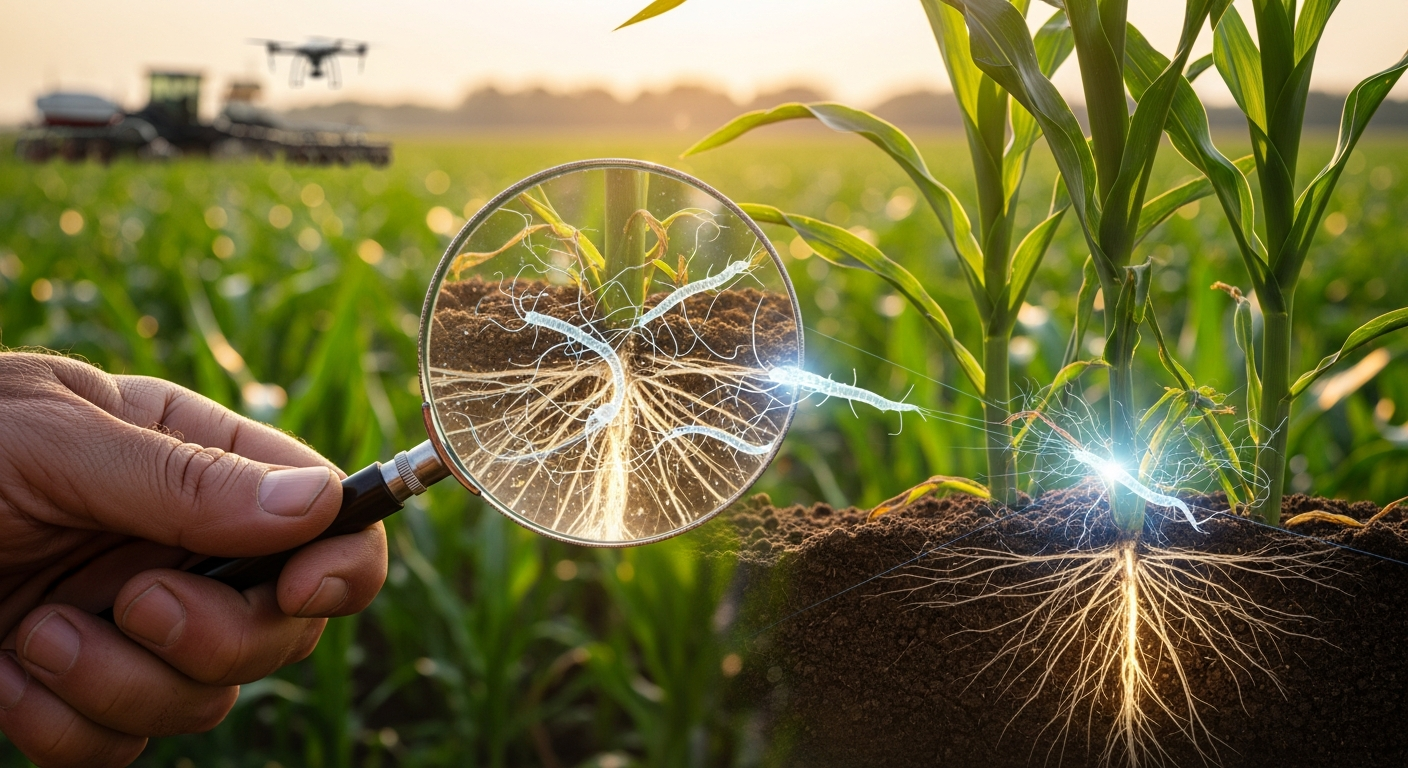
Nematode biological pest control is one of the most sophisticated and successful methods of modern agricultural pest control using biological agents. They are very good at efficiently targeting soil-borne pests because they are not only found in the soil, but also because they actually search for their target with the goal of infecting and eliminating from within.
In today's agricultural systems, where soil health and sustainability are becoming increasingly important, nematodes give farmers a long-term solution to controlling pests without causing harm to beneficial organisms or disrupting the ecosystem. Because nematodes reproduce and provide pest control on their own, they serve as powerful tools for farmers who want to decrease their reliance on chemicals and increase their ability to produce crops.
What Are Nematode Biopesticides?
Nematodes as biopesticides consist of helpful small worms that prey on soil insect pests. They are typically used in biopesticide applications in crop production to control root grubs, borers, and larvae.
Key Attributes Are:
- Live organisms actively seek out pests located in the soil
- Target specific pests, avoiding injury to crops.
- Perform well in moist soil conditions
- Will thrive in and reproduce under conditions that are favorable
- Do not produce toxic residues in soils or crops.

Role of Entomopathogenic Nematodes in Pest Control
The entomopathogenic nematodes are among the primary categories of nematodes being used as biopesticides due to their ability to effectively invade & kill the target pest.
HOW ENTOMOPATHOGENIC NEMATODES CONTROL PESTS
- They enter the host's body through its natural openings, such as its mouth & spiracles
- They introduce into the host's body their symbiotic bacteria, which typically kill the host very quickly
- They 'convert' the host's body into a 'factory' to produce nematodes
- They can continue to spread to nearby hosts, thereby perpetuating the life cycle of the nematode.
ENHANCED BENEFITS OF USING ENTOMOPATHOGENIC NEMATODES
- They can provide pest suppression in soil areas that would not normally be reached by pesticide sprays.
- They can provide ongoing suppression of pest populations over time.
- They will reduce the need for repeated applications of pesticides.
- They help to maintain an ecological balance in the soil.
Lifecycle and Mode of Action
Nematodes as biopesticides have an entirely distinct life cycle in relation to standard methods of managing pests. The development of nematodes within the host pest supports the ongoing management of a pest population.
The stages of nematodes' development are:
- The infective juvenile stage actively seeks a suitable host insect
- Once a host pest is found, nematodes invade and introduce bacterial symbionts
- The host pest is killed within 24 to 72 hours
- The new generation of nematodes develops in the former host pest
- The new nematodes are released into the soil to continue the cycle

Advantages of Using Nematode Biopesticides Over Chemical Alternatives
More people want to farm by following sustainable methods than to use traditional chemical pesticides. Because of this demand, nematode biopesticides are becoming a popular alternative to traditional chemical pesticides. Biopesticides are able to help control pests while preserving the soil, the crops, and the environment around the farm site. Because of their natural nature, nematode biopesticides are able to work in tandem with nature, providing an ongoing source of effective pest-control and being friendly to our planet's resources.
By decreasing dependence on synthetic inputs, farmers can enhance the safety of their crops, decrease their production risk, and better serve the increasing consumer demand for agricultural products that contain no pesticide residues.
Eco-Friendly and Non-Toxic Pest Control
The use of nematode-based biopesticides is a very environmentally conscious method of managing agricultural pests that will not harm other organisms like people and animals or negatively affect the ecosystem.
Some key advantages include:
- Non-toxic to animal, human and beneficial insect pests.
- No contamination of soil or water sources.
- Supports the natural balance of the ecosystem.
- Safe for both repeated and long-term use.
- Good for both organic and environmentally sustainable farming systems.

Reduced Chemical Residues in Crops
The use of nematode biopesticides will result in producing clean, residue-less crops, which are in compliance with current food quality standards.
The following are some of the advantages of using nematodes:
- No toxic residue left on the harvested crop
- Very short or no waiting time from application to recover samples or produce after harvest
- Increased quality of exported crops and compliance with regulations
- Increased safety for consumers and food handlers that process the produce
- Will help meet USDA organic certification requirements
Target-Specific and Sustainable Solutions
Biopesticides based on nematodes provide highly targeted methods of controlling pests, which results in more efficient and sustainable products than conventional chemical pesticides that work on a broad range of pests.
Some of the main benefits are:
- Target specific soil pests with no effect on non-target species
- Less opportunity for the development of resistance in the pest population
- Long-term control due to the natural multiplication of nematodes
- Increases the level of microbial activity and improves the fertility of the soils
- Compatible with Integrated Pest Management (IPM) strategies

Popular Types of Nematode Biopesticides and Their Target Pests
Nematode biopesticides can be used to control different types of pests depending on the type of pest to be controlled, the conditions of the soil, and the needs of the crop being grown.
The use of nematodes as biopesticides allows for more precise pest control than currently available chemical pesticides because nematodes attack only certain types of insects that live in the soil as adults.
The goal of using nematodes as a biopesticide is to provide effective and sustainable pest management and to decrease the farm’s reliance on chemical pesticides.
Steinernema Species and Their Applications
Nematode biopesticides that employ Steinernema sp. are successfully being employed for controlling insect pests that exhibit surface & subterranean behavior.
Primary Uses Include:
- Control on insects such as: caterpillar(s), cutworm(s), armyworm(s).
- Control of larvae of fungus gnats, adult thrips.
- Developmentally active at moderately cool soil temperatures.
- Can be applied to a wide variety of vegetables/horticultural crops.
- Active in the upper soil layer as well as plant canopy areas.

Heterorhabditis Species for Soil Pest Control
Heterorhabditis species are effective biopesticides, as they have been used as nematodes to control a variety of soil pests.
Heterorhabditids have the following important applications:
- As biocontrol agents against the root grub and white grub.
- To target pest larvae from beetles and soil-borne insect pest populations.
- In deeper soil than many other biopesticides.
- To provide long-term pest suppression in sugarcane, turf grass, and fruit trees.
Crop-Specific Pest Management Solutions
Using nematode biopesticides in specific ways is essential to achieve the greatest result from crop-based applications.
Crops with Biopesticide Applications:
- Vegetables - targeting root maggots and fungus gnats;
- Fruit - controlling borer larvae and soil larvae;
- Field Crop - controlling cutworms and grub larvae;
- Nursery Crop - protecting from early pest infestation;
- Plantation Crop - providing long-term suppression of soil pests.

Application Techniques for Effective Use in Crop Protection
Because nematodes are live organisms, the success of a nematode biopesticide depends upon the procedures to be followed in the field to prepare for application.
Nematodes as biopesticides will only survive if they are handled properly, if suitable moisture and timeframes are used to apply them to target pests and sustain their activity within the soil, and they will provide long-lasting, effective control of pests (particularly insects that dwell in the soil) if they are used appropriately.
Soil and Irrigation-Based Application Methods
The use of nematode biopesticides when used through irrigation systems and soil application methods provides direct contact to the pest in the pest's natural environment.
The following methods may be used to apply nematodes biopesticides:
- Pilling drenching is used to create evenly applied material across a plant root zone.
- Drip irrigation is utilized to produce even, consistent and controlled application rates.
- Nematode biopesticides may be mixed with water and then sprayed onto the plant.
- The application of nematode biopesticides may occur when irrigating for maximum penetration.
- Moisture must be provided prior to and following the application of nematodes biopesticides.

Timing and Environmental Conditions for Best Results
To ensure that biopesticides (e.g., nematodes) remain viable and functioning properly, specific variables of timing and environmental considerations must be monitored.
Conditions to Successfully Apply Biopesticides Include:
1. Pest populations must be at their youngest when applying.
2. Soil moisture needs to be replenished as necessary.
3. Avoid stressing plants by high temperatures or excessive solar radiation from a cloudy sky.
4. Time of day should be either at dawn or just before dusk for best results.
Integration with Other Biocontrol Agents
Pest Management through the Use of Nematode Biopesticides and Other Biological Controls Increases Pest Management and Sustainability
Integrative Practices Include:
- Combining Microbial Biopesticides, Such As Fungi and Bacteria, for Use with Nematode Biopesticides
- Combining Organic Soil Treatments with Nematode Biopesticides
- Integrating Nematode Biopesticides Into Integrated Pest Management (IPM)
- Rotating Use of Nematode Biopesticides and Other Biological Control Agents
- Avoid Combining Nematode Biopesticides with Harmful Chemical Pesticides
Challenges and Limitations—and How to Overcome Them
Nematode biopesticides are very effective and sustainable but the effectiveness of the biopesticides relies on the proper handling, environmental conditions and the awareness of farmers.
The use of nematodes as agricultural biopesticides also requires much more precision than the use of chemical agents. However, through correct practices, the limitations can be easily managed, resulting in a consistent control of pests and long-term gain.
Shelf Life and Storage Conditions
Nematode biological pesticides are alive, thus necessitating special consideration regarding the methods of storage to guarantee the continued effectiveness of these materials as well as their continued shelf lives.
The primary challenges are:
- Nematodes have an extremely short shelf life compared to most chemical pesticides.
- Nematodes are extremely sensitive to fluctuation in both temperature and humidity.
- Nematodes have a very high probability of losing all viability when exposed to heat or direct sunlight.
- Nematodes must be stored in either refrigerated or controlled storage conditions.

Environmental Sensitivity and Field Performance
The environmental conditions during and after the application of biopesticides (such as nematodes) are critical for their effectiveness.
Main obstacles to using them are:
- Their reduced activity under dry/hot soil conditions,
- Sensitivity to UV radiation,
- Limited mobility through low-moisture soil,
- Performance that varies according to climate.
Ways to resolve these issues include:
- Applying nematodes in moist soil for better movement,
- Irrigating before and after applying nematodes,
- Not applying during peak sunlight hours,
- Choosing an appropriate season and soil conditions in which to apply them.

Cost and Adoption Challenges
There may be obstacles to farmers adopting the use of nematode biopesticides, such as economic issues and lack of knowledge on the subject.
The main challenges include:
- More expensive to purchase at the beginning than chemical versions
- Most farmers do not have a lot of experience with them
- They will need proper instructions and support for application
- They are perceived to be slower acting than traditional chemical alternatives.
Solutions include:
- Teaching farmers that there are long-term savings from these biopesticides
- Demonstrating use through trial demonstrations on a processor's crops
- Integrating biopesticides and traditional chemical pesticides into existing agricultural practices
- Providing information about improved plant growth quality through the use of nematodes and soil health
The Future of Pest Management with Nematode Biopesticides
Nematode biopesticides will play a central part in future sustainable farming through their ability to reduce chemical dependency, which is becoming the norm in agriculture. As the need arises for alternative methods of crop protection, these biopesticides will be essential in ensuring long-term crop protection, soil quality, and environmental safety.
As we continue to learn about the benefits of using biopesticides for pest control, technological advancements make them more usable and accessible, and as consumers demand less chemical residue, nematode biopesticides will be a significant component of next-generation pest management systems.
Role in Integrated Pest Management (IPM)
Biopesticides that utilize nematodes are now an integral part of Integrated Pest Management (IPM); they offer IPM with a balanced, sustainable approach to pest control.
Bps (Nematodes) Have the Following Roles In IPM:
- Nematodes can work with biological control, cultural control and mechanical control,
- Can lessen the dependency on chemical pesticides,
- Can help to delay the development of resistance by pests,
- Provide long-term suppression of pests within soil environments,
- Help promote environmentally friendly agricultural practices.

Innovations in Nematode Formulations
Nematode biopesticides have benefited from several new technologies that increase their efficiency, durability, and use by growers.
The most important new technologies include:
- New formulations that allow products to have extended shelf lives
- Improved packaging options for easier storage and transportation
- Many more live nematodes surviving in the field
- Liquid and gel based solutions that can be easily applied to crops
- The ability to be integrated with precision agriculture methodologies.
Expanding Use in Biopesticides in Agriculture
Nematode Bacteriophages are quickly becoming more popular in a wide variety of crops and growing systems.
Key Areas of Market Expansion Include:
- Greater emergence of use in Vegetables, Fruits & Plantations
- Higher Demand in Organic and Export Eligible Production
- Including under Greenhouse and Protected Environment
- Turf, Horticulture + Nursery Management
- Part of a Whole Host of Sustainable Agriculture Initiatives
FAQs
Q1- What are nematode biopesticides?
Beneficial microscopic organisms used to naturally control soil-borne pests.
Q2- How do nematode biopesticides work?
They infect pests and release bacteria that kill them from inside.
Q3- Are nematode biopesticides safe for humans?
Yes, they are safe for humans, animals, and beneficial organisms.
Q4- What pests do nematode biopesticides control?
They control soil pests like grubs, larvae, borers, and cutworms.
Q5- Can nematodes be used in all crops?
Yes, they can be used in most crops including vegetables, fruits, and field crops.
Conclusion: Embrace Nematode Biopesticides Today to Protect Your Crops and the Planet
Nematode biopesticides are an innovative way to establish eco-friendly, sustainable farming practices today. These biological products target soil-borne pests yet remain harmless to other beneficial critters in the environment, leading to healthier produce and increased soil health.
With farmers searching for safer alternatives than chemical pesticides, biopesticides offer a natural solution to producing high-quality crops while protecting the environment.
Integration of nematode biopesticides into a grower's grower operational procedures will lead to reduced chemical dependence, improved crop quality and productive use of resources, and superior long-term agricultural sustainability.
By creating an environmentally sound growing atmosphere, farmers will have an ongoing source of healthy produce to continue supplying consumers with consistent harvests and market acceptance in light of today's growing demand for clean, residue free produce.