



Nitrogen-fixing bacteria are naturally occurring bacteria that transform atmospheric nitrogen into forms that can be used by plants.
These helpful bacteria add important nutrients to the soil and help to increase its productivity without using harmful chemical fertilizers.
From Azotobacter and Rhizobium to Azospirillum, all of these nitrogen-fixing bacteria are usually applied as a liquid bio fertiliser, and assist in the production of healthy crops and contribute to sustainable and eco-friendly agricultural practices.
The mechanism of nitrogen-fixing bacteria provides an ongoing supply of nitrogen in the soil and promotes good root development, enhanced yields and improved soils for a variety of crops.
What Are Nitrogen-Fixing Bacteria and Why Are They Crucial?
Bacteria that fix Nitrogen from the atmosphere are a very important type of medium that transform the gaseous nitrogen into a plant usable format. These types of bacteria help to enrich our soil and can therefore be used as a replacement for chemical fertilizers and thus aid in sustainable agriculture.
Use of liquid biological fertilizers helps to distribute the nutrients evenly throughout the soil, therefore aiding in achieving healthy plant growth and thereby increasing yields.
Definition of Nitrogen-Fixing Bacteria
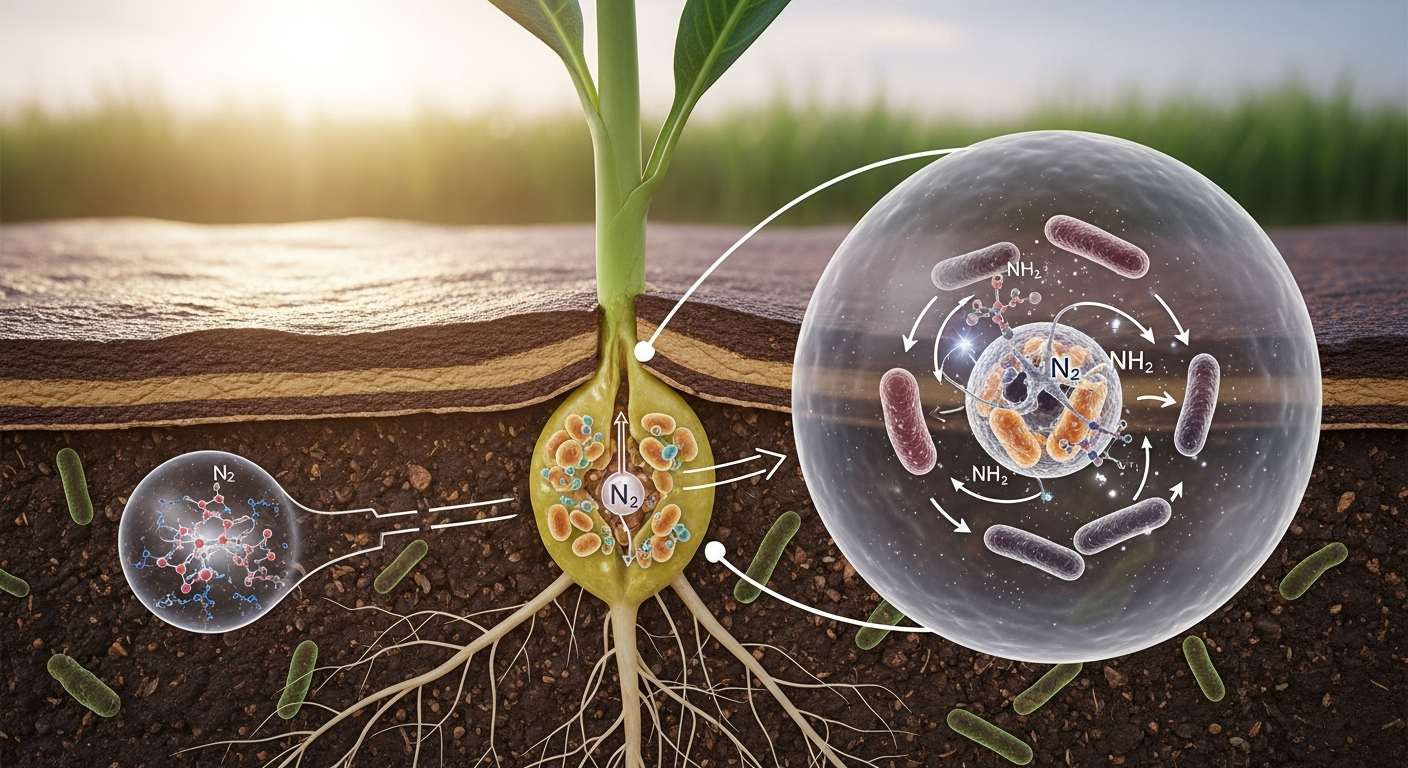
Through the process of nitrogen fixation, nitrogen-fixing bacteria have been shown to be able to convert inert atmospheric nitrogen (N₂) into ammonia (NH₃), which can then be taken up by plants.
These are some of the most critical microorganisms for developing sustainable agricultural systems and can be applied to the land as a liquid bio fertilizer.

Importance in the Nitrogen Cycle
Nitrogen-fixers are essential to the nitrogen cycle because they provide a means by which nitrogen can be removed from the atmosphere and supplied to plants, thereby promoting ecological balance.
Important Points About Nitrogen-Fixing Bacteria:
- Nitrogen-Fixing from the Atmosphere - Converts N2 gas into forms that are usable by plants.
- Enrichment of Soil - Improves organic matter and nutrient levels in the soil.
- Sustainable Agriculture - Decreases dependence on nitrogen fertiliser chemicals.
- Assisting the Growth of Plants - Promotes better flowering, growth of leaves and stems, and roots.

Role in Soil Fertility Improvement
The addition of nitrogen-fixing bacteria into soils will support microbial diversity and create a major improvement in soil structure as well as provide nutrients that are available to crops.
The benefits of this include:
- Increased Microbial Activity – helps improve soil environment health.
- Improved Soil Structure – results in improvements in moisture retention and soil aeration.
- Decreased Chemical Use – means fewer synthetic fertilizer will be used in future growing cycles.
- Compatible With Many Different Types of Farming Systems – very safe to grow legumes, cereals,vegetables.

The Biological Mechanism Behind Nitrogen Fixation
Nitrogen-fixing bacteria specialize in transforming nitrogen gas from the atmosphere into usable forms for plants. This fundamental process provides soil nutrients necessary for producing healthy crops, decreasing chemical dependence, and improving soil fertility overall.
Through application of liquid nitrogen biofertilizer products, growers will be able to more effectively distribute beneficial microorganisms throughout soils, therefore increasing the efficiency of this vital mechanism in agricultural production.
Nitrogenase Enzyme Function
Nitrogen-fixing bacteria use the nitrogenase enzyme to convert nitrogen gas (N₂) into ammonia (NH₃) so it is usable by plants.
FUNCTIONS:
- Nitrogen fixation - Reduces nitrogen gas to ammonia
- Energy use - Uses ATP for the reduction process
- Microbial presence - An example of this is Rhizobium and Azotobacter
- Environmental impact - Inactive when exposed to oxygen.

Atmospheric Nitrogen Conversion Process
Through a chemical process, bacteria can convert atmospheric nitrogen (N₂) into a form that can be used by plants.
Major Steps Include:
- Capture of Atmospheric N₂ – Nitrogen-fixating bacteria take in N₂ from the atmosphere
- Reduction of N₂ to Ammonia – Nitrogenase catalyzes the conversion of N₂ to NH₃
- Incorporation into Soil – NH₃ is converted to NH₄⁺ (ammonium ions) within the soil
- Reception of Ammonium by Plants – Plants take up NH₄⁺ through their roots and utilize it for growth and metabolism.
Symbiotic Nitrogen Fixation Mechanism
Nitrogen-fixing bacteria create nitrogen-fixing nodules on plant roots (particularly legumes).
Notably they have:
- Formed good relationships with their host plants (especially legumes) and create root nodules that efficiently fix N2 gas.
- Both benefit from the association of plant roots and nodules; the plant benefits from acquiring N2 from these nodules (and subsequently using it to produce biomass) while the bacteria receive carbon (as sugar) from the root nodules and atmospheric CO2.
- Create an increase in soil fertility due to the residual nitrogen (from the nitrogen-fixing nodules) left in the soil for subsequent crop production.
- Can increase their effectiveness with the added application of biofertilizer to this planting.

Symbiotic vs. Free-Living Nitrogen-Fixing Bacteria
Nitrogen-fixing bacteria can either live together with plants to form a symbiotic relationship or independently in the soil as free-living bacteria. Both types of bacteria are responsible for enriching naturally rich soil and sustainable farming practices. Liquid biofertilizers that contain nitrogen-fixing bacteria promote healthy crop growth due to even distribution and increased nitrogen source availability, while reducing farmers' reliance on chemical fertilizers.
Knowing the differences helps farmers use each type of biofertilizer to select an appropriate method that will meet their crop goals; this results in maximized yields and healthy soils.
Rhizobium Bacteria Mechanism
Leguminous biota grown through symbiosis with rhizobium bacteria, which develop root nodules. The rhizobium bacteria reside in these nodules and are responsible for converting N2 from the atmosphere into ammonia (NH3), which may be used to create new proteins and allow leguminous plants to grow.
Features include:
- Symbiotic relationship - The rhizobium bacteria live in leguminous plant root nodules.
- Nitrogen fixation - The rhizobium bacteria are converting N2 to nitrogen usable by leguminous plants.
- Benefit for both - The leguminous plant provides bacteria with carbohydrates. The bacteria provide leguminous plants with nitrogen.
- Enhances soil fertility - The nitrogen remaining in the soil enriches the soil in the future for successive crops grown.

Free-Living Nitrogen Fixers
Azotobacterelements are prokaryotic organisms belonging to the population of Freestanding Nitrogen-fixing bacterium, which have the ability to grow and multiply without attaching themselves to crops or any type of plant. They grow best with cereals, vegetables or any other crop that doesn’t belong to the family of legumes, and can be added to the soil using liquid compost to achieve their full potential as a biological fertiliser.
The main characteristics of the sample can be summarised as follows:
- FUNCTIONALLY INDEPENDENT – have the ability to fix nitrogen free soil.
- PROMOTE PLANT GROWTH – enhance the growth of roots and shoots.
- SOIL ENRICHMENT – increase the organic content of soils.
- RESILIENT ENVIRONMENTALLY – survive across a wide range of pH and types of soils.

The Molecular and Genetic Basis of Nitrogen Fixation
The conversion of atmospheric nitrogen into usable forms for plants by nitrogen-fixing bacteria is regulated at both the molecular and genetic levels. Understanding the mechanism of these nitrogen-fixing bacteria will help in maximizing their performance in agriculture and while using liquid biofertilizers through proper application methods.
The nitrogen-fixing process is critical to sustainable production of crops, improving soil fertility, and decreasing reliance on chemical fertilizers.
Role of nif Genes
Nitrogen fixation requires specific enzymes, including those included in the nif genes (nifH, nifD, nifK). They primarily encode the nitrogenase enzyme that converts atmospheric nitrogen to ammonia.
Key Facts:
- nifH codes for the dinitrogenase reductase portion of nitrogenase;
- nifD and nifK code for dinitrogenase and its catalytic function;
- The genes exist in clusters (operons) for coordinated expression; and
- These genes are induced when the organism is in a nitrogen-limited environment.

Regulation of Nitrogenase Activity
The functioning of nitrogenase is very sensitive to both environmental conditions and cellular conditions; therefore, it is important to regulate nitrogenase activity in order to maximize efficiency of nitrogen fixation.
Four important controls for nitrogenase activity are:
- Oxygen sensitivity – Nitrogenase will be inactive in the presence of oxygen; therefore, nitrogen-fixing bacteria develop ways to protect nitrogenase.
- Feedback control – High concentrations of fixed nitrogen will inhibit nitrogenase, thus controlling the enzyme activity.
- Energy dependence – Microbial metabolism provides the ATP necessary to stimulate nitrogenase activity.
- Plant signal interaction – In symbiotic nitrogen-fixing bacteria, compounds and signals from their plant hosts trigger nitrogenase activity.

Genetic Control of Fixation Process
Nitrogen fixation is under the control of multiple genetic and transcriptional factors that regulate bacterial growth, nitrogenase enzyme activity, and symbiotic relationships.
In Brief:
- Transcriptional Activators: These proteins activate nif gene expression.
- Repressors: These prevent additional nitrogenase from being synthesized when nitrogen is not in excess.
- Signal Transduction Pathways: These allow for environmental signals to affect the genetic machinery.
- Horizontal Gene Transfer: This allows for the uptake of nitrogen-fixing abilities by bacteria.

Environmental Factors Influencing Nitrogen Fixation Efficiency
The ability of nitrogen-fixing bacteria to add nitrogen to soil is impacted by environmental conditions like pH, O2 levels, and temperature. An understanding of these influences is key for farmers to optimally use liquid bio-fertilizers and increase yields through natural means.
Conditions within the environment can affect microbial activity as well as the stability of nitrogenase enzymes and the nitrogen-fixing bacteria themselves. By optimizing these factors agriculturalists can ensure that there is a reliable source of nitrogen over time and thus achieve long-term soil productivity and sustainability.
Soil pH Impact
Nitrogen-fixing bacteria's ability to live and function depend on the soil's pH level. Both symbiotic and free-living forms of these bacteria perform best within a certain range of pH.
Important Points:
- Optimal Range - The optimum pH for the majority of this type of bacteria is acidic to slightly alkaline (6 -7).
- Acidic soils - Low or acidic pH levels will prevent bacteria from growing and producing nitrogenase.
- Alkaline soils - High or alkaline pH can prevent symbiotic nodule formation.
- Amendments - The use of liming and/or adding organic matter to the soil will help create and stabilize an optimum pH for bacteria to work effectively in the soil.

Oxygen Sensitivity
The enzyme responsible for nitrogens fixation are nitrogenase, which is extremely sensitive to oxygen. Therefore, good aeration and microenvironments in the soil are critical to nitrogen fixation.
Important Notes:
- Sensitivity of Nitrogenase – Oxygen can inactivate the enzyme.
- Symbiotic Protection – Legume nodules provide areas with low oxygen.
- Free Living Bacteria – Azotobacter has mechanisms to protect them but must be carefully managed in the soil.
- Biofertilizer Application – Maintaining an appropriate moisture and limited tillage will help maintain the oxygen balance.

Temperature Effects
The temperature of the environment has a strong influence on the metabolic activities of the nitrogen-fixing bacteria in the soil and the effectiveness of liquid biofertilizers in the soil.
Key Aspects:
- Ideal Range – The majority of nitrogen-fixing bacteria do their best work in a temperature range of 25-30 degrees Celsius.
- Excessive Heat – Can cause nitrogenase to become denatured, which inhibits growth of the microorganisms.
- Excessive Cold – Inhibits the activity of the microorganisms, and thus lowers the rate of nitrogen fixation.
- Application Strategy – For best efficacy, biofertilizers should be applied during moderate” temperatures

Agricultural Benefits and Applications
Modern agricultural practices have greatly transformed through using nitrogen-fixing bacteria to perform soil improvement naturally and reduce reliance upon synthetic fertiliser. The bacteria help improve overall soil fertility and long-term productivity.
When applied in a liquid biofertiliser form, these bacteria provide more effective delivery methods for nitrogen directly to use on plants, allowing plants to develop properly and produce more. In any case, to accomplish sustainable farming, farmers must understand how nitrogen-fixing bacteria work.
Use in Liquid Bio Fertilizer
The liquid bio fertilizer offers a simple and efficient method for the delivery of nitrogen-fixing bacteria to soils. It promotes faster microbial establishment, uniform distribution and improved nutrient utilization.
Key Features:
- Increased Nitrogen Fixation - Provides a direct supply of ammonia to plants through the microbial action.
- Consistent Application - The liquid form can easily be applied by spraying or fertigation over large agricultural areas.
- Microbial Viability - Active bacteria are preserved in a liquid state, resulting in their faster colonizing the root systems of the plants.
- Compatibility - May be used in conjunction with other bio fertilizers to provide additional nutrient support.

Sustainable Agriculture Practices
The use of aerobic nitrogen fixing bacteria in conjunction with other forms of aerobic nitrogen-fixing bacteria will improve soil quality, reduce the amount of chemicals used in agriculture, and establish a more sustainable agricultural system through the use of nitrogen-fixing bacteria.
Benefits of incorporating aerobic Nitrogen Fixation:
- Soil Quality - Increases Soil Organic Matter and More Diversity of Microorganisms
- Environmentally Friendly - Reduced Carbon Dioxide Production from the use of synthetic fertilizers.
- Adaptability - Increased Resistance to Drought Conditions and Adverse Conditions of Soils
- Continued Production - No Excessive Use of Chemical Fertilizers to Maintain Soil Quality (Long-Term)

Reducing Chemical Fertilizer Dependency
Utilizing nitrogen-fixing bacteria via liquid bio fertilizers allows farmers to decrease their dependence on chemical fertilizers while also reducing both their production costs and their effect on the environment.
Key Points:
- Nitrogen Availability - By means of microbial fixation, farmers can use less synthetic N fertilizer.
- Cost Savings – Lower farmer’s input costs (O.K.).
- Environmental Protection – Decreases contamination of soils and runoff.
- Integrated Nutrient Management – Complements use of organic compost and other types of bio fertilizers.

FAQ
Q1. What is the nitrogen-fixing bacteria mechanism?
It’s the natural process where nitrogen-fixing bacteria convert atmospheric nitrogen into a usable form for plants.
Q2. Why are nitrogen-fixing bacteria important?
They enhance soil fertility and provide essential nitrogen for healthy crop growth.
Q3. What is liquid bio fertilizer?
A liquid formulation containing beneficial microbes, including nitrogen-fixing bacteria, for easy soil or foliar application.
Q4. Which crops benefit most from nitrogen-fixing bacteria?
Legumes, cereals, and vegetable crops gain maximum yield and nutrient efficiency from nitrogen-fixing bacteria.
Q5. Can nitrogen-fixing bacteria replace chemical fertilizers?
They can reduce dependency on chemical fertilizers but are usually used in combination for optimal results.
Conclusion: Embrace the Power of the Nitrogen-Fixing Bacteria Mechanism to Enhance Soil Health and Crop Yield
Using nitrogen-fixing bacterial systems is a major advancement in creating Ecologically Sustainable Agriculture. These microorganisms fix (convert) atmospheric nitrogen into plant-available forms and thus, reduce the need for synthetic fertilisers, increase soil fertility and promote greater plant health. Farmers utilizing liquid biofertilisers have a more evenly distributed nutrient supply for their crops with increased root colonisation resulting in greater yield across the multitude of different crops that are being produced today.
Adopting the nitrogen-fixing bacterial system also improves the long-term health of soils and promotes long-term health of the soil by enhancing the overall biodiversity of the microbial community, improving nutrient cycling, and helping to maintain the ecological balance in the soil. In addition, this practice is in line with sustainable farming practices, lowers production costs, and supports Climate Smart Agriculture.
