Fungicides play a crucial role in protecting crops against fungal disease causing damage to crop yield and negatively affecting plant wellbeing. When choosing either inorganic or organic fungicides, the type of crop planted, planting location and disease severity must be taken into considerable account by farmers and gardeners.
By understanding the differences between an inorganic and organic fungicide, growers will know how to choose the proper type of fungicide that will provide them with the best long-term solution for protecting their plants. Each type has its own advantages and disadvantages; these differences will affect the applications to which they can be used and the manner in which the grower will want to treat his or her plants.
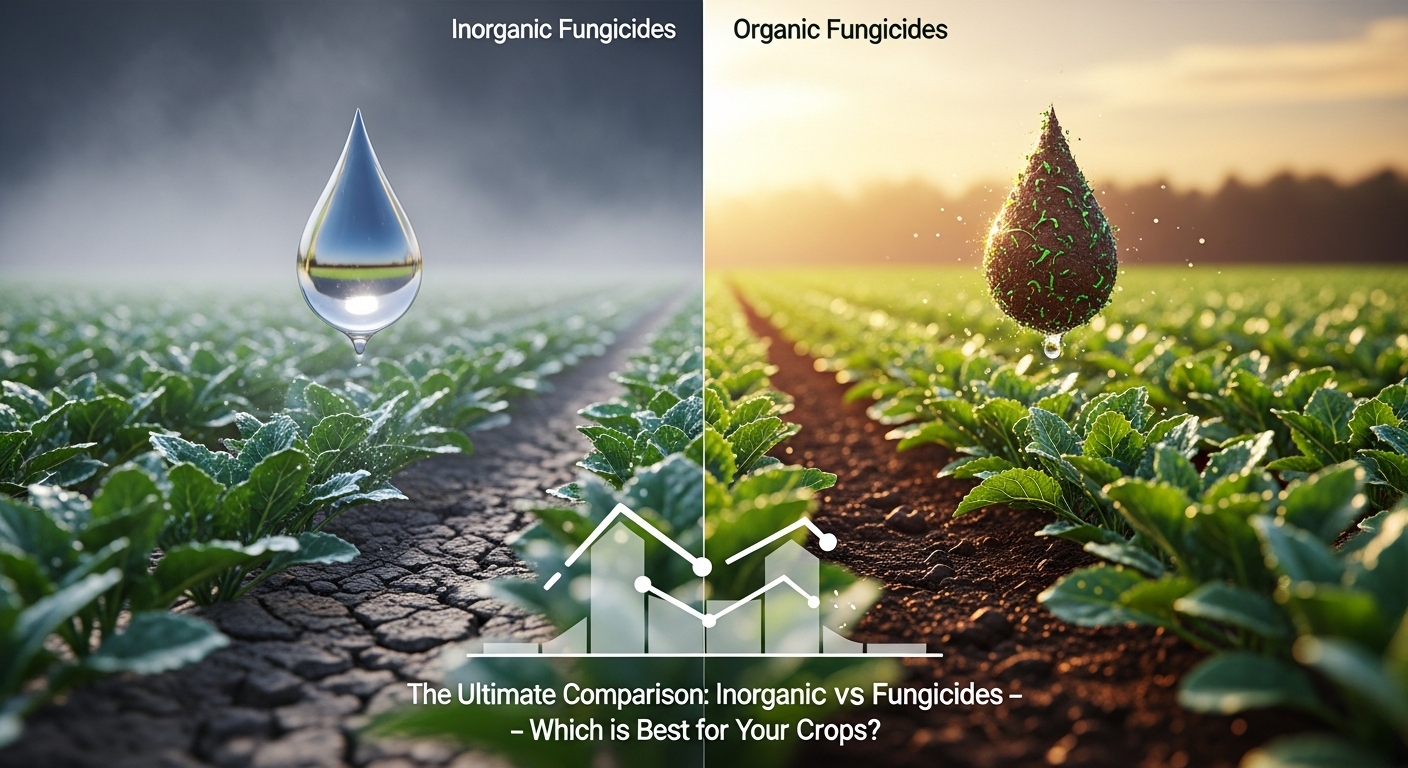
Typically, inorganic fungicides will work very quickly on severe outbreaks of infection, whereas organic fungicide options tend to have an emphasis on sustainability as well as being safer for the environment. The decision of which fungicide option to use will be made on additional factors (i.e., crop type, environment, etc.).
In determining what fungicide option works best, growers need to carefully combine both inorganic and organic fungicide options in order to maintain healthy crops, increase yield, and promote sustainable agriculture. Typically, a balanced mix of these two types of fungicides will yield the most satisfactory results for combating diseases while maintaining a safe and sustainable environment.
Understanding Fungicides: What Are Inorganic and Organic Fungicides?
Fungal infections can be prevented, suppressed, or eradicated from crop plants, using fungicides. Fungicides are classified into two main categories: inorganic and organic. The classifications are based on their origin (that is how the active ingredient came to be), composition (the way the active ingredient works), and, to a lesser extent, their mode of action (the way the active ingredient affects the fungus).
Inorganic fungicide products tend to be synthetic products or mineral based products; therefore they provide immediate and effective protection against diseases. On the other hand, organic fungicides provide long lasting protection against diseases and are made from naturally occurring compounds and thus are suitable for use in sustainable and eco-friendly agricultural methods.
Inorganic Fungicide Definition and Key Characteristics
Chemical- or mineral-based fungicides utilized to swiftly and efficaciously manage fungal diseases are identified as inorganic fungicides. Since they have a wide range of action and exhibit quick results, most commercial agricultural applications utilize inorganic fungicides.
Key Facts:
- Rapid acting to control disease
- Broad spectrum protection against fungus
- Extended shelf life and durability
- Effective for the most extreme cases of disease control

Organic Fungicide Meaning and Natural Disease Control
Natural fungicide products are made from micro-organisms, plant extracts or minerals and are used to control plant diseases. They are preferred by organic farmers because they enhance the soil and are environmentally safe.
Key Features:
- Disease Management in an Eco-Friendly Manner
- Biodegradable Formulations
- Safe For Beneficial Organisms
- Can Be Used In Organic Farming

Key Differences Between Inorganic vs Organic Fungicides
Inorganic fungicides differ from organic fungicides with respect to overall composition; therefore, they work differently (i.e. inorganic products tend to kill fungus quickly, while organic solutions will apply to long-term care), and their overall effects (i.e., inorganic fungicides typically leave more residue behind after application than organic ones), and their environmental impact.
Differences include:
- Synthetic vs. naturally occurring origin
- Speed of action and gradual build-up of protection
- Residue (in terms of the amount left afterwards)
- Commercially available versus environmentally friendly.

Effectiveness and Spectrum: How Inorganic and Organic Fungicides Differ
The effectiveness of fungicides can rely heavily on disease severity, crop types, as well as environmental conditions. Inorganic fungicides tend to be the better choice for immediate control; whereas organic materials tend to be more effective for preventive applications.
By understanding the differences between these two groups of effective fungicide products, growers can develop more effective fungicide programs that combine both approaches and yield better results through long-term crop protection.
Fungicide Effectiveness Against Plant Diseases
The effectiveness of fungicides depends on how they are formulated and the target organism(s). The majority of the time when using inorganic fungicides, they can quickly suppress disease, whereas organic products typically suppress or kill disease over a longer term.
Key Characteristics:
- Instant response with severe disease present
- Can provide protection as well as cure disease
- Work well in a variety of circumstances
- Help to increase crop quality and yield.

Broad-Spectrum vs Targeted Disease Control
Broad-spectrum fungicides provide protection from multiple fungal pathogens all at once while targeted fungicides focus on singular diseases, allowing for a more targeted approach to managing those specific to the pathogen.
Bullet Highlights:
- Broad-spectrum disease coverage across many diseases
- Specific pathogen targeting
- Better disease resistance management
- Flexibility of application method

Pathogen Resistance and Long-Term Disease Management
Over time, continuously applying a single fungicide enables the development of resistance in the pathogens. Using a combination of different fungicides (both inorganic and organic) will help to ensure continuing effectiveness of your products.
Key Points:
- Rotate fungicide groups
- Minimize the number of times a fungicide is applied
- Utilize Alternative Management Practices along with your fungicides
- Monitor the development of disease(s)

Environmental Impact: Assessing the Safety and Sustainability of Fungicides
When considering the selection of fungicides, environmental safety plays a major role. In contrast to inorganic fungicides, which can have serious effects on soil microbes and water quality; organically certified or organic fungicide products are generally more beneficial to the environment.
The use of fungicides in Sustainable Agriculture is encouraged so that crop protection as well as environmental protection can be addressed and achieved. The selection of the most appropriate fungicide can promote healthier soils and biodiversity.
Environmental Safety and Soil Health Considerations
Soil microorganisms, nutrient cycling, as well as long-term soil fertility can all be affected by using fungicides. Organic solutions are typically regarded to be less harmful to the environment than synthetically produced fungicides.
Important Notes:
- Protect beneficial soil microorganisms
- Maintain the fertility of soils
- Minimize Risk of Contamination
- Support Sustainable Agriculture

Chemical Residue vs Biodegradability
Fungicide use can have an impact on soil microorganisms, nutrient cycling and long term soil fertility. The use of organic fungicides is generally considered to be less harmful to the environment than synthetic fungicides.
Key Points:
- Protect beneficial soil microorganisms
- Maintain Fertility of Soil
- Minimize Risk of Contaminating Soil or Water
- Support Sustainable Agriculture
Eco-Friendly Fungicides and Organic Farming
Organic fungicides are popular in certified organic farming systems and assist farmers in maintaining crop health with fewer environmental impacts.
Main Points:
- Allowed to be used for organic certification
- Enhance biodiversity
- Provide ecologically-based control of disease
- Reduce the use of chemicals

Cost and Availability: Comparing Economic Factors Between Inorganic and Organic Options
Growers select fungicides based on the influence of cost and product availability. Generally speaking, growers will use more commonly available inorganic fungicides because they may offer a lower short-term (spending now) cost of treatment than organic fungicides.
Organic fungicides may initially cost more but provide long-term sustainability of production on the land, are less damaging to the environment, and should also be included in economic-risk decision-making.
Fungicide Cost and Affordability
Different types of organic and inorganic formulations differ in price. Generally speaking, inorganic fungicides are less expensive upfront, while organic types are often more expensive when looking at the long-term use of these products.
Points to Consider:
- Differences between initial purchase costs
- Long-Term Value
- Application frequency
- Crop Value

Market Availability and Accessibility
Fungicide availability is subject to geographical location, farmed crop type and country regulations. The general uses of inorganic fungicides have been established; and organic fungicide usage is continuing to grow.
Highlights:
- Widespread commercial availability
- Growing demand for organic products
- Product availability based on geography
- Sustainable product alternatives are becoming available.

Balancing Cost with Sustainability Goals
Farmers often face the challenges of finding ways to maintain the balance between costs & environmental sustainability while growing their crops through the means of using both inorganic & organic fungicides to achieve cost effectiveness & healthy crops
Key Points:
- Balancing short-term and long-term objectives
- Reducing the use of chemicals that impact the environment
- Increasing crop profitability through the use of more economical alternatives
- Supporting sustainable farming methods

Application and Usage: Best Practices for Using Inorganic and Organic Fungicides
Agricultural fungicide effective use is critical to maximum disease control and resistance reduction. Fungicide effectiveness is a product of numerous factors including: timing of use; dosage; and spray coverage.
Integrated Pest Management practices optimize the effectiveness of fungicides while reducing their potential to harm the environment. Properly using fungicides will promote healthy crops and sustainable agriculture systems.
Fungicide Application Methods and Timing
Applying fungicides at the right moment is the key to avoiding fungal infection at the earliest signs of trouble, therefore preventing the fungi from developing further. Both organic and inorganic fungicides need to be applied using an identified method for maximum effect.
The following are significant factors that you should consider when using fungicides:
- Apply fungicide before any significant infection occurs.
- Make sure that you have completely covered your plants using a sprayer. Make sure you have covered all parts of your plants.
- Ensure that you are looking at the correct time of year for application.
- Use the weather forecast while applying fungicide.

Dosage, Frequency, and Safety Precautions
Reducing the risk of poor plant performance with fungicides is achieved by following the recommended application rate and other directions provided by the manufacturer. Not following these instructions can lead to harm to the plants, soil health and beneficial organisms.
Things To Remember:
- Use correct rate
- No overspraying
- Protective equipment must be worn
- Store fungicides correctly

Integrated Pest Management (IPM) Strategies
A comprehensive strategy that integrates cultural, biological and chemical approaches for overall disease control is referred to as an Integrated Pest Management (IPM) Program. Different pesticide formulations (inorganic and organic) can be used in conjunction with one another to provide for long-term production protection from plant diseases.
Main Ideas:
- Use of multiple (different) fungicide products in rotation
- Crop sanitation
- Disease monitoring
- Use of three different control methods together

Choosing the Right Fungicide for Your Needs
Choosing the right fungicide depends heavily on factors such as crop characteristics, disease severity and grower objectives. Some growers are looking for rapid disease control; others are more interested in sustainability and improving soils or how to improve the long-term productive capacity of their farms while still maintaining environmental safety.
By understanding these variables, growers can determine which fungicide strategy best meets their needs for both short-term yield potential and long-term sustainability.
Crop Type and Disease Severity Considerations
Each crop and each disease has a specific required fungicide. When dealing with a severe case of fungus growth a user typically will choose to use an inorganic fungicide. When using preventative measures a user should use an organic fungicide.
PLEASE NOTE:
- Choose a fungicide specific to the crop you have.
- Consider the severity of the disease.
- Consider environmental factors.
- Plan for prevention in advance.
Indoor vs Outdoor Fungicide Selection
There are differences in the types of disease control practices that are necessary for indoor and outdoor farms. There are certain environmental variables such as humidity, air flow, as well as exposure that would affect how fungicide is selected.
Important Factors:
- Greenhouses and Field Foundations
- Ventilation Requirements
- Moisture Control
- Application Options

Balancing Efficacy, Safety, and Sustainability
An ideal fungicide strategy provides results that balance effectiveness versus being environmentally responsible by utilizing both organic and inorganic solutions through synergistic input will provide the greatest outcome.
Key Points:
- To achieve maximum disease suppression.
- Therefore, protect soil health.
- Minimize/mitigate risk of developing resistance.
- Encourage sustainable agricultural practices.
FAQs
Q1. What is the difference between inorganic vs organic fungicides?
Organic/fungicides are naturally occurring, whereas inorganic/fungicides are chemical-based.
Q2. Is organic fungicide safer for the environment?
Typically, yes, organic fungicides are considered to be more environmentally friendly than chemical-based or inorganic fungicides.
Q3. Which fungicide works faster on plant diseases?
Inorganic fungicides are known to work quicker when treating pathogenic fungi than organic fungicides.
Q4. Can organic fungicides control serious infections?
Inorganics fungicides will usually be able to control a severe infection; however, in some cases, multiple treatments may be necessary.
Q5. Are inorganic fungicides harmful to soil health?
Overusing inorganic fungi-cides can have an adverse effect on non-pathogenic microorganisms (beneficial) in the soil.
Conclusion: Making an Informed Choice Between Inorganic vs Organic Fungicides for Healthy, Sustainable Crops
When deciding whether or not to use an inorganic or organic fungicide depends upon various factors; such as your crop's specific needs , the type of environmental conditions they will be grown in, the severity of the disease and your desire for sustainable cropping systems should all be taken into account. When properly and responsibly applied, both organic and inorganic fungicide options can provide positive results for growers.
Inorganic fungicides are often associated with obtaining a near-instantaneous, effective control on high-severity disease epidemics, while organic fungicides generally focus on aiding in establishing an overall sustainable and safer farming method. A combination of organic and inorganic fungicides is often the best option when establishing an effective disease management strategy.
