




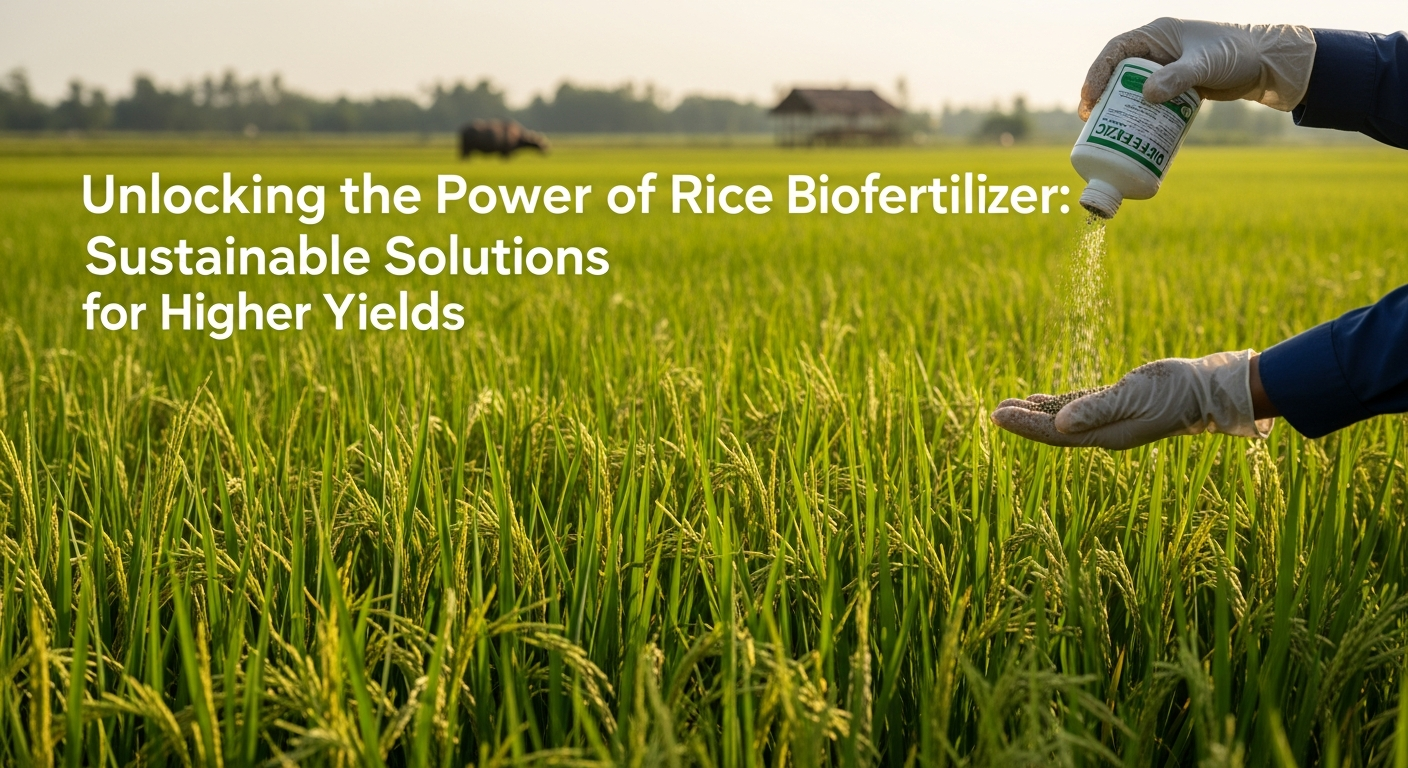
A naturally sourced biofertiliser for rice is an environmentally friendly method of boosting crop yield whilst sustainably managing soil and land resources. For many years, farmers have successfully used a variety of biofertilisers, incorporating biological processes into their farms as part of everyday practice to create healthy rice production systems without adversely affecting the environment.
A rice biofertiliser is made up of beneficial bacteria that promote the availability of essential macro-nutrients, primarily nitrogen and phosphorus, which are important for establishing roots and growing strong plants; additionally they improve soil content, increase the level of soil micro-organisms, and enable rice plants to absorb available nutrients more efficiently during their entire growth period.
Unlike chemical inputs, bio-fertilisers do not damage soil over time and therefore provide long term benefits for those farming with them. In addition to providing a natural means of developing productive farms, bio-fertilisers also create sustainability in farming and build soil fertility over time. By restoring soil fertility, bio-fertilisers improve resistance to crop stress and decrease reliance on synthetic fertilisers; therefore they are an excellent option for farmers who want to produce more with fewer environmental impacts.
Through developing healthier seedlings, improving grain formation, and providing an environmentally responsible option for developing paddy fields into well yielded and high quality agricultural crops today there will be more opportunities for future generations to produce food in a sustainable manner.
Understanding Rice Biofertilizer: What Is It and Why Does It Matter?
Rice Biofertilizer is a type of input that consists of microorganisms and has many benefits when applied to the soil to create better quality conditions for producing rice. Like food is to a baby’s growth, so too is rice biofertilizer to the soil-growing system to increase the availability of nutrients, fortify the root structure of crops, and support consistent crop growth through an environmentally conscious manner.
Rice biofertilizers have become an essential part of modern rice production due to the continually increasing cost of production inputs and ongoing deterioration of current soil quality.
Definition of Rice Biofertilizer
Biofertilizers for rice are made up of beneficial microorganisms known as nitrogen-fixing bacteria, phosphate-solubilizing microbes and plant-growth promoting rhizobacteria. These microorganisms reside in the soil and root zones of rice plants, providing them with the necessary nutrients throughout their lifecycle.
Major Characteristics of Rice Biofertilizers:
- Increases natural nutrient availability (N, P, K)
- Increases root development and nutrient uptake
- Restores balance of beneficial soil microbes
- Safe for long-term repeated applications
In contrast to chemical fertilizers that directly feed the plant, biofertilizers improve the ability of the soil to provide nutrient(s) for the crop in a natural manner, which produces healthier, more resilient yields.
Why Biofertilizers Are Important for Rice Crops
Rice crops require many nutrients, and as rice is grown continually, soil fertility becomes less productive. To combat this nutrient deficiency, biofertilizers provide more efficient nutrient use and enhance soil condition at the root system.
The following represents the key advantages of applying biofertilizers to rice.
- Nitrogen fixation and phosphorus availability will be improved.
- Tillering, flowering and grain filling will be improved.
- Chemical fertilizers will be used less frequently.
- The soil structure will be improved and the ability of the soil to hold water will be improved.
- Crop growth and yield stability will be more uniform throughout the crop.
The greatest benefit of applying biofertilizers to rice occurs during early crop establishment and when maximum nutrient uptake and root establishment take place.
Rice Biofertilizer in Sustainable Agriculture
In sustainable and organic farming systems, biofertilizers play a central role by maintaining long-term soil productivity while protecting the environment. They reduce chemical runoff, preserve beneficial soil organisms, and support eco-friendly farming practices.

The Science Behind Rice Biofertilizers: How Do They Work?
Rice Biofertilizers Support Rice Plants During Their Life Cycle Through a Variety of Biological Processes Similar to the Way Different Millets Will Support A Baby’s Growth During Various Life Stages.
They Provide Nutritionally Beneficial Soil Microorganisms To Cultivated Plants By Inoculating The Soil With Beneficial Soil Microorganisms, Increasing Nutrient Availability For Use By The Crop Plant; Supporting Crop Plant Growth; And Restoring Soil Health/Nutrients Overall In A Sustainable Manner.
Nitrogen-Fixing Bacteria in Paddy Fields
Rice needs nitrogen to develop healthy, green foliage (leaves), branches (tillers) and a good overall plant condition. Nitrogen-fixing bacteria such as Azospirillum and Azobacter are commonly found in biofertilizers for rice because they change atmospheric nitrogen gas (N2) into usable nutrient forms that rice can absorb.
How these nitrogen-fixing bacteria benefit rice:
- Change or convert N2 into forms usable by rice
- Encourage healthy and strong root and shoot (stem and leaf) growth
- Enhance the color of leaves and photosynthesis
- Reduce or eliminate the need for synthetic N fertilizer.
These nitrogen-fixing bacteria can be found in the root zone of flooded rice paddies and provide an ongoing source of nitrogen throughout important developmental stages.
Phosphate-Solubilizing Microorganisms
Phosphorus is an essential nutrient used by plants for healthy root establishment, flowering, and grain production. In most soils, much of the phosphorus is bound and unavailable to plants. The use of Biofertilizers containing phosphate solubilizers can help unlock the bound phosphorus by releasing organic acids which aid in converting insoluble forms of phosphorus to soluble forms that plants can use.
There are many advantages to using PSM in agriculture. They can:
- Improve early establishment and vigor of crops through enhanced root development.
- Increase efficiency of nutrient uptake from the soil by plants.
- Enrich flowering and grain filling.
- Reduce phosphorous accumulation and waste in soils.
Rice bio-fertilizer is especially effective as a result of PSM during transplanting and the early vegetative stages.
Microbial Activity and Soil Health Enhancement
Biofertilizers are more than just a source of nutrients; they also stimulate soil microorganisms that help support plant growth and provide the nutrition required for healthy rice production by
- Increasing the number of beneficial microorganisms
- Improving the amount of air and water in the soil
- Increasing the rate of cycling of soil nutrients so they are more available for plant uptake
- Providing long-term enhancements to soil fertility by increasing the number of plant available nutrients in the soil.

Key Benefits of Using Rice Biofertilizer
Similar to the way that millet is an excellent source of gradual, nutrient-rich nourishment for infants; rice biofertilizers, through cooperation with helpful soil microorganisms, strengthen rice plants from the ground up and also improve the future of the land.
The following are significant reasons why biofertilizers are a critical part of sustainable rice production.
Increased Crop Yield Naturally
Rice biofertilizers offer an array of advantages, including improving rice yields without pushing the plant to grow through any chemical means. Beneficial microorganisms will improve the availability of nutrients, create good tillering, and help develop uniform plants.
When using rice biofertilizers, the following crops will show increased productivity:
- Nitrogen and phosphorus will be more readily available
- Roots will have more growth and uptake of nutrients
- Flowers will be produced more effectively and grains will fill more completely
- Plants will display improved growth and greater tolerance to environmental stresses
Thus leading to more vigorous and healthy rice plants that produce stable yields from year to year.
Improved Soil Fertility and Structure
Biofertilizers are beneficial as they stimulate the establishment of ecosystems in soils by improving microbial diversity, improving the aggregation of soil particles, and preserving balanced ecosystems within the soil; therefore, biofertilizers can regenerate and enhance soil fertility.

Healthy soils lead to healthy roots, improving the accessibility of nutrients to rice plants over the full-synthetic fertilizer life sequence.
Reduced Dependence on Chemical Fertilizers
Farmers spend a lot of money on chemical fertilizers, but using too much can degrade the quality of the soil and water. Rice biofertilizer can help farmers reduce their use of chemical fertilizers because it provides nutrients naturally and makes chemical fertilizers more effective.

Application Methods: How to Use Rice Biofertilizers Effectively
Just like you give your baby the right type and timing of millet, properly applied rice biofertilizer can produce maximum results if applied correctly. By applying the rice biofertilizer correctly, you will ensure that the good microorganisms will be alive, reproduce, and will work together to support the rice growth from seed to harvest.
Here are the most effective application methods of biofertilizers when growing rice.
Seed Treatment with Biofertilizer
Using biofertiliser in the seed treatment process is the earliest and also the most important means of introducing beneficial microbes to the crop's root system, establishing a healthy root system, as well as improving the uptake of early nutrients by the newly developed root system.
The benefits of seed treatments include:
- Increases seed germination and seedling vigour
- Allows for early root development
- Helps protect young seedlings from stress caused by the soil
- Provides for early nutrient absorption
The basic steps for seed treatments include:
- Mixing the biofertiliser with water or jaggery solution
- Coating the seed with the mixed solution
- Drying for a few hours in the shade prior to sowing
The use of this method is a cost-effective and beneficial method of treating seedlings that are raised from a nursery.
Soil Application Techniques in Paddy Fields
Through soil application, biofertilizers can be applied in the root zone directly, particularly in transplanted rice systems. The benefits of this practice include enhancements to soil fertility and maintenance of microbial activity throughout the whole crop cycle.
Below are some common methods of soil application:
- Combining rice biofertilizer with compost or farmyard manure.
- Broadcasting at the time of land preparation.
- Application close to the root zone during transplanting.
Below are some advantages of soil application:
- Enhances microbial populations and soil structure.
- Supports nutrient cycling in flooded areas.
- Provides continuous availability of nutrients.
Foliar Spray and Dosage Guidelines
Foliar application of rice biofertilizer is a secondary means to help support rice health during critical growth stages early on in the new crop. Foliar application is not a substitute for soil; however, it can help enhance microbial relations on the surface of leaves.
Key Points:
- Only apply at the recommended dilution rate.
- Apply during the early to late part of the day.
- Avoid applying during high heat and/or rainfall events.

Comparing Rice Biofertilizer with Chemical Fertilizers
When considering millets as they provide an option for slow and gentle nutrition over time, it is important to consider rice bio-fertilisers as a sustainable source in comparison to chemical fertilisers for rice growers.
Both provide a means to improve crop yield, however each product works differently, their environmental impact varies, and the benefits can differ greatly in terms of longevity. Therefore, understanding the differences in all three areas will help growers make better choices regarding nutrient management.
Nutrient Release and Crop Response
When plants receive chemical fertilizer, it is quickly available so the plant can grow immediately. Rapid plant growth after application of a chemical fertilizer results in nutrient losses through leaching and/or volatilising. In comparison, a rice biofertiliser works by slowly activating beneficial microorganisms to release nutrients as the plant needs them.
Some significant differences between chemical fertiliser and rice biofertiliser in the nutrient supply include:
- The rice biofertiliser provides slow, continuous nutrient supply
- Increases nutrients available to be absorbed by the roots of the plant
- Provides a more uniform (rather than a sudden increase) growth of rice plants from time of application of the fertiliser
- Decreases the amount of nutrients lost and causes less stress to plants
These balanced nutrient supplies produce healthier rice plants and a more consistent yield of rice.
Environmental Impact Comparison
Excessively using chemical fertilizers leads to increased soil erosion, pollution of watersheds, destruction of living helpers in the earth’s soil, etc. Bio-fertilizers increase the number of living helpers and maintain a balanced ecology of soils.

Chemical fertilizers are known to provide advantages with regards to maximizing yields in a very short time. Biofertilizers maintain longevity in the agricultural ecosystem while continuing to provide bountiful harvests when harvested.
Cost-Effectiveness in Rice Farming
Chemical fertilizers may provide fast results but over time their continued use leads to production cost increases. Biofertilizers yield improved fertilizer-use efficiencies which decrease the necessity for continual chemical applications.
Advantages of Biofertilizer Related to Cost:
- Less input costs due to multi-season utilization
- Enhanced soil fertility yields less dependence on future fertilizer
- Increased return on investment through sustainable crop yields.

FAQs
Q1. What is rice biofertilizer?
Rice biofertilizer is a natural product containing beneficial microorganisms that improve nutrient availability and soil health for rice crops.
Q2. How does biofertilizer for rice improve yield?
A biofertilizer for rice enhances nutrient uptake, strengthens root growth, and supports better tillering and grain formation.
Q3. Can biofertilizers replace chemical fertilizers in rice farming?
Biofertilizers can partially replace chemical fertilizers and significantly reduce their usage when used as part of an integrated nutrient plan.
Q4. Which biofertilizers are commonly used for rice?
Common biofertilizers for rice include nitrogen-fixing bacteria, phosphate-solubilizing microorganisms, and plant-growth-promoting microbes.
Q5. When should rice biofertilizer be applied?
Rice biofertilizer is best applied during seed treatment, transplanting, or early vegetative growth for maximum effectiveness.
Conclusion: Make the Switch to Rice Biofertilizer and Transform Your Harvest Today!
Biofertilisers are an excellent way for farmers to switch to sustainable agriculture. Rice biofertilisers have the ability to significantly enhance soil health and increase productivity on rice farms by providing direct benefits via the provision of essential nutrients, enhanced root development and persistent crop growth, all while protecting the environment. Additionally, this method offers an organic method to restore the soil to its original fertility level that may have been depleted via continuous conventional agricultural practices.
Farmers who use rice biofertilisers can continue to have reliable and consistent yields while reducing their reliance on synthetic fertilisers over time. Farmers will benefit from improved soil conditions and increased capacity to hold water due to an increase in the amount of organic material in the soil and the increased microbial activity in the soil, thus producing healthier plants that can better withstand stress. This in turn provides farmers with improved grain quality and lower input costs, as well as greater long-term profits.
In a world where sustainable agriculture is now an absolute necessity, rice biofertilisers offer an alternative to conventional agricultural practices. By making the switch to rice biofertilisers today, at no additional cost, you are helping to create healthier crops, improve soil quality, and develop a greener environment. You will be able to produce high-yielding rice crops for today and for the future generations!