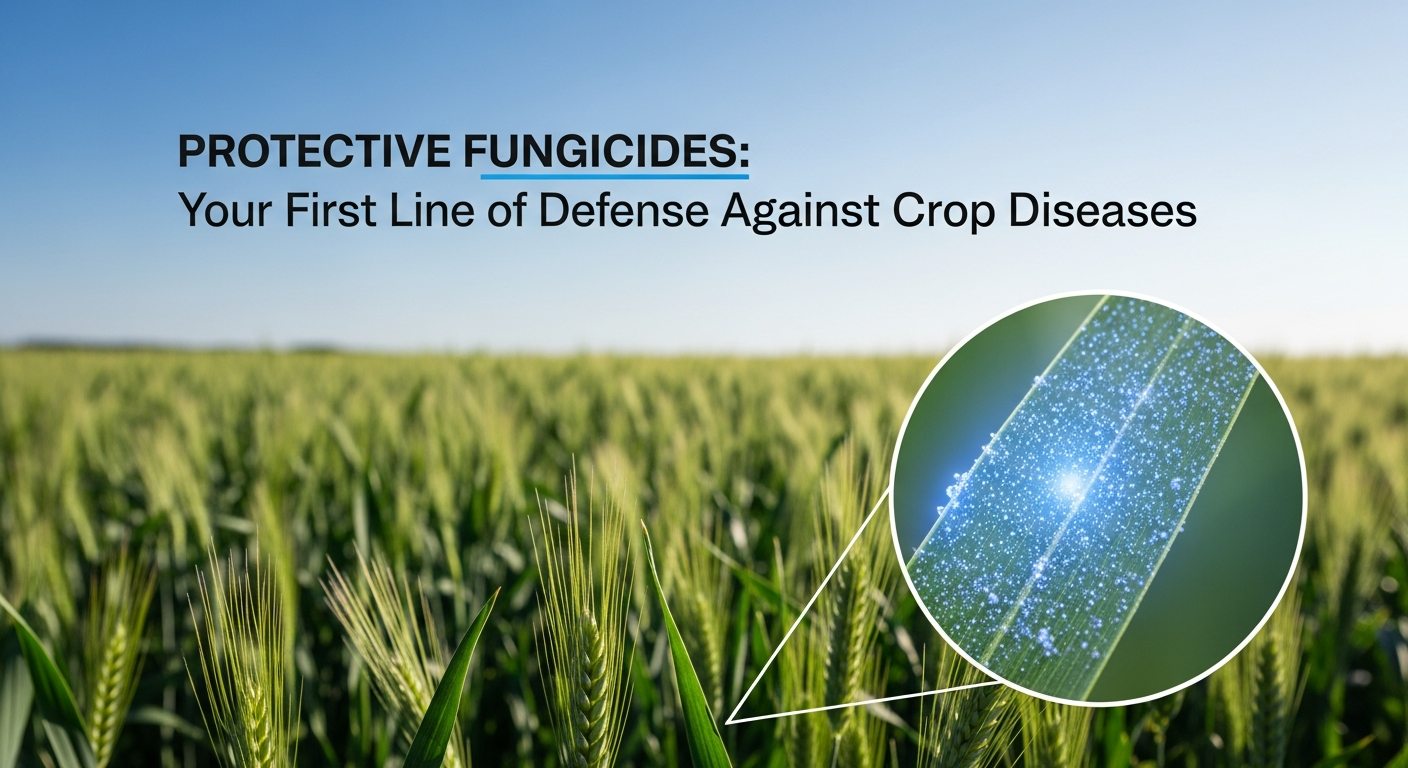
Fungicides are critical tools for agriculture because they can protect crops from fungal disease before disease begins. Fungicides for crops provide a means to prevent fungal spores from germinating and then spreading by applying fungicides to the leaves and stems of the plant, and therefore fungicides represent a reliable means of protecting all crops both commercially and residentially when properly applied at planting and periodically thereafter until harvest.
Fungicides, including copper, sodium, and mancozeb, represent some of the most widely used fungicides and possess broad-spectrum effectiveness against many of the most common fungal diseases affecting plants. The fungicides are simple to apply, economical for the gardener and farmer, and usable in an integrated prevention program for most crops.
The protective fungicides represent an important aspect in the preservation of crop health through ample preventive activity and broad application. The application of protective fungicides provides consistent protection to crops when properly applied at planting and at appropriate intervals to produce the best plant growth, the highest yield, and the most consistent crop throughout the growing cycle, whether the crop is produced for commercial or private use.
Understanding Protective Fungicides and Their Role in Plant Health
Fungicides (protective) are an important part of modern crop protection, preventing fungal infections from occurring. Fungicides for plants create a protective barrier around the surface of the plant protecting them from disease.
Proper application will assist in protecting plants' health as well as maintaining plant health, improving crop quality, and reducing crop loss.
Protective Fungicides Definition and Key Features
The purpose of using protective fungicides is to inhibit or prevent fungal spores from germinating and infecting vegetative plant structures. Preventative fungicides typically provide a preventive solution rather than a curative one.
What are Protective Fungicides?
- Preventative in nature (used before the infection has occurred)
- Surface-active and non-systemic
- Work against many different types of fungal diseases
- Simple to use and inexpensive
- Important for first stage protection of crops

Types of Fungicides and Their Classification
Fungicides can be classified according to their method of action in plants, with protective fungicides being one of the main types.
Types of fungicides include:
- Protective fungicides (External protection of surfaces).
- Systemic fungicides (Protection of the interior of plants).
- Translaminar fungicides (Localized movement in leaves).
Importance of Preventive Disease Control in Crops
Disease control through prevention is very important in agriculture. When a fungal infection is in the farm, the expense and time to manage it increases after the spread.
Benefits of Disease Control through Prevention include:
- Decreased Risk of Outbreaks
- Maintained Quality of Crop/Yield
- Decreased Need to Use Large Amounts of Chemicals
- Increased Sustainability of Agricultural Practices
How Protective Fungicides Work to Prevent Fungal Infections
Before a fungus infects a crop, you can use protective fungicides to block the fungus from establishing and to protect plants against fungal disease. Fungicides for plant use help keep the fungal spores that are attempting to germinate in contact with the fungus and prevent them from becoming established, thus acting like an armor around the plant.
With an understanding of how all fungicides for plants work, you can apply protective fungicides effectively so that your crops remain healthy and free of disease.
Mode of Action of Protective Fungicides
Fungicides that act as protectants are designed for use on plants, primarily as a means of preventing fungal infection at the earliest point of contact, prior to any existing infection being cured by a curative fungicide.
The following are descriptions of the various modes of action for fungicides that act as protectants:
- Protective fungicides form a protective chemical barrier on the surface of the plant.
- Protective fungicides target fungal spores before they germinate.
- Protective fungicides disrupt the enzyme activity of fungi.
- Protective fungicides inhibit the ability of the fungus to invade plant tissue.
Surface Protection and Fungal Spore Inhibition
The use of protective fungicides is very successful because they can prevent a fungal infection by stopping a fungal spore on the surface of the plant (before any infection occurs).
Entry of fungal pathogens is prevented, which includes:
- bacterial pathogens spread to other plants
- leaves, stem and fruit are protected
- immediate effectiveness after application.

Preventive Fungicide Application Strategies
Using fungicides in a preventative way is more effective than using them on the same plants after a disease has already occurred.
Here are a few tips for applying fungicides:
- Always apply fungicide before any symptoms of a disease occur
- Use a pre-determined schedule to apply fungicides regularly
- Make sure the surface of the plant receives even coverage of the fungicide.
- Combine the use of fungicides with sound agronomic practices.

Key Benefits of Using Protective Fungicides in Agriculture
Fungi are a significant threat to agricultural productivity, so farmers must use protective fungicides to prevent fruit and vegetables from contracting a fungal disease before it affects crop development.
Plant protective fungicides help to establish a barrier between a crop and the fungi, which prevents the disease from establishing itself in that plant, providing an overall increase in yield due to continued plant growth. When they are used as part of a preventative strategy to control fungi, farmers may achieve stable productivity and fewer crop failures by using protective fungicides.
Disease Prevention and Crop Yield Protection
Using a protective fungicide is one of the best ways to prevent fungal diseases in agricultural crops successfully since they help ensure all crops retain their required health while growing to maturity.
Fungicides Are Protectively Constructed To Be:
- Preventative (they prevent disease from infecting crops)
- Effective against many of the most common types of fungal growth, such as rust and blight, and others are diseases caused by fungi
- Helpful with maintaining the quality of the crop and ensuring that the crop grows evenly
- Mainly used to protect yield and reduce losses

Sustainable Farming and Resistance Management
The use of protective fungicides in order to sustain agriculture has been identified as beneficial in terms of limiting or reducing reliance on using significant amounts of lethal chemicals to treat problems after an outbreak has occurred
Sustainability Benefits of Protective Fungicides Include:
- Lowering chemical consumption versus curative solutions
- Supports integrated pest management (IPM)
- Lowers potential for developing resistant strains
- Maintains soil and ecological health.
Early Disease Management Advantages
Applying fungicides early in the crop cycle is a great way to reduce how much disease gets established in the fields before they can get out of control and become a detriment to your farming business.
Some early application advantages are:
- Less disease begins when you reduce disease pressure early
- The need for additional spray applications later is minimized
- The consistency of growth is increased
- Overall efficiency on the farm is improved

The Best Practices for Applying Protective Fungicides Effectively
It is important to apply protective fungicides correctly so that you can provide a strong preventative strategy for diseases and establish some consistency in plant performance. Protective fungicides for plants are preventative, therefore how well they perform depends on getting the application timing right, using proper application techniques, and following the manufacturer's recommended guidelines.
Protective fungicides form a protective barrier on the plant. An application error, even a minor one, can significantly reduce the level of protection provided by the protective fungicide.
Fungicide Application Timing and Frequency
Fungicides that provide protection will work best when used prior to showing symptoms of the disease, to prevent infection by the fungus; they will not cure the infection once it occurs.
How to Apply Fungicides:
- Early enough (within two weeks) on a crop to avoid having symptoms
- Regularly scheduled applications based upon: crop, type of spray being used, and environmental conditions
- More applications during humid, wet conditions
- Re-apply after significant rain or watering due to irrigation

Spray Techniques for Maximum Coverage
To be effective, protective fungicides must be effectively sprayed on plants; therefore, adequate spray application is important to the successful use of these products.
Spray Techniques to Follow:
- Ensure even distribution of spray on leaves, stems and fruit
- Use small spray droplets for better adherence
- Treat the upper and lower leaf surfaces
- Maintain proper nozzle pressure and calibration.
Dosage Guidelines and Safety Measures

Common Protective Fungicides Available and Their Target Diseases
In agriculture, fungicides are used to protect crops from fungal infection prior to the onset of damage caused by them. Fungicides for plants provide a barrier of protection against the germination and spread of fungal spores. There is a large variety of fungicides available for purchase and each has been developed to control a specific fungal disease but has the ability to control several other diseases at the same time.
Learning about the different types of fungicides and the diseases they control will help you to find the best fungicidal product to manage your disease. Choosing appropriate fungicides based on crop type, the environment, and levels of disease will allow you to have better crop production, higher yield, and lower loss.
Broad-Spectrum Protective Fungicides
Fungicides classified as broad-spectrum protective have proven to be extremely effective at protecting against numerous types of fungal disease. These products are typically used as prophylactic measures (or preventative solutions) on a variety of different crops.
Broad-Spectrum Protective Fungicides:
- Are effective against many types of fungus
- Can be used on more than one type of crop (such as grain crops, fruit crops and vegetable crops)
- Provide consistently good performance in different types of environments
- Are commonly used as part of a preventative spray program
Popular Fungicides for Plants and Their Uses
There are many different types of fungicides for plant use; however, the choice of the right one depends on what botanical as well as what kind of disease it is. Using the right fungicide helps to achieve maximum effectiveness and reduces the number of unnecessary applications of that chemical.
Some popular fungicides for plant use are:
- Mancozeb is effective against leaf spots and blight
- copper-based fungicides are effective against both bacterial and fungal diseases
- sulfur fungicides are used to control powdery mildew
- chlorothalonil is used to control rust diseases and other diseases found on leaves.

Target Diseases Controlled by Protective Fungicides
Fungicides that provide protective coverage to crops from different fungal diseases throughout a plant’s life cycle have been developed to protect against various fungicides.
Diseases Treated by these Fungicides Include:
- Leaf spots
- Blight (an early and late)
- Rust
- Powdery mildew
- Downy mildew
Selecting the Right Protective Fungicide for Your Crops
Selecting the right fungicides is crucial for both controlling disease effectively and maximising the effectiveness of your crop. Each crop will be affected by different diseases as a result of the specific use of fungicides to combat these fungi.
Therefore, each crop will require a different fungicide based on the crop’s type, disease pressure according to its climatic conditions, and growth stage. By selecting fungicides based on these criteria, growers will have a greater chance of effectively controlling disease while also using fewer chemicals and reducing their overall input costs.
Crop-Specific Fungicide Selection Guide
The most effective way to select protective fungicides is by the specific crop and associated diseases.
Select Fungicides Based on:
- Fungicide type is based on susceptibility of crops
- Match the fungicide used with the history of a disease on the crops
- What crop stage is present before applying a fungicide
- Select a product that is effective in your local climate conditions
Broad-Spectrum vs Targeted Fungicides
Fungicides are divided into two groups: broad-spectrum and targeted. These groups of fungicides will prevent and control different fungal diseases depending on the crops you are growing and how complex the diseases are.
They are compared as follows:
- Broad-spectrum fungicides can prevent and control many diseases
- Targeted fungicides will prevent and control only one type of disease
- Broad-spectrum fungicides work better at preventing disease than targeted fungicides
- Targeted fungicides should be used when you know the disease already exists.

Integrating Fungicides into IPM Strategies
Protective Fungicides are an integral part of Integrated Pest Management (IPM), which lowers the total amount of chemicals used and the amount needed to effectively control Coconut Rhinoceros Beetles.
Some Ways to integrate IPM into your business include:
- Combining Protective Fungicides and Cultural Practices
- Rotating Protective Fungicides to help prevent developing resistance
- Using Disease Resistant Varieties of Coconut Palms
- Regularly Monitoring Crops to Detect Early .

Avoiding Resistance: Responsible Use of Protective Fungicides
Proper use of fungicides is important to minimize resistance development in plant-pathogenic fungi. When fungicides are used without planning and repeatedly on the same or similar crops, those fungi can adapt over time and become less sensitive to those fungicides, which decreases the ability of a farmer to use those products effectively. This can result in more expensive input prices for farmers, greater loss of crops due to not being able to find an effective fungicide for disease control, and longer-term limits on crop protection strategies.
For fungicides to remain effective, it is important that farmers establish resistance management practices through rotation of different fungicide classes, correct application rates, and use of fungicides only as one component of a multi-faceted integrated pest management (IPM) program.
Implementing a balanced and sustainable management program will enhance the ability to achieve long-term control of diseases, improve crop health, and increase agricultural production.
Fungicide Resistance Management Techniques
To make sure that they work properly, it’s a good idea to use protective fungicides with a suitable resistance management plan so that fungi don’t evolve resistance.
Some ways to manage resistance are:
- Use a variety of modes of action when using fungicides.
- Do not repeatedly use the same fungicide.
- Always follow the recommended rate of application for use.
- Use in conjunction with biological agents, as well as cultural practices.

Common Mistakes to Avoid
Protective fungicides tend to be misapplied because they are often misused by uneducated applicators who do not know the proper way to use them. Misuse can lead to less effective use, as well as greater chance for fungicide resistance.
Some of the most common mistakes are:
- Excessive application/use
- Incorrect dosages
- Application made after a disease event
- Weather conditions ignored during application of fungicide
Sustainable Use of Fungicides for Plants
If applied properly and in conjunction with other practices, protective fungicides are an important element of sustainability in agriculture.
Practices That Promote Sustainable Use:
- Integration Of Fungicides In IPM
- Use Of Disease Resistance Crop Varieties
- Proper Field Maintenance
- Optimize Spray Application Intervals According To Need

FAQs
Q1-What are protective fungicides?
Protective fungicides are preventive fungicides that form a barrier on plant surfaces to stop fungal infections before they start.
Q2-How do fungicides for plants prevent diseases?
Fungicides for plants prevent diseases by inhibiting fungal spore germination and blocking pathogen entry.
Q3-When should protective fungicides be applied?
Protective fungicides should be applied before disease symptoms appear, especially during high-risk conditions.
Q4-Are protective fungicides safe for crops?
Protective fungicides are safe for crops when used at recommended doses and proper application methods.
Q5-Can protective fungicides cure infections?
No, protective fungicides cannot cure infections as they only prevent disease development.
Conclusion: Embrace Protective Fungicides to Safeguard Your Crops and Maximize Yield Success
The use of protective fungicides will continue to have a significant impact on plant disease prevention in agriculture today and in the future. Fungicides enable farmers to implement effective crop protection strategies by providing a protective barrier against soil-borne pathogens on crop surfaces to promote vigorous growth, reduce disease pressure, and provide higher quality produce than without fungicide assistance. By combining proper use of protective fungicides based on research, timing, appropriate application rate, soil type, and climatic conditions will enhance farmer profitability through lower losses due to crop failure and increased overall productivity of their operation.
Developing and utilizing fungicides in conjunction with comprehensive disease control programs, allows producers to mitigate the potential for crop loss due to disease outbreaks over an extended period. The integration of surface protective fungicide applications, sound agronomic practices (including timing of application), and resistance management ensures the effectiveness and sustainability of the entire crop protection program. Protecting crops with fungicides will reduce non-target chemical application to the environment, thus maintaining ecological integrity.