
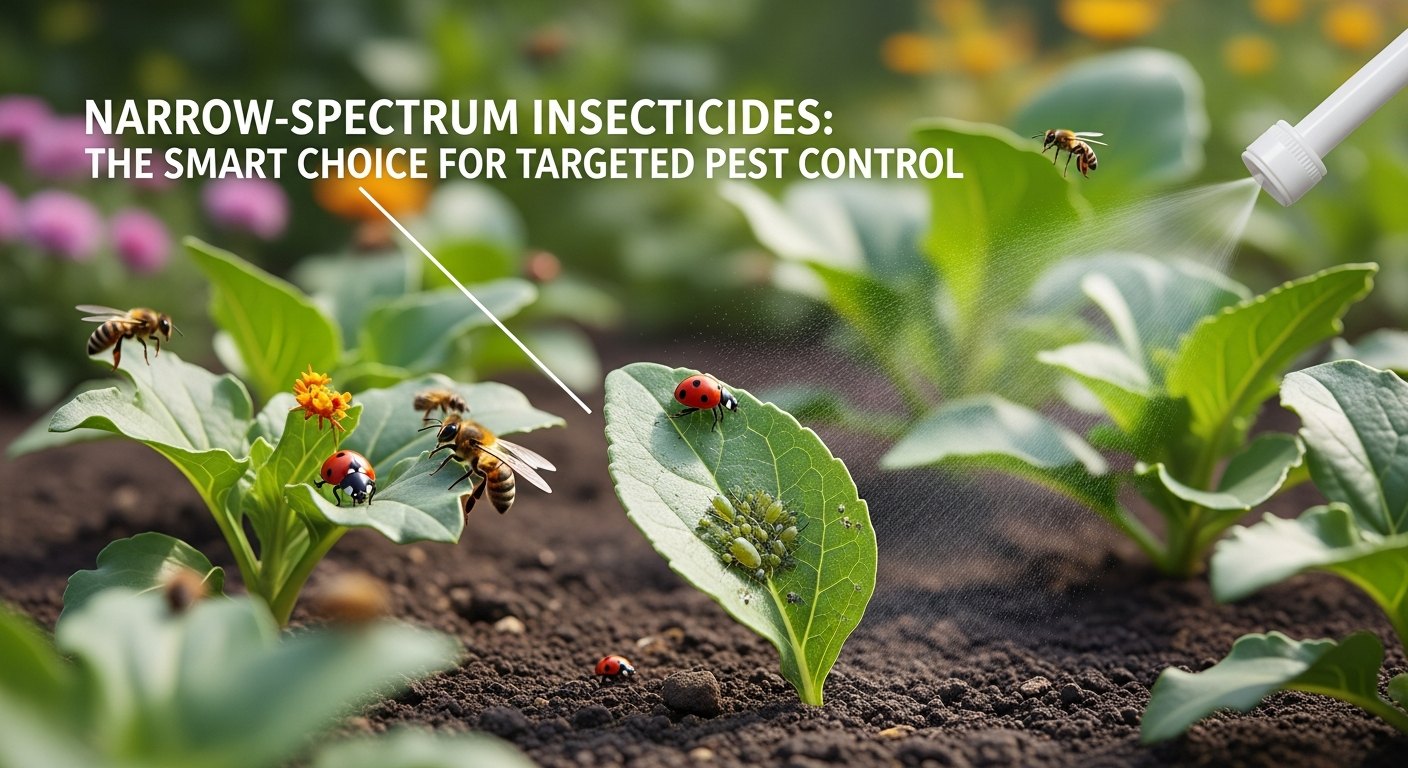
Narrow-spectrum insecticides are advanced pest control tools that specifically target unwanted insects and prevent their destruction of crop and plant life without harming other species that share an ecosystem with crops and plants.
While most insecticides are very broad spectrum, narrow-spectrum insecticides use a much more precise application technique, which assists farmers and gardeners in getting rid of undesirable insects, while also assisting with preserving the balance of nature.
As more and more people become concerned about being sustainable, more and more folks are turning to pest control with narrow-spectrum insecticides that provide directional pest control with a minimum of negative impact on the environment.
Whether you are looking for a selective pest management solution, or an environmentally friendly solution, narrow-spectrum insecticides give you the opportunity to protect your crops and plants, while being more intelligent and responsible than ever.
Understanding Narrow-Spectrum Insecticides and Their Role in Pest Management
Insecticides with a narrow spectrum of activity are intended to control particular insect pests while having the least amount of impact on the beneficial insects and the environment. These products are that they utilize a precision approach to controlling pest populations rather than a general purpose or broad-spectrum approach, which makes them valuable components of contemporary sustainable agriculture.
Due to the increased demand for more environmentally friendly farming practices, many farmers are choosing organic insecticides as a preferred means of controlling specific pests without harming the environment or non-target organisms.
Definition of Narrow-Spectrum Insecticides
Insecticides with a narrow spectrum of influence refer to substances that have use against a small number of different insect pests, allowing the user to reduce the number and/or types of pest activities. The aim here is to eradicate harmful or unwanted insects while doing as little harm to beneficial organisms as possible.
The principal characteristics of narrow-spectrum insecticides are:
1. They have a very narrow range of insect pests that can be controlled.
2. They have very limited options for controlling beneficial insect species.
3. They generally use less chemical material than other insecticides.
4. They can be found in both chemical and organic formulations.
Role in Targeted Pest Control
Narrow-spectrum insecticides have been shown to be vital for achieving precise control over pests and preventing excessive amounts of pesticides being applied to crops. The focus on controlling only the insects that cause damage allows for increased efficiency of pest control practices as well as maintaining the balance of the ecosystem where these insecticides are used.
Important Points
- Provide precise targeting of pests
- Minimise damage to non-target species
- Improve effectiveness of managing pests
- Reduce the likelihood for resistance development
Importance in Eco-Friendly Pest Management
To minimize their effect on the environment while maximising farm viability for the long term, practitioners of sustainable agriculture rely on the use of narrow spectrum insecticides. In combination with organic solutions, narrow-spectrum pesticides provide a balanced, environmentally friendly pest control system.
Sustainable Agriculture Key Points:
- Offer support for Integrated Pest Management (IPM)
- Protect soils, water, and biodiversity
- Minimise the levels of chemical residues found on crops
- Promote the use of natural alternatives for insecticides.

Benefits of Using Narrow-Spectrum Insecticides Over Broad-Spectrum Alternatives
Because of their narrow spectral action and their decreased environmental effects, narrow spectrum insecticides have become increasingly abundant in modern crop systems. Rather than broad-spectrum insecticides (insecticides used to kill all insects), narrow spectral insecticides are designed to kill only certain insect species.
The use of narrow-spectrum insecticides in urban areas will create a much more efficient pest control system while increasing economic sustainability.
On the other hand, organic alternatives to insecticides used in urban areas provide a balanced approach to pest control, protecting crops and the environment at the same time.
Reduced Environmental Impact
Compared to wide-spectrum insecticides, narrow-spectrum insecticides greatly reduce any potential harm that could occur to soil, water, and/or nearby ecosystems. Because they concentrate solely on specific pest types, narrow-spectrum insecticides also help to avoid unreasonable chemical exposure and improve the balance in the environment.
Important Notes:
- Provide Reduced Risk of Contact to Soil and Water
- Provide Reduced Chemical Residue in Crops
- Support Sustainable Agricultural Operations
- Can Be Effectively Used With Organic Products Insecticides

Preservation of Beneficial Insects
By utilizing narrow-spectrum insecticides, we can mitigate insect pest resistance that can occur through our constant use of wide-spectrum insecticides. Pest resistance is a considerable threat, and using narrow-spectrum products along with properly rotating insecticides provides consistency, and allows for improving overall pest control performance over time.
Key Benefits of Narrow-Spectrum Insecticides Include:
- Decreasing the rate of development of insect pest resistance
- Increasing the effectiveness of insecticides over the long term
- Reducing the amount of material required to control insect pests
- Synergizing with Integrated Pest Management (IPM) programs

Minimized Resistance Development
A significant benefit of narrow-spectrum insecticides is their protection of beneficial insects such as pollinators and natural predators. This contributes to preserving the natural balance of the ecosystem, which ultimately contributes to sustainable long-term pest management.
Key Points:
- Preserve honeybees, butterflies, and ladybugs
- Preserve natural pest control systems
- Encourage biodiversity in agriculture
- Decrease frequency of insecticide applications
How Narrow-Spectrum Insecticides Protect Beneficial Insects and Pollinators
Narrow-spectrum insecticides are intended for the use against certain insects but will protect the beneficial insects or pollinators that help crops grow, and are also important for maintaining balance in our ecosystems.
Narrow-spectrum insecticides differ from general insecticides in that they have the ability to target specific insects and to limit the adverse effects to non-targets. By using a narrow-spectrum insecticide in conjunction with organic pest control options, it creates a safer and more long-term pest management system.
Selective Toxicity and Precision Targeting
Narrow-spectrum insecticides work through targeting particular types of pests, based on their biological characteristics, thus reducing the potential for harming beneficial insects. By having a selective mode of action against specific pests there is an assurance that only pests will be affected and not beneficial ones.
Key Points:
- Targets certain pest organisms only
- Limits exposure of non-target insect species to the insecticide
- Reduces chemical use
- Improves pest management efficiencies

Supporting Pollinator Health
Pollinators (bees, butterflies, etc.) play a vital role in the yield of crops and food production. Narrow-spectrum pesticides are used to protect these vital insects from being harmed by use of pesticides. Organic insecticides also protect pollinators while promoting sustainable agriculture and biodiversity.
Key Points:
- Supports the protection of all pollinators including bees and butterflies
- Promotes maintenance of pollination efficiency for crop production
- Reduces pesticide stress on ecosystems through reduced use of pesticides
- Encourages organic farming practices

Role in Integrated Pest Management (IPM)
Insecticides with narrow spectrum are a vital part of Integrated Pest Management (IPM) using a variety of techniques together for effective and long-lasting pest management. Insecticides with narrow spectrum work effectively with organic methods and biological controls to decrease the amount of chemical reliant insecticides.
Summary:
- Maintain a balanced approach to pest management
- Decrease the total amount of chemical insecticides used
- Work with natural predators and biological controls
- Improve long-term sustainability
Popular Types and Examples of Narrow-Spectrum Insecticides
Narrow-spectrum Insecticides Are Targeted Insecticides That Effectively Control Insect Pests Without Harming Beneficial Species or The Environment. They Are Commonly Used In Modern Agriculture, Including Sustainable And Eco-Friendly Systems. Many Organic Allergies Can Be Targeted By Organic PMPs.
Microbial and Bio-Insecticides
Microbial insecticides (bacteria, fungi, etc.) are natural-derived insecticides made from microorganisms that kill specific insect pest groups.
They are effective narrow spectrum insecticides used in organic production systems.
Key Points:
- Target specific pest groups (e.g., caterpillar or larval stages)
- Are safe to beneficial insects and people
- Environmentally safe and biodegradable
- Great for sustainable farming
Botanical and Insecticides Organic Options
Botanical insecticides are solutions that come from plants that will normally repel insects as well as disrupt the growth and feeding of many different types of insects. Since they are non-toxic and good for the environment, farmers use botanical insecticides.
Some of the most common types of botanical insecticides are:
1. derived from Neem (Azadirachta Indica)
2. those derived from garlic (Allium sativum)
3. those derived from Pyrethrum flowers (Pyrethrum cinerariifolium, and Chrysanthemum cinerariifolium)
Botanical insecticides are:
1. considered harmless to humans, animals, and beneficial insects when used in accordance with instructions,
2. little if any environmental toxicity, and
3. can be used in organic farming systems.
Insect Growth Regulators and Selective Chemicals
A class of insecticides that affects insects at their developmental and reproductive stages instead of killing them are Insect Growth Regulators (IGRs) . Selective chemicals used for insecticidal applications are also made to selectively kill or harm a specific type of insect without harming other types.
Some of the benefits of using IGRs include:
- Interrupts the life cycle of a pest using all developmental stages (egg, larva and pupa)
- Stops the reproduction of a pest and their population from growing
- Very targeted and effective
- Lower chance of developing insect resistance to insecticides

Implementing Narrow-Spectrum Insecticide Strategies for Effective Pest Management
A strategic and planned approach is needed for the most effective use of narrow-spectrum insecticides. By using good pest identification, appropriate timing, and incorporating biological controls, the highest efficiency will be achieved with the least amount of environmental damage.
Combining these approaches to using organic-based insecticides will provide maximum efficiency in a sustainable, highly targeted pest management system.
Pest Identification and Monitoring
Accurate pest identification is essential for correct application of narrow-spectrum insecticides because they kill only certain types of insects. Correctly identifying a pest will provide a more effective use of an insecticide, and it will prevent unnecessary use of an insecticide. Regular monitoring of your pest population will help you identify when to intervene and what level of pest population warrants an action.
Summary:
- Identify the pest species and the type of damage caused by the pest
- Regularly monitor the pest population
- Use traps and field scouting to help determine pest population
- Only apply insecticides when the pest population reaches a predetermined threshold
Application Timing and Techniques
The timing and method of application of insecticides heavily impact how well they will work. Targeting insects during their weakest point or most vulnerable stage is essential to maximising the effectiveness of a product and conserving product usage. Additionally, using authorised application techniques will lead to increased efficacy while decreasing the amount of active ingredient lost or used unnecessarily.
Key Points:
- Early infestations are the best time to treat
- Pest life cycle stage (e.g., larvae, nymphs) should guide application
- Dosage and equipment should use recommendations otherwise use will decline
- Low (high) temperature or windy conditions make it difficult for products to work effectively
Combining with Biological Controls
Incorporating narrow-spectrum insecticides with biological control methods enhances pest management and supports ecological balance.
This method enables lessening dependency on insecticides chemically and promotes long-term s
sustainability.
Key points:
- Utilising beneficial insects such as ladybugs or larvae of parasitoid wasps
- Creating microbial insecticides and other organic pest control solutions
- Promoting biodiversity in fields
- Utilising Integrated Pest Management (IPM) techniques
The Future of Sustainable Agriculture with Narrow-Spectrum Pest Control Solutions
Insecticides with a narrow range of action are driving the future of agriculture. These solutions are precise, environmentally-friendly, and highly effective at controlling pests. As we transform toward sustainable farming methods, narrow-range insecticides will play an important role in helping reduce our environmental footprint as well as continue to increase crop yields.
By combining with organic insecticides and newer technologies, narrow-range insecticides will help create a better, more sustainable agricultural system overall.
Reducing Chemical Residues in Crops
A key benefit of narrow-spectrum insecticides is the reduced pesticide residue within crops, resulting in safer foods being produced for the consumer. Another positive aspect of narrow spectrum insecticides is that they are designed to only kill certain types of pests, thus reducing the number of chemicals used to control those types of pests.
Main Points:
- decrease facility usage by consumers
- produce safe food for consumers/export markets
- less contamination of the soil and water
- compatible with organic insecticide treatment schemes
Advancing Precision Agriculture Technologies
Precision agriculture has become a way of farming throughout the years and narrow spectrum insecticides work well with precision agriculture. Farmers use tools such as drones, sensors and Artificial Intelligence (AI) to determine areas where insecticides are needed for application, thus increasing efficiency and reducing waste.
Points to remember:
- Utilizes modern technology to apply insecticides specifically where needed
- Reduces the need to apply unnecessary chemicals
- Improves monitoring of crops and the ability to make accurate decisions on actions to take regarding the crops
- Works very well with organic insecticide solutions

FAQs
Q1. What are narrow-spectrum insecticides?
They are insecticides that target specific pests while minimizing harm to beneficial insects.
Q2. How are narrow-spectrum insecticides different from other insecticides?
They focus on selective pest control, unlike broad insecticides that affect many insect species.
Q3. Are narrow-spectrum insecticides environmentally friendly?
Yes, they are more eco-friendly as they reduce impact on non-target organisms and the environment.
Q4. What are examples of insecticides organic in this category?
Examples include neem oil, microbial insecticides like Bt, and other plant-based solutions.
Q5. Can narrow-spectrum insecticides be used in IPM?
Yes, they are ideal for Integrated Pest Management as they support targeted and sustainable pest control.
Conclusion: Embrace Narrow-Spectrum Insecticides for Efficient and Environmentally Responsible Pest Control
Insecticides with a limited range of effectiveness provide an intelligent, effective way to manage pests because they are intended to kill a small number of pests and protect beneficial insects as well as the environment. By providing an insecticide that is more focused in its effectiveness than broad-spectrum insecticides, consumers can use fewer chemicals, grow safer crops, and employ sustainable farming practices.
Narrow-spectrum insecticides, when used in conjunction with organic insecticides and IPM techniques will maintain an ecological balance and provide long-lasting insect suppression. The right choice of insecticide will promote better pest management, create healthier crops, and be a more ethical approach to modern agriculture.