As in modern farming, plant growth regulators (PGR) are unique products to aid a grower in growing plants smartly and grow plants naturally.
PGR works through regulating and balancing the internal hormones in the plant through influencing plant functions, such as how quickly a plant will grow.
These compounds can provide high efficiency for very little volume, allowing a grower to improve their crops without having to spend too much money on fertilizers or large amounts of other products.
Whether they are auxins, gibberellins, cytokinins, or ethylene, plant growth regulators are essential in allowing the grower to achieve a higher yield, improved quality, and uniformity among their crop.
What is PGR? An Introduction to Plant Growth Regulators
Plant Growth Regulators (PGR) have revolutionized food production with their impact on crop production and on improving crop efficiencies. By controlling the processes of plant development such as flowering, fruiting, and stress relief, these compounds improve crop yield and quality.
By understanding how PGR works, farmers can maximize their growth cycles and obtain consistent results across the entire crop spectrum.
In addition to controlling growth, PGR increases global nutrient use by providing additional ways to build up certain plant structures, improve their resiliency to environmental stresses, etc. PGR provides the farmer with one of the most beneficial tools available to produce crops more effectively.
What is PGR and Why is it Important in Agriculture?
They can also regulate the rate at which plants grow, and how they grow by adjusting their growth regulator levels. Certain PGRs may also enhance or suppress specific plant processes.
Important Features of PGRs:
- Enhance flower and fruit production
- Improve crop yield and uniformity
- Regulate height and branching of plants
- Decrease stress due to drought or temperature
- Improve nutrient utilization.
Types of PGRs: Natural vs Synthetic Plant Growth Regulators
Plant growth regulators can be classified into two categories: natural, which are produced naturally by plants; and synthetic, which are applied from outside the plant.
Natural P.G.R's are produced by the plant itself however Synthetic P.G.R's are used to regulate plant development when essential.
Important Points:
- Natural P.G.Rs are within the plant system
- Synthetic P.G.Rs are applied externally for increased control of plant development
- Both types can contribute to improving productivity of crops.
- Can be used on fruit, vegetable, & field crops.

Role of Plant Hormones in Growth Regulation
Plant hormones are at the center of how plants grow and develop, while plant growth regulators may affect the actions of the hormones to yield the results that are beneficial to growing plants.
Plant hormones are required for specific functions within the plant developmental process, and PGRs provide effective means for regulating these specific plant hormone functions.
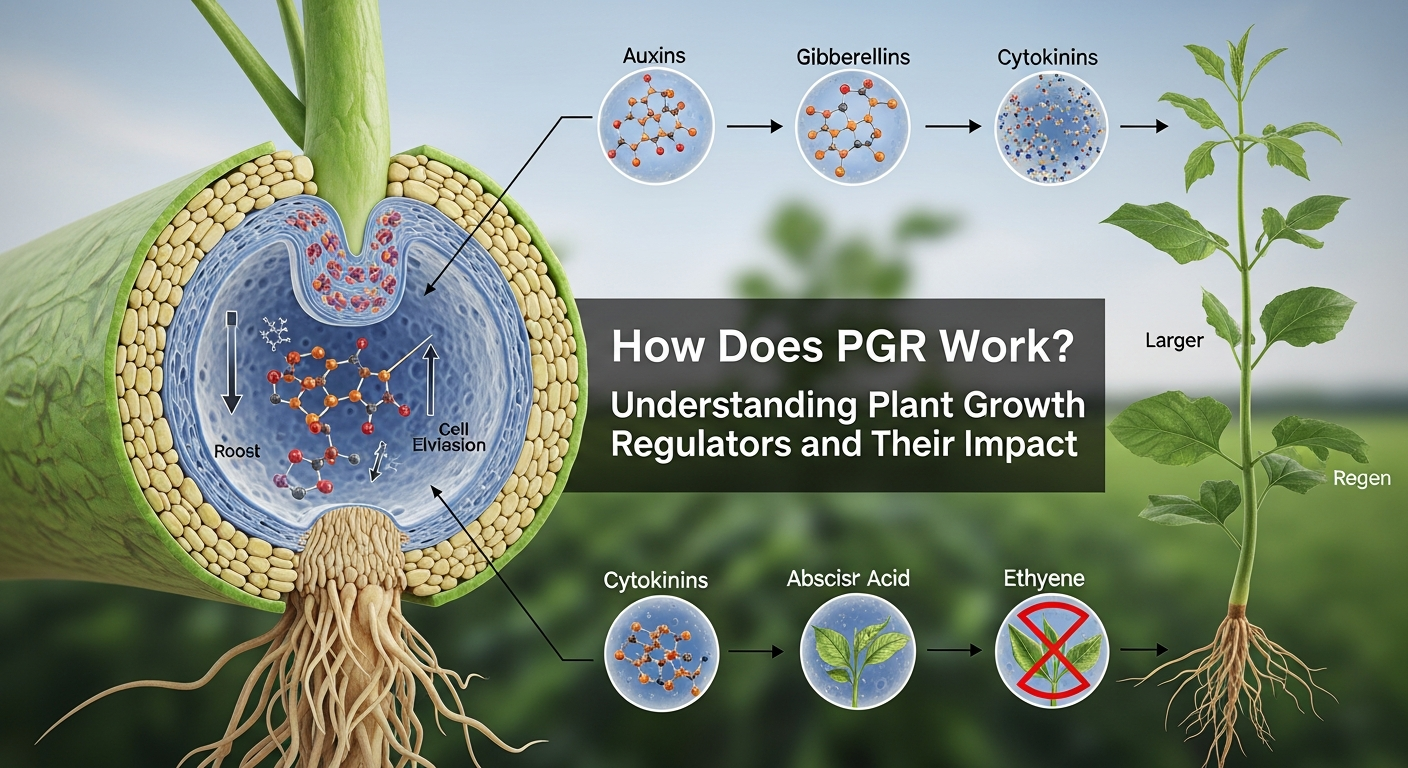
The following are examples of the various plant hormones and the related functions of each:
- Auxin produces new roots
- Gibberellin produces longer stems or greater flowering
- Cytokinin increases cell division and produces more plant shoots
- Ethylene speeds up the ripening of fruit
- Abscisic Acid helps a plant deal with stress

The Science Behind How Does PGR Work in Plants
Plant growth regulators or PGRs affect the way plants grow, develop, and thrive in their environment through direct impact on their chemical hormone-mediated internal growth system.
By interacting with the plant's own natural hormones, these substances manage many growth functions such as cell division, cell elongation, flowering, and fruiting and increase farmers' knowledge about how to use them properly for greater yields through scientific knowledge of how they function and their interactions within the plant.
Mechanism of PGR Action and Hormone Signaling Pathways
Plant Growth Regulator (PGR) interacts with the hormone signalling pathways that determine how plant tissues grow and develop by entering into them.
The communication pathways within the plant help provide a signal to individual cells when they should be growing, dividing, or maturing.
The following summarizes the important functions of the PGR:
1. Regulate the internal hormone balance
2. Activate or suppress specific growth signals
3. Regulate gene expression that relates to growth
4. Regulate flowering and fruiting cycles
5. Support stress response mechanisms

Effects on Cell Division and Elongation
Controlling plant growth indirectly affects how the plants look by the way the individual cells develop, but their impact is also directly related to how the plants' cells divide and how they continue growing through the reproductive stages.
Plant growth regulators (PGRs) have several major functions, including;
- Stimulating cell division provides for more rapid plant growth.
- Control stem elongation and help promote proper balance between shoot and root systems.
- Enhance both root and shoot development.
- Ensure that the canopy or shape of the plant is appropriate for the proper collection of sunlight.
- Prevent excessive or weak growth.

Physiological Responses Controlled by PGR
Plants Growth Regulators (PGRs) have an impact on several growth functions of the plant and as a result on the quality and quantity of the crop produced.
Examples of these functions include:
- Flowering
- Fruit formation
- Ripening
- Stress tolerance
Positive Effects of PGRs on Crop Yield:
- Flowering and fruit set are improved
- Size and uniformity of fruit are improved
- Timing of ripening and maturity is controlled
- Resistance to drought and stress is improved
- Nutrient uptake is enhanced

Common Types of PGRs and Their Specific Functions
Plant Growth Regulators (PGR) can be categorized according to their role in the growth and development of a plant (e.g., root development; flower formation, fruit formation, and plant's response to stress).
The classification of the types of PGR will help farmers understand how a PGR works for each growth stage of the plant.
PGR can serve several uses in agriculture; some of those include promoting the development of roots, controlling the ripening of fruit, etc. Long or short term growth performance of crops can be enhanced by using PGRs as selective tools.
Auxins, Gibberellins, and Cytokinins Explained
Auxins, gibberellins, and cytokinins are three of the major hormones that promote plant growth and are commonly found in many aspects of the agricultural industry. Auxins stimulate the development of roots, gibberellins increase the height of plants and facilitate flowering, and cytokinins promote both cell division and the growth of branches.
Important Facts
- Auxin – Promotes initial formation of roots and their elongation
- Gibberellin – Helps a plant grow taller or create more flowers
- Cytokinin – Promotes both cell division and the growth and development of stems, resulting in an improved structure for both commercial grower and producer
- Increases ability to absorb nutrients, promotes balance between vegetative and reproductive growth

Ethylene Inhibitors and Ripening Control
Ethylene is a plant hormone which impacts fruit ripening, therefore controlling ethylene activity is important for a longer shelf life as well as maturity of harvested crops.
Plant growth regulators (PGR) regulate the activity of ethylene while most commonly acting as inhibitors of ethylene, consequently delaying ripening/harvesting or improving the fruit's quality, among other characteristics.
Key Benefits of Using PGR Include:
- Control of the timing of fruit ripening
- Increase in the shelf life of fruit
- Ensure uniform ripening across a production area
- Reduce premature fruit drop upon harvest
- Improve the marketability/quality/value of fruit produce
Abscisic Acid Role in Stress Management
Abscisic acid (ABA) is a plant growth regulator (PGR) that plays a key role in plant survival during the stresses associated with extreme temperature, high salinity and low moisture. PGRs utilize ABA-related activities to help improve the stability and resilience of plants.
Some important characteristics of ABA are:
- Assists in helping a plant to tolerate drought conditions
- Limits the amount of water lost by stomata
- Stimulates seed dormancy, and helps seeds survive until conditions are appropriate for germination
- Enhances a plant's ability to withstand adverse environmental conditions
- Enhances the stability of crops during unfavorable conditions.

Practical Applications: How Does PGR Work in Agriculture and Horticulture?
Agriculture and horticulture rely heavily on plant growth regulators (PGR) to regulate plant growth, optimize production, and enhance product quality.
PGR regulates the inner process of a plant, such as maturity periods (flower and fruit set) and the direction a plant will grow. Knowing how PGR works in actual farming environments will allow the farmer to implement an appropriate strategy at the appropriate time.
PGR are a major part of modern crop management systems. They produce higher yields and better quality fruits.
PGR Use in Crop Yield Improvement
Overall productivity of crops can be improved through the application of PGR.
Key Benefits:
- Improved nutrient use efficiency by plants
- Consistent growth patterns across all plants
- Reduced lodging of several types of crops, such as wheat or rice
- Improved grain fill and fruit development
- Higher productivity of the crop as a whole
Flowering Control and Fruit Setting Enhancement
The essential function of plant growth regulators is to manage flowering and fruit production. They ensure that flowering occurs when it should, and also help reduce the number of flowers lost to proportionally increase the potential yield from the growing of the plant.
Key Points:
- Encourages earlier and quicker flowering
- Decreased flower/fruit loss
- Promotes pollination success
- Enhances the size and quality of fruits
- Synchronises the harvest maturity of the fruits.

Weed Control via Growth Regulation
Plant Growth Regulators or PGRs are used in selective weed management by controlling the growth of unwanted plants while having no negative effect on the main crop. Compounds that contain PGRs will disrupt normal growth patterns of weeds, therefore allowing crops to grow without any competition from the weed species.
The following information describes PGRs:
- Control the growth of unwanted plants.
- Target specific weed species without damaging and affecting main crops.
- Reduce competition for water and nutrients.
- Used as part of integrated weed control strategies.
- Increase the overall yield and performance of the crops.
Benefits and Potential Risks of Using PGRs Effectively
Using PGRs (Plant Growth Regulators) can be a key factor in increasing the production of your crops. Proper application of PGRs is essential for their effectiveness.
PGRs are used primarily to control growth, increase production, and improve quality. However, if used incorrectly, PGRs can cause negative results. Understanding how PGRs function helps farmers weigh the risks and rewards of using them.
When applied correctly, PGRs can be an extremely useful tool in creating a more sustainable and profitable agricultural system.
Advantages of Using Plant Growth Regulators
Plant growth regulators (PGRs) offer numerous advantages by enhancing plant growth processes and increasing the efficacy of crop production.
Main advantages include:
- Increased crop yields and productivity
- Increased flowering and setting of fruit
- Improvements in size and quality of fruit
- Control of the height and structure of plants
- Increased tolerance to environmental stresses in crops
Environmental Impact and Safety Considerations
Plant growth regulators can be useful, however, they must also be handled properly keeping into consideration environmental and safety issues.
- If used in excess they may affect soil and plant health
- Using the wrong dosage may negatively affect the quality of your crop
- If not used correctly, there may be problems with residue buildup
- The proper use of PGRs requires adherence to the guidelines
- Plant growth regulators are safe and effective when used properly and in appropriate limits

Proper Application Guidelines for PGR
Making effective use of propylene glycol and control methods is critical for optimal crop benefits without damaging crops.
Here are some of the key points:
- Apply at the correct timing (with regard to stage of growth) for best results.
- Apply the recommended product rate only.
- Prefer an even application method (uniform spraying).
- Combine with good nutrient management.
- Monitor response to crops frequently.

FAQs
Q1-How does PGR work in plants?
PGR works by regulating plant hormones to control growth, flowering, and development processes.
Q2-What are plant growth regulators?
Plant growth regulators are substances that influence plant growth, development, and physiological functions.
Q3-Can PGR improve crop yield?
Yes, PGR can improve crop yield by enhancing flowering, fruit set, and nutrient utilization.
Q4- Are PGRs safe for crops?
Yes, PGRs are safe when used in recommended dosages and proper application methods.
Q5-What are common types of PGRs?
Common types of PGRs include auxins, gibberellins, cytokinins, ethylene, and abscisic acid.
Conclusion: Harnessing the Power of PGRs for Sustainable Agriculture Success
Modern farming has greatly benefitted from the use of plant growth regulators (PGR). Through PGRs, farmers have achieved greater yield, higher quality and more reliable crop results. Farmers who understand how PGRs function will be able to manage plant growth more effectively, optimize blooming and fruiting, and increase productivity.
When PGRs are used responsibly, they contribute to the sustainability of agriculture by maximizing resource efficiency and minimizing wasteful use of resources, as well as increasing the resilience of crops against environmental stressors. PGRs can be integrated into a complete farming plan to provide smarter, more profitable and environmentally responsible crop production
