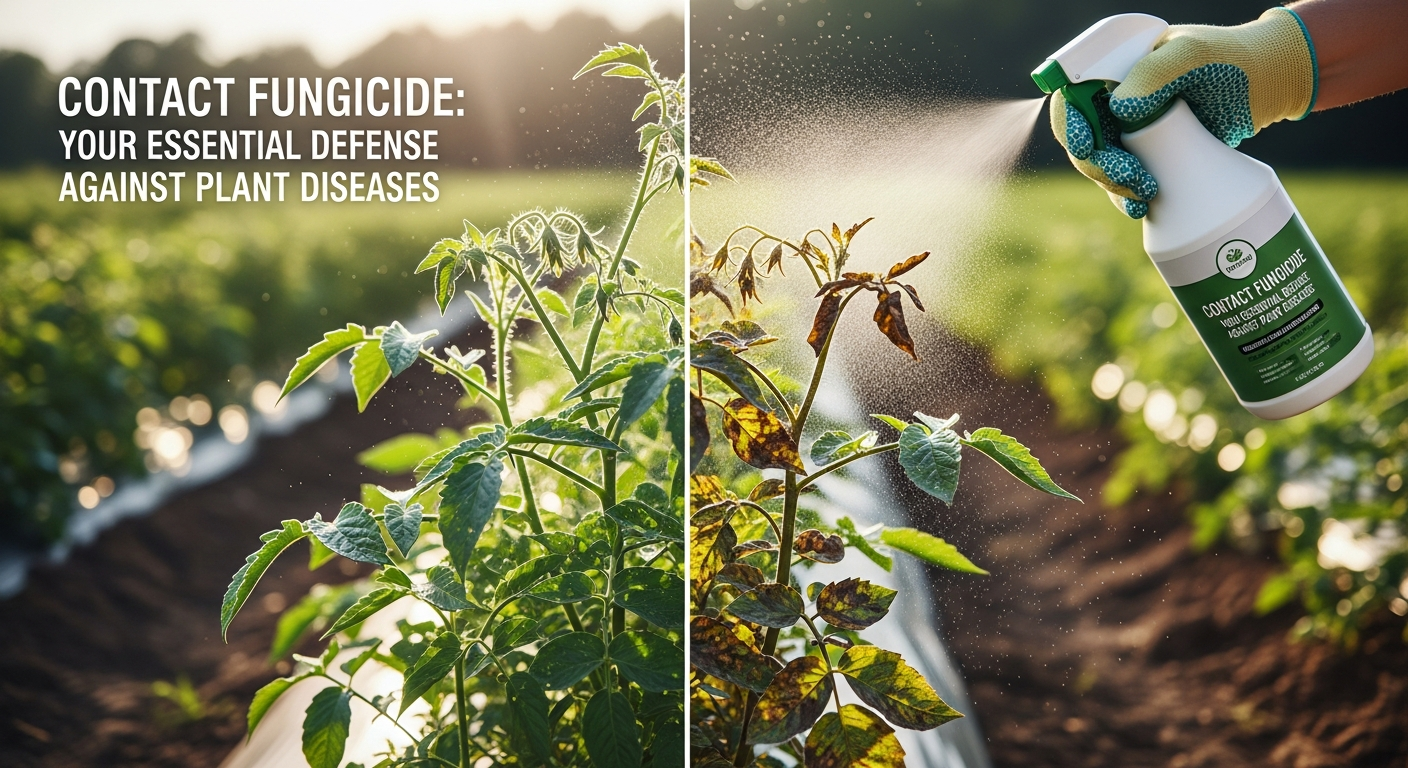
In modern agriculture, contact fungicide is a popular tool that protects crops from fungal infections by creating an external barrier on the surface of the crops. In contrast to systemic, or internal, treatments, contact fungicides prevent fungal spores from germinating and spreading by working externally. For this reason, contact fungicides provide a reliable first line of defense against numerous plant-related pathogens.
Some of the most commonly used contact fungicides, found on most contact fungicide lists, are copper, sulfur, and mancozeb. They are effective against the following types of pathogens: leaf spots, blights, and mildews. Contact fungicides typically work quickly, are easy to apply, and can be particularly beneficial in preventive disease management programs.
In addition to being easy to use and cost-effective, contact fungicides are also very effective for protecting crops in the early stages of crop development. Contact fungicides are also important for maintaining crop health when they are applied at the correct times and intervals, whether in an agricultural setting, a home garden, or a greenhouse.
Understanding Contact Fungicides and Their Role in Plant Protection
Contact fungicides are key components of modern crop protection, creating a barrier on plant surfaces to protect crops from fungi and their effects before they can infect. These fungicides can be found in many agricultural, horticultural, and gardening products.
An effective contact fungicide for plants program provides a healthy crop, reduces disease and other damaging pathogens, and enhances overall crop production.
Contact Fungicide Definition and Key Characteristics
Contact fungicides are a type of fungicide that prevents fungi from growing on plant surfaces by keeping the spores from germinating on the surfaces of plants.
They don't get into the plant itself; they only work as a barrier to protect against developing fungal diseases and are used for preventative disease control.
The following are characteristics of contact fungicides:
- Only work on the outside of the plant
- Prevent spore germination
- Have to be applied thoroughly for them to work correctly
- Have to be applied again and again because they will wash off
- Best for preventing disease in the early stages.
A strong list of contact fungicides will include materials such as copper fungicides, sulfur, mancozeb, or chlorothalonil; contact fungicides all provide broad spectrum disease provisions.
How Contact Fungicides Work on Plant Surfaces
A contact fungicide is basically a thin barrier (protects) the leaves and stems of plants before the fungus can enter the plant.
Mechanisms of Action:
- Creates a barrier on the surface of the plant.
- Kills or inhibits the fungi (spores) when in contact with them.
- Blocks the entry points into the plant.
- Reduces the spread of disease in the crop.
Advantages of Contact Fungicides for Plants:
- Will kill or inhibit fungi immediately.
- Inexpensive for the farmer.
- An effective choice for preventative spray programs
- Effective against a wide variety of diseases.
As Contact Fungicide does not penetrate into the plant, it is essential to have uniform spray coverage over the entire plant for best results.
Types of Fungicides: Where Contact Fungicides Fit In
Fungicides can be classified based on their mode of action on plants. Contact fungicides are one of the fundamental types of fungicides, generating comparisons to systemic fungicides.
Where Contact Fungicides Belong:
- Preventative disease management
- Best utilized early in the crop’s life cycle
- Work better when combined with systemic fungicides
- Widely utilized in integrated programs for disease management.
When utilizing a combination of contact and systemic fungicides, both internal and external protection of the crop takes place, thereby resulting in stronger plants and increased crop productivity.

Benefits of Using Contact Fungicides for Healthy Crops
Agriculture relies heavily on the use of contact fungicides because they provide excellent protection from fungal disease. They provide a physical barrier from fungal infection by creating a coating on the plant surface to prevent the entry of a fungus.
When using the proper contact fungicide for crops, producers will have more successful crops with fewer losses and maintain a higher level of agricultural productivity than those who do not use contact fungicides properly.
Effective Disease Prevention and Crop Protection
Usage of contact type fungicides is necessary to control fungal disease and to prevent the spread of the disease throughout a crop or number of crops. Immediate action is taken by applying a fungicide on a plant’s surface to inhibit the entry of a fungus.
Contact-type fungicides are useful for:
- Preventing fungal diseases prior to the occurrence of the disease (protective)
- Being effective against early fungal spores
- Having consistently effective results when using a standard spray program
- Being able to be used on vegetables, fruits and field crops.

Residue Safety and Environmental Advantages
There is less chance of having a harmful impact from using contact fungicides due to their nature of remaining on the outside of the plant rather than going into the plant tissue.
Contact Fungicides Are:
- Reduced residue compared with systemic fungicides
- Less toxic to humans and animals when an appropriate amount is applied
- Compatible with Integrated Pest Management (IPM)
- Environmentally friendly if applied correctly

Broad-Spectrum Control and Resistance Management
Contact fungicides possess a wide range of properties and have a much lower likelihood of developing resistance versus many systemic fungicides.
Characteristics of Contact Fungicides:
- Will effectively control numerous fungal pathogens
- Are less likely to develop resistance
- Can be used in rotation with systemic fungicides
- Are critical for a long-term strategy of managing diseases

Common Active Ingredients Found in Contact Fungicides
Fungicides made with contact-type active ingredients provide excellent surface level protection against fungal diseases. Different active ingredients used to formulate these fungicides have been specifically chosen because they are effective against different types of pathogens. These different fungicides are widely used on many different types of crops throughout the world.
When determining which contact fungicide to apply to specific crops, it is important to understand the various active ingredients used in these products and how each one functions to manage diseases.
Popular Ingredients in Contact Fungicide List
Contact fungicides are most commonly used with different active ingredients because they have a wide spectrum of efficacy and a history of dependability.
Some examples of the active ingredients in common contact fungicides are
- Prevent disease before it occurs
- Control many different types of fungi (multiple types of pathogens)
- Be effective on various types of crops
- Be easy to apply and cost-effective

Protective Fungicide Ingredients and Their Roles
A contact fungicide has active ingredients that create a shield to keep any fungal spores out of the plant.
The protective fungicide ingredients will be:
- Non-systemic surface active ingredients
- Only used for prevention
- Preventively effective against spore germination

Choosing the Right Contact Fungicide for Plants
Choosing the correct contact fungicide is very important when you want to manage diseases and improve how well your crops will grow.
When deciding which contact fungicide to use, keep in mind the following factors:
- The type of crop (vegetables, fruits or cereals)
- The type and severity of the disease
- The weather (amount of rain and humidity)
- The stage of the crop's growth

Best Practices for Applying Contact Fungicides Effectively
When applying a contact fungicide for maximum disease protection, timing, coverage and rate are important factors in where and how you use this type of chemical or fertilizer since they only work on the surface of the plant.
By using good practices with your contact fungicides it will help ensure that you receive greater benefits from your program for your plants and also provide a means to support healthy crops through the growing season.
Correct Application Timing and Frequency
Application of contact fungicides before the onset of fungal infection provides the best results. Because contact fungicides are preventive rather than curative, it is important to time their use appropriately.
The best time to apply contact fungicides is as follows:
- Before disease symptoms show
- Early in the crop's growth stages
- In humid conditions or in areas commonly affected by disease
- When/if there is heavy rainfall/irrigation, then they should be reapplied

Spray Coverage Tips for Maximum Effectiveness
Covering all surfaces of the plant is important when using contact fungicides since they are unable to move into the plant itself. It is important that the application be uniform so that there are no unprotected surfaces on the plant.
Here are spray coverage tips:
- Make sure to cover both the tops and undersides of the leaves
- Use the right type of spray equipment to get fine droplets
- Avoid spraying unevenly and missing spots
- Keep your spray pressure at the proper level

Dosage Guidelines and Weather Considerations
Using the right amount of contact fungicide will increase its effectiveness and will keep safe the crops treated with this product. Too much or too little fungicide applied can impact the crop's safety and reduce the effectiveness of the chemical.
Factors to Consider With Dosage and Weather:
- Labels should always be followed for the recommended dosage
- Contact fungicide should not be sprayed in periods of high temperatures or in direct sunlight
- Calm winds will minimize drift when you apply contact fungicide
- Additional applications of contact fungicide will be necessary following any significant rainfall event

Comparing Contact and Systemic Fungicides: Which is Right for You?
Selecting between contact and systemic fungicides is essential for protecting crops from diseases. Both types of fungicides have their own benefits, and the farmer will choose between the two depending on specific criteria such as crop development, the symptoms caused by a disease, and climatic conditions.
Knowing the differences in how contact fungicides operate and work compared to them will assist in choosing a method of disease management that will be the most effective for their particular conditions.
Contact vs Systemic Fungicide: Key Differences
There are fundamental differences between contact and systemic fungicides in regard to disease control and plant protection as well as their method of action (internal or external).
- Contacting: Contact fungicides typically provide a protective mechanism by working on the surface of the plant.
- Systemic: Systemic fungicides usually act by moving into the internal structure of the plant.
- Preventive: Contact fungicides provide only a preventative mechanism.
- Curative: Both contact and systemic fungicides can provide preventative and curative mechanisms; however, only systemic fungicides can provide both

Mode of Action Comparison
The mode of action of a fungicide will influence its efficacy, the location of use, and the direction of application.
The modes of action of fungicides include:
- Contact fungicides form a barrier of protection against fungi
- Systemic fungicides are absorbed by the plant and move through the xylem and phloem
- Contact fungicides prevent the germination of fungal spores
- Systemic fungicides prevent the growth of fungi within the plant.

Choosing the Best Disease Control Strategy
The strategy you choose will be based on crop condition, disease stage, and the environment.
Factors Influencing the Best Practice Are:
- Crop Growth Stage
- Severity of Disease
- Weather Conditions
- Farming Practices
Intelligent Approach to Farming Will Include:
- A contact fungicide for preventive disease control on plants
- An alternative system of control using systemic fungicides (or combining systemic fungicides with contact fungicides to give maximum control).
- Rotating fungicides from an appropriate list of contact products to prevent resistance development

Avoiding Common Mistakes When Using Contact Fungicides
Proper use of a contact fungicide is critical to achieving effective disease control and minimizing damage to crops. Contact fungicides are typically very reliable. However, if they are misused, their efficacy may be diminished and/or plants may be damaged.
By understanding mistakes that often occur when using contact fungicides, farmers can select the most appropriate contact fungicide for their particular crop and use it effectively without harming their crop.
Risks of Overuse and Phytotoxicity
Contact fungicides have great potential to protect crops from damage, but misuse of these fungicides can create phytotoxic issues (damage to the plant) as well as a reduction in crop quality.
Risks Associated With Overuse Of Contact Fungicides Include:
- Leaf Burn/Discoloration
- Reduced Plant Growth & Vigor
- Residues On Plant Surfaces
- Increased Input Cost Without Increase In Return

Common Application Errors to Avoid
Most of the time, the main reason that contact fungicide for plants does not work correctly is because of application errors.
Some common examples are:
- Lack of uniform coverage when spraying the leaves
- Missing the underside of the leaves
- Spraying at the wrong time
- Utilizing incorrect application equipment

Preventing Resistance Development
While there is less potential for resistance with contact fungicides than there is with systemic fungicides when they are misused, improper use may lead to problems with prolonged resistance to fungicides in the future.
Practices That Will Help Prevent Resistance Include:
- Rotate fungicide products that have different modes of action
- Do not use the same product continually
- Do combine contact and systemic fungicides when appropriate
- Use integrated pest management strategy as a base of attacking the plant pest problem

FAQs
Q1. What is a contact fungicide?
A contact fungicide is a surface-acting fungicide that prevents fungal infection by forming a protective layer on plants.
Q2. How does a contact fungicide for plants work?
A contact fungicide for plants works by stopping fungal spores from germinating on treated plant surfaces.
Q3. What are common products in a contact fungicide list?
Common contact fungicide list products include mancozeb, copper fungicides, sulfur, and chlorothalonil.
Q4. How often should contact fungicides be applied?
Contact fungicides are typically applied every 7–10 days or after rainfall for effective protection.
Q5. Are contact fungicides safe for crops?
Yes, contact fungicide is safe for crops when used correctly at recommended dosages.
Conclusion: Protect Your Plants with Reliable Contact Fungicide Solutions Today!
A contact fungicide is an effective way for growers to prevent pathogen outbreaks and can also help growers protect their plants from developing disease during the entire plant-growing period. Effective use of contact fungicides (from a reputable contact fungicide reference) is crucial to preventing diseases commonly found on plants.
Not only does a contact fungicide program create healthier crops and improve crop yields, but it also supports the grower in pursuing sustainable agricultural practices. With the proper contact fungicide program, crops can be safely produced at all stages of growth, which allows for a produce item that is free of disease.