
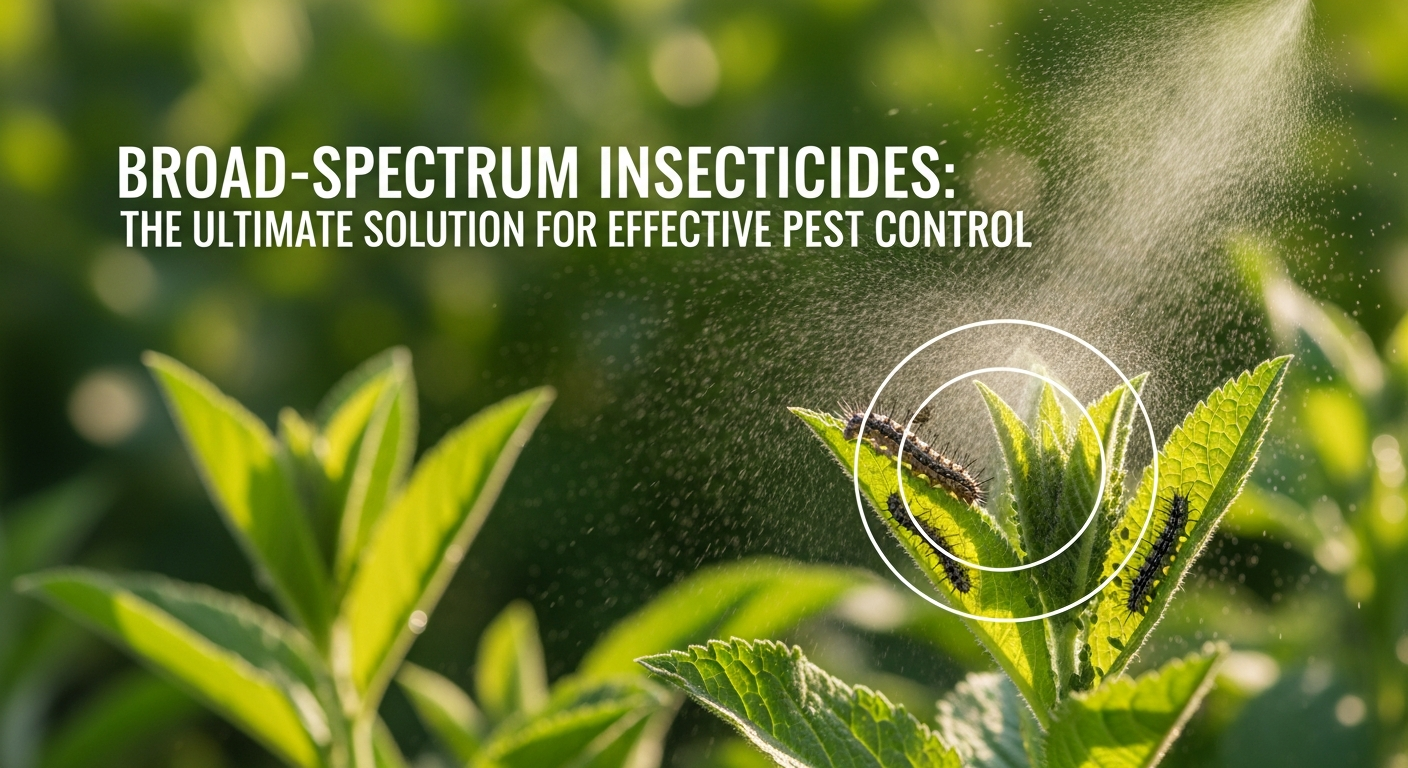
Insecticide broad spectrum products are effective at controlling a variety of pests on crops. On farms, insecticides are widely used to control multiple pests in one treatment, thereby providing benefits to crop protection, increasing yield, and preventing pest infestation.
Broad spectrum insecticides provide fast and effective action. In general, broad spectrum insecticides kill a large number of different kinds of pests. Organic insecticides can also be used to control pests and provide safer and more environmentally friendly options for organic farming.
Broad-spectrum insecticides protect crops from a variety of pests (i.e., aphids, caterpillars, beetles, and whiteflies) and help produce healthy crops that produce more food!
Understanding Broad-Spectrum Insecticides and Their Role in Pest Management
Modern agriculture relies heavily on using broad-spectrum insecticides to manage numerous different kinds of insect pests in one application. Farmers will typically use a broad-spectrum insecticide when they have a cluster of several insects attacking their crops at once because this allows them to maintain yield and protect their crops from damage as well as increase productivity.
In addition to using chemicals, there has been an increase in the usage of organic non-chemical insecticides as a way to achieve sustainable, environmentally friendly pest management.
Broad-Spectrum Insecticides Definition
Broad-spectrum insecticides are pest management products that control numerous insects as opposed to only a single pest. Most commonly, these types of products are utilized in agricultural settings where there is the potential for an overlapping infestation of pests and thus require an effective solution quickly.
Main Benefits:
- Ability to control many different types of insects all at once
- Provide pest control by way of contact, ingestion, and/or systemic action
- Offer both chemical and organic products
- A valuable tool in large-scale agriculture, particularly when an unexpected pest outbreak occurs
Types of Insecticides and Their Uses
Agricultural pests can be controlled with various insecticides, each formulated for different pest control needs. Broad-spectrum insecticides are one group of pesticides that fit into a larger category of pest management solutions.
Some of the key points concerning insecticides include:
- Various types of insecticides address various types of insect problems.
- Broad-spectrum insecticides could be effective to solve multiple insect problems together at one time.
- Organic insecticides are generally safer to use in the environment.
- Selection of an insecticide will be based on the type of pest insect present in the crop, the specific type of crop being grown, and the method of farming.

Role in Modern Pest Management Solutions
Modern pest control often uses broad-spectrum insecticides but only under responsible, sustainable use practices.
Below are some examples of responsible and sustainable use methods for broad-spectrum insecticides.
- Rapid control of pests during critical times such as when insects are damaging crops.
- Help maintain healthy crops and increase productivity.
- Contribute to IPM when used appropriately.
- Can be used in combination with organic insecticides to achieve a balanced control of pests

Advantages of Using Broad-Spectrum Insecticides in Agriculture and Gardening
Insecticides intended for broad-spectrum use are used extensively in agriculture and gardening.
They provide a reliable means of controlling various pest species with one application, assisting both farmers and gardeners in preventing damage to crops while successfully enhancing crop health and reducing losses due to pest infestation.
Chemical alternatives to insecticides also exist, thus providing safer and more sustainable options for pest management.
Effective Pest Elimination Across Multiple Species
The design of broad spectrum insecticides allows for control over a variety of pests, or multiple different pest species, in the same crop, when the pests are infesting the same crop at the same time. In other words, rather than having to use multiple types of insecticides against different types of insect pests, one insecticide can be used and applied to one crop and manage several different species of insect pests with one application.
Some Key Points Include:
- Controls many insect pests such as aphids (soft bodied sucking insects), caterpillars, beetles and whiteflies
- Reduces the number of applications of insecticides required for pest management
- Saves time and labor in pest management
- Has contact, ingestion or systemic modes of action against insect pests

Improved Crop Protection and Yield
Hypothetical pest control chemicals, or broad-spectrum insecticides, control a variety of pests and therefore prevent catastrophic loss of crop-yielding capability by protecting food from being damaged by insects. Therefore, producing healthy crops will allow for improved agricultural production and ultimately maximum profit to farmers.
Important Factors To Consider When Applying Hypothetical Pest Control Chemicals:
- Preventing the loss of crops caused by insect infestations.
- Improving the health and growth rate of plants.
- Increasing the quality and value of produce.
- Promoting uniform agricultural production.

Convenience in Garden Pest Control
Broad-spectrum insecticides can be used easily. They have the added benefit of being easy to apply at home and small farms. They also give you immediate results with less effort than identifying bugs.
Main Points
- Simple to apply to gardens and landscape
- Will work on vegetables, fruit, and ornamental plants
- They give you fast results on bugs that you see
- There are many chemical and organic varieties to choose from

Common Types of Broad-Spectrum Insecticides and How They Work
Pest infestations are a common problem faced by farmers and gardeners alike, and broad-spectrum insecticides have long provided an effective method for controlling this problem.
By targeting many different types of insects at once, broad-spectrum insecticides offer the farmer or gardener a potent way to address any pest infestation.
More and more farmers are also looking into the use of organic alternatives to traditional chemical insecticides.
Organophosphates, Carbamates, and Pyrethroids
Broad-spectrum insecticides come in a variety of forms; each performs differently in controlling pests.
The commonly used broad-spectrum insecticide categories include the following:
- Organophosphate: Insecticides are insecticides that primarily attack the insect nervous system and result in the insect's rapid paralysis and death. Organophosphates are fast acting but must be handled with care.
- Carbamate: Insecticides work in a similar fashion to Organophosphate insecticides, but they are typically less persistent in the environment than Organophosphate insecticides. As a result, they can be used more safely in a controlled manner.
- Pyrethroid: Insecticides are based on natural pyrethrum and are commonly used in agriculture due to their relatively low toxicity to humans in addition to their rapid knockdown effect.
Summary:
- Effectively controls a large number of pests
- Rapid action / high efficiency
- Used in agriculture, gardening and public health
- Sold in several different forms (Spray, Dust and Granulars)

Mode of Action of Broad-Spectrum Insecticides
Knowledge of how to use broad-spectrum insecticides will give you both the ability to choose an insecticide and to use it effectively.
Types of Action for Broad-Spectrum Insecticides:
- Contact Action - Kills insects that are in direct contact with the insecticide.
- Systemic Action - Can be absorbed by plants and moves through plant tissue to kill insects that feed on the plant.
- Stomach Poison - When insects eat the insecticide through feedings they die from being poisoned internally.
Do's & Don'ts:
- More than one method of killing will give greater control over insects.
- Some insects have different habits, so more than one product will be needed to control them.
- Using broad-spectrum insecticides can lead to more rapid elimination of pest hazards.
- Using broad-spectrum insecticides can lead to decreased chances for survival for insects.

Natural and Insecticides Organic Alternatives
With a growing awareness of healthy and environmentally friendly practices, an increasing number of growers (farmers and gardeners) are switching over from chemical insecticides to organic forms of insect control.
Here are some examples of organic insect control methods:
- Neem Oil: Neem oil is a widely used natural insecticide that inhibits insect growth and eating habits.
- Botanical Extracts: Plant-sourced solutions (such as extracts of garlic, chilli, and eucalyptus) offer pest-repelling characteristics without chemicals.
- Biological Control: Utilizing beneficial insects such as ladybugs to control damaging insect populations is a method of biological control.
Advantages of using organic insect control methods:
- Environmentally friendly and biodegradable
- If used correctly, they are safe for beneficial insects
- Reduce chemical residue on harvested produce
- Perfect for sustainable agriculture practices

Guidelines for Safe and Responsible Application of Broad-Spectrum Insecticides
Although broad-spectrum insecticides can be effective control options, their effectiveness depends on using them correctly and responsibly. Correct insecticide applications improve your ability to properly manage pests as well as protect human health, crops and the environment.
In addition to chemical options, applying organic insecticide solutions can further enhance your safety and sustainability goals.
Safety Precautions During Application
The safety of those applying broad spectrum insecticides, as well as wildlife and other benefits people may enjoy from the use of those products, is first and foremost.
Guidelines for Safety:
- Wear any necessary personal protective equipment such as gloves, face mask, goggles and long clothing any time you handle the broad spectrum insecticide product.
- Avoid direct skin contact and/or breathing (inhaling the product) when spraying the broad spectrum insecticide.
- Do not eat, drink, or smoke while you are handling or using any broad spectrum insecticide products.
- Ensure that all children and pets are kept away from any treated areas until they have dried completely.
- Follow the directions printed on the product label for correct dosage and use.

Proper Application Techniques
Appropriately applying insecticides helps increase the efficiency of broad spectrum insecticides and reduce both waste and misuse.
Application of broad spectrum insecticide tips:
- Apply insecticides in the early morning or in the late evening.
- Only use the recommended dosage and avoid applying too much.
- Apply insecticides evenly to all leaves and stems of plants to achieve uniformity.
- Use appropriate equipment and appropriate nozzle sizes to achieve the desired results.
- When applying insecticides, limit your application to areas that actually need treatment, rather than unnecessarily treating the entire field.

Reducing Environmental Impact
Using pesticides responsibly can lead to the conservation of soil, water, and good insects. Using other methods along with pesticides can reduce harm to the environment.
Helpful tips:
- Do not spray near water (such as lakes, rivers).
- Rotate your use of different pesticides to help avoid the development of resistance to them by insect pests.
- You can also try using natural pesticides (like neem).
- Be sure you are not killing beneficial insects (like ladybugs or honeybees) when using pesticides; use pesticides with caution and only when absolutely necessary.
- Use sound pest control methods like Integrated Pest Management (IPM).

Potential Risks and Environmental Considerations When Using Broad-Spectrum Insecticides
The improper use of broad-spectrum insecticides can cause significant ecological and environmental problems, though they are very effective at controlling pests.
Knowing these risks will help make better decisions about pest control, as well as encourage farmers and gardeners to consider using organic and less harmful pesticides.
Impact on Beneficial Insects
Insecticides designed to kill a wide range of insects can affect both beneficial and harmful (pest) insects. When used, broad-spectrum insecticides may disrupt the natural balance of the ecosystem.
- Pollinators, such as bees and butterflies, may be harmed
- Beneficial predators, such as ladybugs, can experience a decline in population
- Natural pest control systems that rely on beneficial insects can become disrupted
- Secondary pest outbreaks may occur as a result of these insecticides.

Resistance Development in Pests
The continuous application of the same type of insecticide can cause resistance in insects over time, so that it becomes increasingly difficult to control them.
Key Points:
- Tolerance of insects to chemicals increases
- Insecticides are less effective
- Higher dosages or stronger chemical alternatives are required for pest control
- Increased costs and environmental impacts associated with resistance of insects to chemicals

Potential Risks and Environmental Considerations When Using Broad-Spectrum Insecticides
Although broad-spectrum insecticides can be used to control insects effectively, using them improperly or excessively may cause significant issues to our environment and ecology.
Understanding the potential for harm associated with those products will help both farmers and gardeners make better choices and ultimately give them the motivation to use organic alternatives if available.
Impact on Beneficial Insects
Insecticides with a broad spectrum of action don't distinguish between damaging insects (pests) and benign (beneficial). Therefore, the use of broad spectrum insecticides can upset the natural ecosystem's equilibrium.
Summary:
- Can kill beneficial pollinators (like bees and butterflies).
- Will reduce the number of beneficial predator insects (like ladybugs).
- Will disrupt nature's pest control mechanisms.
- Could produce a secondary pest outbreak as a result of disruptive activity.

Resistance Development in Pests
Repeated applications of the same pesticide creates resistance which makes it more difficult to manage the pest long term!
Three Major Points:
- Pests Become Tolerant To The Insecticide(s)
- Insecticides Growth Decrease in Effectiveness
- Increased Cost Associated With Agriculture And Environmental Impacts of Larger Doses/Strong Chemicals

Ecological and Regulatory Concerns
Concerns arise over possible environmental dangers, too high a level of use of broad-spectrum insecticides, and whether or not manufacturers are compliant with regulatory requirements.
Key Points
- Risk of contaminating soil and water
- Residual insecticide in crops and food chain
- Regulatory enforcement is strict in regards to usage and limits
- Need for safer alternatives; uses of organic insecticides are needed

How to Choose the Right Broad-Spectrum Insecticide for Your Needs
Effective pest management requires choosing the best broad spectrum insecticide that will safely control pests while protecting crops and helping the environment. There are many products on the market today to choose from, including organic insecticides.
Some will work better than others for controlling a specific pest, meeting your crop needs or achieving your goals for sustainability.
Pest Identification and Selection
Prior to choosing any broad-spectrum insecticide, it is critical to properly identify the insect pest(s). Selecting an inappropriate insecticide can result in ineffective control and wasted resources.
The following are key points to consider in the identification of insect pests prior to selection of an insecticide:
- Identify the type of insect (chewing, sucking, boring)
- Carefully observe the crop damage symptoms
- Select the appropriate insecticide for the targeted insect pest species
- Do not unnecessarily apply insecticides to low pest populations

Comparing Product Effectiveness
The effectiveness, speed of action, and safety of insecticides vary between products. To determine which product is best for your pest management needs, you have to evaluate these factors.
Things to Evaluate
- Effectiveness - check for efficacy against multiple pest species
- Speed of Action: Quick knock-down or long-term control?
- Residual Effect: how long will the chemical/insecticide remain effective after application?
- Chemical vs. Organic Options: compare products made from synthetic ingredients with those made from natural ingredients like plant extracts, essential oils or other botanicals, etc.
Integration with IPM Strategies
If you want to implement long-term sustainable pest control, use broad-spectrum insecticides with your Integrated Pest Management (IPM) strategy.
Key Points
- Combining chemical pesticides with organic products will increase the success of controlling pests.
- Rotate your pesticides, which will reduce resistance to the chemicals.
- Use biological controls, such as beneficial insects, where possible.
- Regularly monitor pest populations before applying pesticides.

FAQs
Q1-What are broad-spectrum insecticides?
Broad-spectrum insecticides are pest control products that can eliminate a wide range of insect species with a single application.
Q2-Are broad-spectrum insecticides safe to use?
They are safe when used correctly by following label instructions, proper dosage, and safety precautions.
Q3-Can broad-spectrum insecticides harm beneficial insects?
Yes, they can also affect beneficial insects like bees and ladybugs if not used carefully.
Q4-What are examples of insecticides organic alternatives?
Common insecticides organic options include neem oil, botanical extracts, and biological controls like beneficial insects.
Q5--How often should broad-spectrum insecticides be applied?
They should be applied based on pest infestation levels and label recommendations, avoiding excessive or frequent use.
Conclusion: Why Choosing the Right Broad-Spectrum Insecticide Can Transform Your Pest Control Efforts
It’s crucial to make the right choice of insecticides for broad-spectrum purposes if you want long-term success in pest management and control. When insecticides that affect a variety of different insects or crops are wisely selected based on the type of pest(s) present, the requirements of the crop being treated, and the environmental conditions affecting pest activity; they produce an effective and efficient means of eliminating multiple pests, reducing the amount of potential harm inflicted on crops by pests (and in turn the total amount of crop loss) and improving productivity and/or yield performance. Additionally, by selecting the most appropriate insecticides, unnecessary usage of any insecticide will be minimized, thus creating savings on time and money for both crop producers and gardeners.
A critical part of this selection process is the judicious and responsible use of the insecticide; overuse and/or misapplication of the insecticide can: develop resistance in target pests (and all associated negative impacts), create negative environmental impacts, and cause casualties to beneficial insects. Combining insecticides with organic alternatives allows for a more balanced approach to pest and plant pest management, reducing risks to the plant/pest and the surrounding ecosystem(s) while also providing a substantially effective means of controlling target pests.
In summary, a combination of properly-selected products, properly-applied techniques, and sustainable production practices will enhance any pest management strategy. By making informed choices regarding what type of pest management strategy to use, agricultural producers will protect their crops from pests more effectively and help create and sustain a healthy and sustainable environment in the agricultural sector.